
Understanding Property Taxes on a Tight Budget: The Plain Guide
Can you understand property taxes on a tight budget in Southampton? Council tax, stamp duty, landlord taxes and legitimate reductions — in plain English.
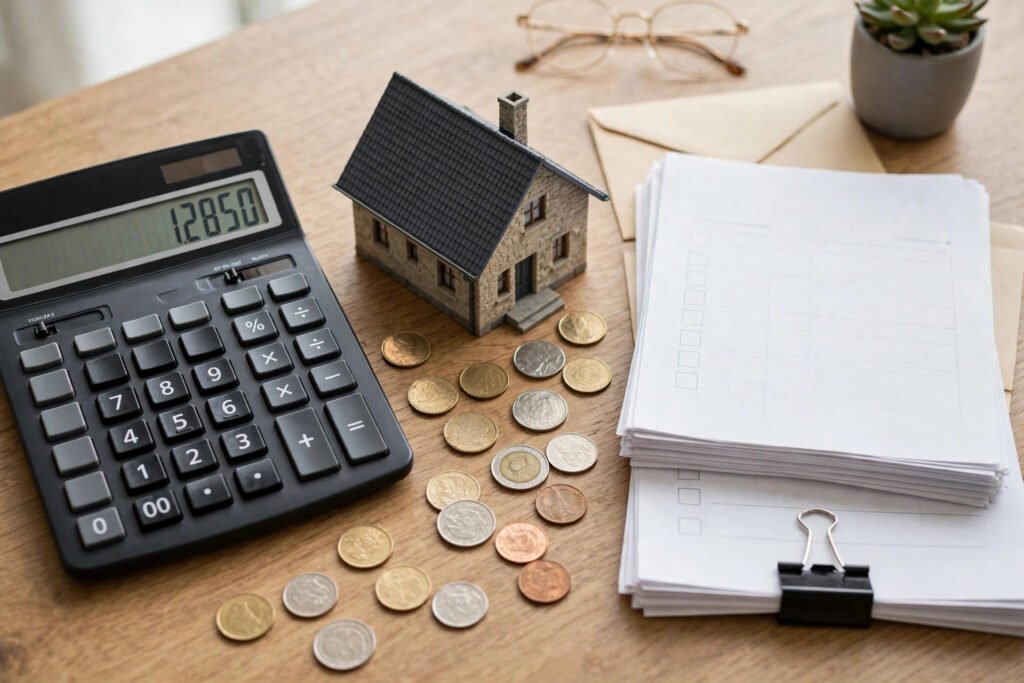
A tight household budget leaves no room for a tax bill that arrives as a surprise, yet property related taxes in Britain rarely arrive with any warning at all.
Managing property taxes on a budget starts with separating the charge you pay for living somewhere from the charges linked to work premises, because the systems, the authorities and the routes for challenging them are entirely different. Homeowners who also run a small shop or office sometimes meet both worlds in the same month, so it helps to understand how business rates work as a tax on shop and office premises alongside the domestic bills that land on the doormat at home.
Which Property Taxes Actually Apply to Your Home?
For most households the list is far shorter than the headlines suggest. If you live in a home, whether you own it or rent it, the regular charge that applies is council tax, collected by the local council to help fund local services. Other property related taxes only appear at particular moments, such as when a home is bought, sold, rented out or passed on after a death, and many households go for years without meeting any of them at all.
Renters often worry that they owe more than they do. In an ordinary tenancy the occupier usually pays council tax, while the landlord is responsible for tax on the rent they receive. You do not pay a purchase tax for signing a tenancy agreement, and you do not owe tax on your landlord income because you have none. What matters for a tenant is reading the tenancy agreement carefully, since it should state plainly who is responsible for council tax and for household bills.
Owner occupiers sit in a slightly wider picture. Alongside council tax, a purchase tax may have applied when the home was bought, and a tax on gains may apply if a second property or a rental property is later sold for more than it cost. A main home that you live in is treated differently from an investment property, and the government website sets out those distinctions in plain language, so checking the official pages before assuming a bill is due saves both worry and money.
How Does Council Tax Banding Shape the Yearly Bill?
Council tax is built around bands, and every home is placed into one band according to its value at a fixed point in the past rather than its value today. In England and Scotland the bands run from band A at the lowest level through to band H at the highest, and the local council sets the charge for each band in its area each year. Two similar homes in different council areas can therefore face noticeably different bills even when they sit in the same band.
The band matters because the charge rises step by step as you move up the letters. A home placed one band too high will be overcharged every single year until the position is corrected, which is why the band is worth checking rather than accepting blindly. The Valuation Office Agency is responsible for banding in England and Wales, and its guidance explains how a band is decided and what evidence supports a challenge, such as similar nearby homes sitting in a lower band.
Banding also explains why a neighbour may pay less for what looks like the same house. Extensions, conversions and the history of a property can all affect its band, and homes valued at that fixed past date sometimes fell either side of a boundary line. If your home was altered by a previous owner, the band may reflect the home as it once was rather than as it stands now, so a careful comparison with close neighbours is a sensible starting point before contacting the Valuation Office Agency.
What Help Exists When Money Is Genuinely Tight?
Help does exist, but it rarely arrives automatically, and claiming it is often the single most valuable step a stretched household can take. A person who lives alone can claim the single person discount from the local council, which reduces the full bill by a quarter off the full amount. Households where every adult is a full time student are generally exempt, and a home adapted for a disabled resident may qualify for a reduction that treats the bill as if the home sat in the band below its actual band.
Beyond discounts, each local council runs a council tax reduction scheme for residents on a low income or receiving certain benefits. The details vary by area because each council designs its own scheme for working age residents, while pension age residents follow national rules. The local council can explain what its scheme covers and what evidence of income and savings it needs, and the government website provides a starting point for finding the right council pages and application routes.
Which Taxes Appear Only When You Buy or Sell?
Buying a home in England or Northern Ireland can bring stamp duty land tax into the picture, charged on purchases above the thresholds published on the government website. First time buyers receive relief under separate rules, and buyers of additional properties face higher rates, which is why the same home can produce a different tax outcome for different buyers. Scotland and Wales operate their own purchase taxes with their own thresholds, so the nation where the home sits decides which system applies.
The purchase tax is calculated in slices, meaning each rate applies only to the portion of the price within that slice rather than to the whole price at the highest rate. That structure is widely misunderstood, and misunderstanding it can distort a savings target by a wide margin. Anyone building a deposit should treat the likely purchase tax as part of the total needed from the very beginning, alongside legal fees and moving costs, rather than discovering it late when the purchase is already under way.
Selling raises a different question. Selling the home you live in as your only or main home usually falls within private residence relief, so a gain on that sale is generally not taxed. A second home, a rental property or a home you never lived in is treated differently, and capital gains tax may apply to the increase in value, with reporting duties that can arise soon after completion. HM Revenue and Customs publishes the reporting rules, and meeting them promptly matters because late reporting can bring penalties even when the tax itself is modest.
What About Savings, Gifts and Passing a Home On?
Property also meets the tax system when wealth is saved, given away or inherited. Renting out a property produces rental income that is taxable through self assessment, after allowable expenses, and HM Revenue and Customs expects that income to be declared even when it feels small or informal. Letting through an agent does not remove that duty, and keeping clear records of rent received and costs incurred makes the annual return far less painful for landlords of every size.
When someone dies, inheritance tax may apply to their estate, including the home, depending on the overall value and on who inherits it. Separate allowances can apply when a main home passes to children or grandchildren, and a surviving spouse or civil partner can often use allowances left unused by the first partner. Executors handle the reporting to HM Revenue and Customs, and the official guidance walks through the forms step by step, although larger or more complicated estates commonly need professional help to value property fairly and claim every allowance correctly.
How Can You Check a Bill That Looks Wrong?
Start with the bill itself. A council tax bill shows the band, the charge for that band, any discounts or reductions already applied, and the instalments expected. If a discount you believe you qualify for is missing, contact the local council and ask for the bill to be corrected, providing evidence such as proof that you live alone or that every adult in the home is a student. Councils can backdate a discount where the entitlement can be shown, so an old mistake is still worth raising.
If the band itself looks wrong, gather evidence before challenging it. Compare your band with similar homes on the same street using the official checking service on the government website, and note any homes that appear identical yet sit in a lower band. A challenge goes to the Valuation Office Agency in England and Wales, and the process is free. Be aware that a review can in principle move a band up as well as down, so a challenge is strongest when the evidence is clear and gathered carefully beforehand.
For other property taxes, the checking route runs through HM Revenue and Customs and the government website rather than the council. Purchase tax queries follow the filing made at completion, gains on a sale follow the reporting service for property disposals, and inheritance matters follow the forms completed by executors. Keeping letters, completion statements and council bills together in one folder makes every query faster, because officials will ask for dates, references and figures from documents rather than accepting a summary from memory.
Frequently Asked Questions
Who actually has to pay council tax in a rented home? In most rented homes the tenant who lives there pays, because council tax follows the occupier rather than the owner, although the tenancy agreement should confirm the arrangement and the local council can clarify liability where a house is shared by several tenants on separate agreements.
Can a council tax bill be reduced if only one adult lives in the home? Yes, a person living alone can claim the single person discount from the local council, which takes a quarter off the full bill, and the claim can usually be made through the council website with evidence of the household circumstances.
Where should a buyer check the current purchase tax thresholds? The government website publishes the current thresholds and rates for stamp duty land tax in England and Northern Ireland, along with links to the separate Scottish and Welsh systems, and those official pages are the reliable place to check because thresholds change over time.
Does selling the home you live in usually create a tax bill? Generally no, because private residence relief usually covers a gain on the only or main home you live in, while second homes and rental properties are treated differently and may need to be reported to HM Revenue and Customs after the sale completes.


1 replies