Mistakes to Avoid When Joining Your Local Football League
The top mistakes to avoid when joining a local football league: fitness, fees, ability levels and the Sunday league realities every new player must know first.
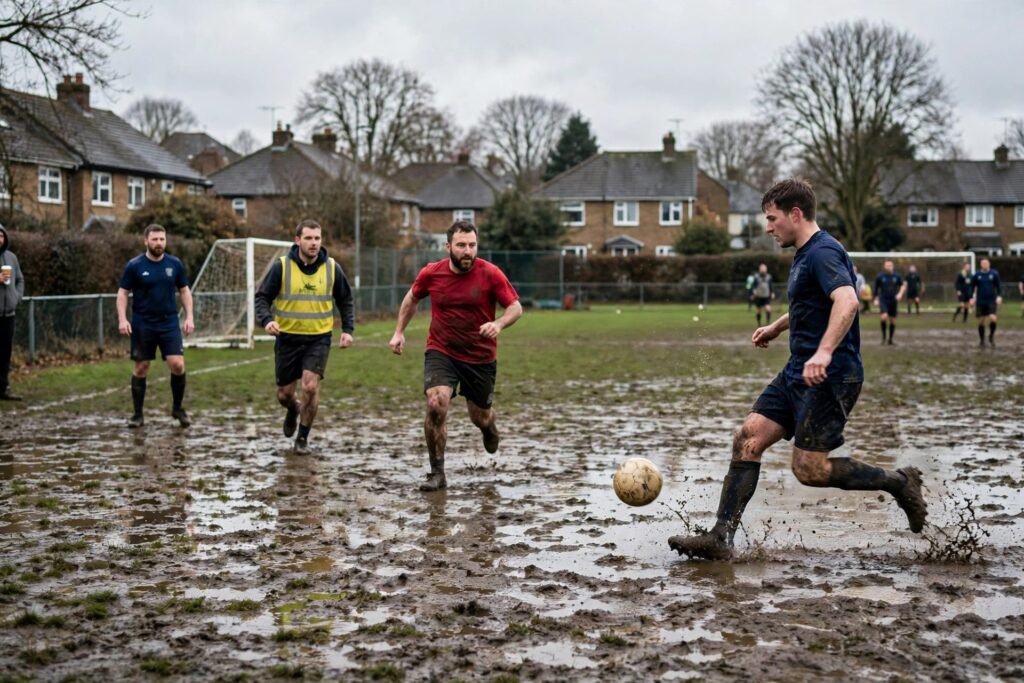
Joining a local football league sounds like the easiest decision of the summer, right up until the first month exposes every shortcut taken in preparation.
The common thread behind early struggles is rarely talent, because most newcomers fail on preparation, honesty and recovery rather than ability with a ball. Building a sensible base matters, and understanding how much exercise adults really need each week gives a realistic yardstick for the weeks before joining a local football league, when enthusiasm alone can easily push a returning player into doing far too much, far too soon, and paying for it before the season has properly begun.
Turning Up Unfit and Hoping to Hide
The mistake is assuming that general fitness from the gym, from cycling or from occasional running will carry you through a match. Football fitness is specific, built on repeated short bursts, sharp changes of direction and brief recoveries that never quite feel long enough. A player who arrives without that base spends the match chasing the game a yard behind play, and the effort of catching up drains what little sharpness they brought with them onto the pitch.
The correct way is to build gradually over several weeks before the first competitive game. Short interval sessions, where you run hard for a brief spell and then jog or walk to recover, prepare the body far better than one long steady plod. Add simple strength work for legs and core, keep at least one full rest day between harder sessions, and increase the load in small steps so that joints and muscles adapt instead of complaining all at once.
Honesty helps here as much as effort. If you have not played for years, tell the manager exactly where your fitness stands and accept shorter spells from the bench while you build up. Teams respect a newcomer who manages their minutes sensibly far more than one who hides a lack of fitness, fades badly after half time and then misses the next month with a strain that a gradual start would probably have avoided altogether. A simple training diary helps here, recording each session honestly so that progress is visible on the page rather than guessed at in the changing room, and so that a sudden jump in effort stands out clearly before tired legs turn it into an injury.
Choosing a Team Above Your Honest Level
The mistake is joining the highest standard side that will take you, flattered by the invitation and reluctant to start lower down. Local football has clear layers, from relaxed small sided kickabouts through to highly organised Saturday leagues where pace, physical contact and tactical discipline all rise together. A newcomer playing above their honest level touches the ball rarely, makes decisions under pressure they are not ready for, and can lose confidence with every passing week of the season.
The correct way is to start where you can contribute and grow. Train with a side a few times before committing, watch a full match from the touchline, and judge whether you can follow the speed of thought as well as the speed of running. Most clubs welcome trial sessions, and a good manager will give a frank view of where you fit. Playing regularly at the right level rebuilds touch, awareness and belief far faster than surviving as a passenger higher up.
Moving up later remains entirely possible. A season spent playing every week, learning positioning and enjoying the game again gives you the sharpness that higher level football demands. By contrast, a season spent on the bench of a stronger side, or being exposed in matches beyond you, often ends with a quiet decision to stop playing altogether. The level that keeps you involved, improving and looking forward to the next fixture is the right level for now, whatever your pride whispers at the start.
Ignoring Kit, Boots and the State of the Pitch
The mistake is treating kit as an afterthought, buying eye catching boots that suit a shop display rather than your feet, or arriving with footwear that has no grip for the surface in front of you. Park pitches in Britain change with the weather, from firm and fast in early autumn to heavy and cutting up badly in midwinter. Boots chosen without regard to that reality slip, dig in at the wrong moment or rub blisters that turn a simple run into a painful hobble.
The correct way is to match footwear to surface and fit above all else. Moulded studs suit firmer natural grass, longer removable studs suit genuinely soft winter ground where the rules allow them, and trainers designed for artificial surfaces suit the synthetic pitches many leagues now use. Try boots on with proper football socks, later in the day when feet have spread a little, and walk and jog around in them. Toes should have room without the heel lifting as you move.
Kit care matters across the season too. Break new boots in during training rather than unveiling them on match day, dry wet boots slowly away from direct heat so the material does not crack, and keep a basic kit bag ready with socks, shin pads, tape and a spare pair of laces. Shin pads are not optional decoration, since even friendly leagues produce accidental kicks, and arriving without them can mean watching from the side while a borrowed, ill fitting pair ruins someone else afternoon as well as your own.
Arguing With Officials and Burning Bridges Early
The mistake is carrying professional habits from the television into grassroots football, surrounding the referee, disputing every throw and treating dissent as part of the performance. Local leagues depend on a small pool of officials who give up their weekends so matches can happen, and a newcomer who argues constantly marks themselves out within weeks. Captains notice, managers notice, and the reputation follows you between clubs far faster than any good performance does in those early months.
The correct way is to let the captain speak and to keep your own counsel, however wrong a decision feels in the moment. Referees at this level work alone, without assistants watching every line or replays to rescue a tight call, so honest mistakes are part of the bargain everyone accepts by playing. A quiet word at half time from the captain achieves more than a crowd of complaints, and accepting decisions quickly lets your own team reset while opponents are still arguing among themselves.
There is also a practical cost to losing control. Dissent can bring cautions, sin bins in some competitions and fines that the club passes back to the player under its own rules. Beyond discipline, constant arguing drains the enjoyment from teammates who joined for exercise and company rather than confrontation. New players earn trust by being dependable in temper as well as effort, and the sides that last for years are almost always the ones where respect for officials is treated as a basic standard, not a weakness.
Skipping Warm Ups and Paying for It Later
The mistake is drifting onto the pitch minutes before kick off, standing still through the team talk and then sprinting at full effort on cold muscles. Hamstring strains, groin pulls and twisted ankles cluster in exactly those opening minutes, and older players returning after a long break are the most exposed of all. A warm up can feel faintly embarrassing beside more casual teammates, yet the player who skips it is gambling a month of the season on saving a few minutes of gentle running.
The correct way is unglamorous and well established. Arrive with time to spare, begin with easy jogging to raise your temperature, then move through dynamic movements such as leg swings, walking lunges and gentle side steps that take joints through their full range. Build towards short accelerations that approach match speed without reaching it too early, and include some passing at increasing tempo so touch and body warm together. The whole routine takes a modest slice of the morning and feels routine within a few weeks.
Cooling down deserves the same respect after the final whistle. A few minutes of walking and gentle stretching while the body is still warm helps stiffness the following day, and being honest about a tight muscle during the warm up can prevent a tear during the match. If something feels wrong before kick off, saying so early gives the manager options. Playing on in silence and breaking down early helps nobody, least of all the player facing weeks of watching instead of playing.
Drifting Away When the Honeymoon Ends
The mistake is vanishing once the novelty fades, when the weather turns, results dip and the group chat demands replies at inconvenient hours. Every squad plans around expected numbers, and a player who stops answering messages leaves teammates scrambling for cover on the morning of a match. Reliability is the quiet currency of grassroots football, and newcomers who spend it early find that invitations, starting places and lifts to away grounds quietly dry up even if their ability was never in doubt.
The correct way is to commit honestly from the outset and communicate early when life intervenes. Tell the manager before signing what your work pattern, family duties and other commitments realistically allow, and give as much notice as possible for any match you cannot make. Teams cope comfortably with a player who misses the occasional fixture with warning. What damages a squad is silence, late dropouts and a pattern of turning up only for the fixtures that suit you on fine weekends.
Staying involved also protects your own enjoyment. Form in grassroots football rises and falls, and the players who remain through a poor run are the ones who share the lift when results turn. Turning up to training on a wet evening, helping with nets and corner flags, and supporting from the bench when you are not starting all weave you into the fabric of the club. That belonging, far more than any single result, is what keeps adults playing happily season after season well beyond the first summer of enthusiasm. Looking after the social side deliberately, sharing lifts, welcoming the next newcomer and staying for a drink or a meal after the match, turns a loose squad into a group that people genuinely plan their weekends around.