Playing Badminton for Cardio: 9 Beginner Mistakes to Avoid
Top mistakes to avoid when playing badminton for cardio: warm-ups, footwear, technique errors and how to get a real workout from the UK's favourite racket sport.
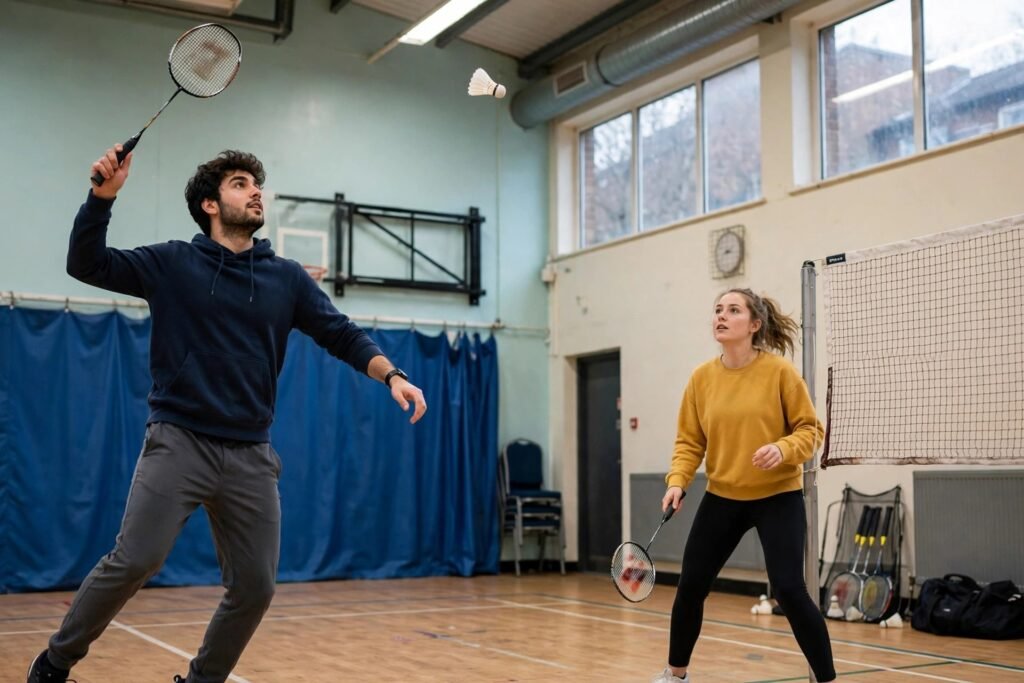
Village hall, net, shuttlecock — the scene looks like a gentle pastime, and that is exactly the trap. A proper singles game is one of the most demanding workouts available without a gym: constant lunging, sprinting, jumping and twisting, all while tracking an object that moves faster than the eye expects. Most casual players never meet that version of the game, because they treat it as a stroll. They skip the warm-up, wear the wrong shoes, grip the racket like a hammer and wonder why their shoulder aches on Monday. The difference between a knockabout and a workout is intent, and intent starts with knowing the mistakes before you make them.
The best cardio is the game you actually keep playing, week after week, which is why a lasting habit matters more than a heroic session. A single furious evening on court means little if the shoulder aches for a fortnight afterwards, while a steady weekly game that you enjoy will still be paying off a year later. That is why how to build a daily walking habit that lasts belongs in the same conversation as any workout plan: the habit is the engine, and the sport is only the fuel. Badminton earns its place in that engine because it is fast, social and genuinely demanding, but only when it is played with intent rather than drifted through.
Why Badminton Counts as Real Cardio
A proper singles game is one of the most demanding workouts available without a gym membership. The rallies are short, sharp bursts: lunge, recover, sprint to the back, jump, twist, and do it again before the breath has settled. The heart rate climbs and stays up through the game, the legs work through constant changes of direction, and the shoulders and core work on every overhead shot. It is interval training disguised as a game, and the disguise is exactly why it works for people who would never last ten minutes on a treadmill. The score keeps the mind busy while the body does the work.
The social side belongs to the fitness, not apart from it. A court booked with a regular partner builds a commitment no solo workout can match, and the rallies demand focus, which stops the mind from counting down the minutes. As skill grows, rallies stretch, intensity climbs and the workout deepens without conscious effort to push harder. That is the quiet edge a racket sport holds over a machine: skill and fitness rise together, each feeding the other, and the game stays fresh for years.
The Nine Mistakes in the Order They Bite
Treating it as a gentle stroll, not training. How hard badminton works the body depends on how hard you play it, and that takes intent. Gentle rallies broken by long chats between points barely lift the heart rate past a brisk walk, and an hour spent that way is pleasant without counting as training. A real workout needs rallies that keep going, with genuine movement: proper singles or lively doubles, played with purpose, brief pauses between points, and a promise to chase every shot instead of admiring the ones that sail past.
A little structure changes everything. Play games where the score matters, keep the gaps between games brief, and agree with your partner that both of you will chase everything. An hour of competitive singles, played properly, keeps the heart rate up in the aerobic range through most of the game and leaves the legs with no doubt about the effort.
Skipping any warm-up, shoulders especially. The overhead smash is a fierce, ballistic action, and a cold shoulder never forgives it. Ankles must handle lunges and sudden turns, while Achilles tendons soak up every jump, so the sport punishes anyone who arrives unprepared. Walking in and hitting full-power smashes in the opening minute is how seasons end in the first week, and none of it needs to happen.
Allow a good ten minutes before playing properly. Start with light movement that raises your temperature, then arm circles that grow gradually to full range, wrist rotations, and lunges with a gentle twist. Build your practice clears slowly, from soft to firm, and save the full-power smashes for when the shoulder feels warm and loose.
Wearing running shoes on court. Trainers built for running invite a twisted ankle on a badminton court at the worst moment. The game demands sideways movement, lunges and pivots, while running shoes are made for forward motion, with tall, grippy soles that resist every lateral step. The outcome is rolled ankles, or knees taking forces the shoe ought to have handled. Poor footwear makes a safe sport risky for no reason at all.
Proper court shoes transform the game completely. They carry flat soles that will not mark the floor, with side support and a low profile that holds the foot steady through lunges and direction changes. They are the best-value purchase in the sport, beating any racket upgrade for sheer usefulness, and they survive years because they are worn only indoors.
Death-gripping the racket. New players often squeeze the handle as though it were a hammer, with a stiff arm and a tense shoulder, and that tension spoils every shot it touches. Real power comes from a loose, whipping action rather than brute arm strength, so a white-knuckle hold drains power while overloading the elbow. The nagging ache on the outer elbow that troubles keen beginners usually traces back to this single habit, and once it settles in it can linger for months. A rigid arm also ruins feel, turning the soft shots at the net into clumsy swipes.
The proper hold feels strange at first, which is why so many players stick with the wrong one. Grip tightly enough that the racket stays in your hand, yet loosely enough for the wrist to flick freely at the moment of contact — imagine cradling a small bird without squeezing it. The force comes from turning the forearm and snapping the wrist, not from clenching the handle. It feels awkward for a few weeks, then one day it clicks, and the shuttle sails deep while the arm stays relaxed.
Running to the shuttle instead of moving properly. Watch a beginner and you will see them chase the spot where the shuttle already is, arriving off balance and swiping from an awkward position. Watch a skilled player and you will see them drift toward where it is heading, take a quick hop-step as the opponent strikes, and arrive settled with time to pick a shot. Footwork is the quiet engine of the game: moving well spends less energy per rally, which buys longer, fitter sessions and fewer desperate lunges.
A few basics will carry you a long way. The split step means a small hop as the opponent strikes, loading the legs so they can spring in any direction. The side-step shuffle handles sideways movement without crossing the feet. Lunging rather than running reaches shots at the front, with the racket leg forward and the body low. Master just the split step and a sound lunge and each rally costs half the energy, so the game starts to feel like gliding instead of chasing.
Playing through the wrong pain. Keenness for cardio meets the reality of overuse in shoulders, elbows, knees and Achilles tendons, and each of those spots breaks down in its own way when training load climbs too quickly. The rule is easy to say and hard to obey: tired muscles and heavy breathing are fine, but sharp, localised or one-sided pain means stop. Shoulder pain on smashes, elbow pain on backhands and knee pain on lunges are all signals to stop and assess, not tests to push through. Carrying on regardless turns a short rest into months of treatment.
Build volume gradually, starting with one session a week and adding more only when the body has adapted. Strengthen the rotator cuff and the calves with simple exercises before they complain, and respect rest days as part of training rather than as time off.
Fuelling like it is not exercise. Since it feels like play rather than training, players forget they are exercising: no water because it lasts only an hour, no food beforehand because they will eat later, then shaky hands and a foggy head from low blood sugar halfway through. An hour of hard badminton drains the body’s fuel like any other cardio workout, and your body makes no allowance for the fact that the workout came with a net and a laugh. Turning up hungry and thirsty wrecks the second half of the session.
Handle the session as the workout it is. Have a proper meal a few hours beforehand, or a banana and a drink an hour before if the meal sits too far away. Keep water beside the court and sip through the session, not only at the end, because thirst trails behind need. A fed, hydrated player moves better, thinks faster and enjoys the game more — enjoyment is the whole point.
Never improving, year after year. The last mistake is quiet, and it ends more badminton habits than any sprain or strain. Players repeat the same patterns for years, rallies stay short, fitness stalls and interest fades. The game stops offering anything fresh, so the weekly session quietly slips out of the diary. Badminton repays skill development with stronger workouts: as technique grows, rallies stretch, intensity climbs and the cardio benefits build without any extra effort.
Break the plateau on purpose. Book a few beginner lessons, then join a club night where stronger players stretch your game, or sign up for a low-level tournament where the score suddenly counts. Getting better rekindles interest, and interest keeps the habit alive through the months when willpower alone would fail.
Skipping the cool-down entirely. The last mistake arrives at the end of the session, when the final point is played and everyone reaches for their bags. Walking straight out of a hard game into a cold car leaves the muscles tight, the heart rate dropping suddenly and the next day stiffer than it needs to be. The body has just worked hard; it deserves a few minutes to come down gently, and those minutes cost nothing.
Spend a few minutes after play moving slowly: gentle rallies at half pace, easy walking around the hall, and slow stretches for the shoulders, calves and hips while the muscles are still warm. Drink water, change out of the damp shirt, and let the breathing settle before driving home.
Playing With Intent From Now On
The fix for every one of these nine mistakes is the same word: intent. Decide before the session that it is a workout, warm up like one, wear the proper court shoes, hold the racket loosely, move with purpose, respect pain, eat and drink like an athlete, keep improving, and cool down when it ends. Together they turn a pleasant knockabout into one of the most enjoyable and truly sustainable cardio workouts available, and they keep you on court for years instead of weeks.