
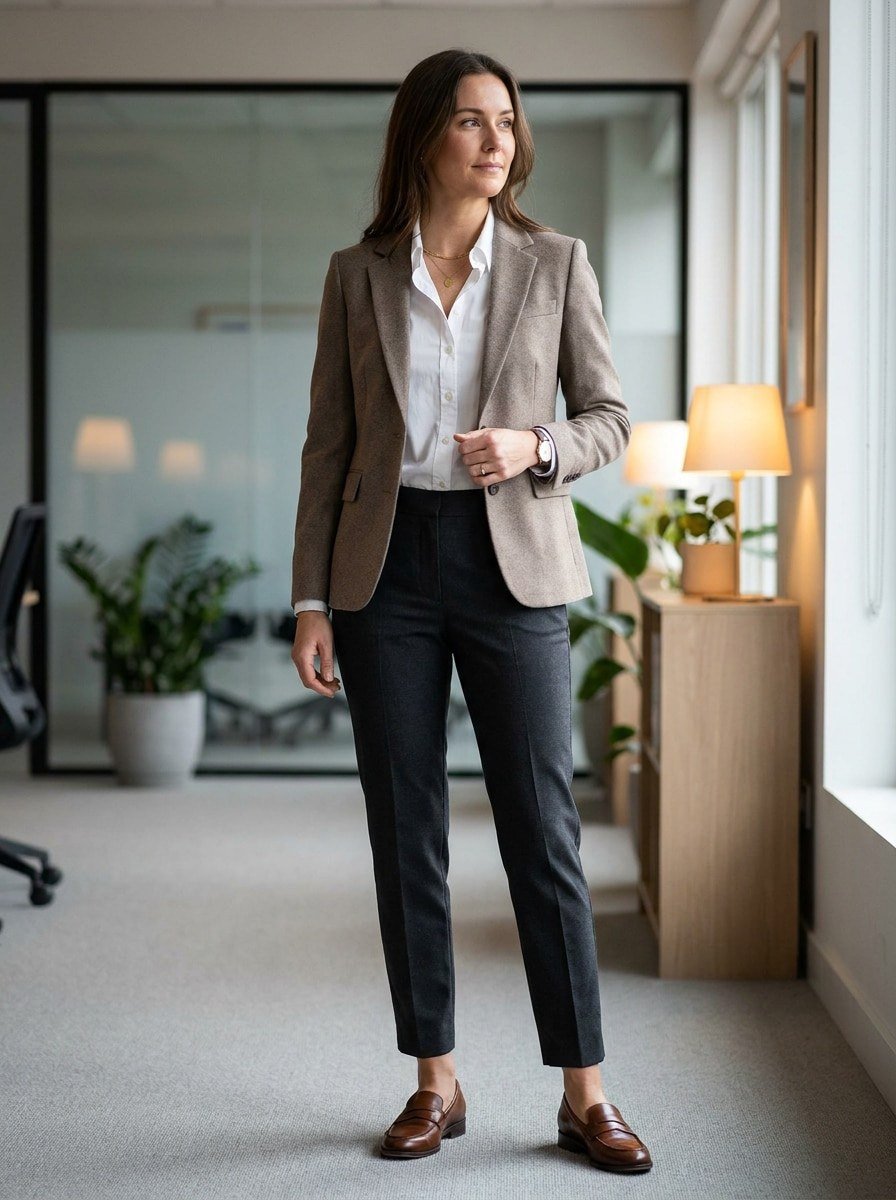
How can I Dress Smart Casual for the Office
“Smart casual” is the most confusing dress code in the British workplace. Too smart and you look like you’re interviewing; too casual and you look like you misread the memo. And every office defines it differently — smart casual at a City law firm and smart casual at a Shoreditch startup are barely the same language. If you’re navigating a new job, a dress-code change, or just the daily “what do I wear” dilemma, here’s how to dress smart casual for the office in a way that’s polished, appropriate, and still feels like you.
What Smart Casual Actually Means
Think of it as a spectrum, not a fixed outfit. At its core, smart casual means: polished and put-together, but not formal. No full suits, no ties (usually), but also no jeans-with-holes, no gym wear, no flip-flops. The sweet spot is “I made an effort, but I’m comfortable and modern.” When in doubt, observe what senior people wear and aim slightly smarter — never smarter than the CEO on day one, never more casual than the intern.
The Smart Casual Building Blocks
Tops
- Shirts: Oxford shirts, linen shirts, quality flannel — tucked or untucked depending on formality. The backbone of men’s smart casual.
- Knitwear: merino crew necks, fine-gauge roll necks, quarter-zips — layered over shirts or worn alone. A navy merino jumper is the hardest-working item in smart casual.
- Blouses and tops (women): silk-feel blouses, quality knit tops, Breton stripes, structured shells. Avoid anything too low-cut, sheer, or slogan-printed.
- Polo shirts: acceptable in most smart-casual offices, especially pique cotton in solid colours. Not for client meetings.
Bottoms
- Chinos: the smart-casual trouser. Navy, stone, olive, charcoal — well-fitting, not baggy, not skin-tight.
- Tailored trousers: dress them down with knitwear instead of a blazer.
- Dark jeans: controversial and office-dependent. If allowed: dark indigo or black, no rips, no fading, no distressing — and pair them with smarter pieces (blazer, proper shoes) to balance. When unsure, chinos are safer.
- Skirts and dresses (women): midi skirts, tailored dresses, smart jumpsuits — knee-length or longer, not bodycon-tight.
Layers
- Blazers: the smart-casual superpower. An unstructured blazer over a tee and chinos instantly reads “office.” Navy, grey, or textured (hopsack, linen) — avoid shiny suit jackets worn as separates.
- Cardigans and overshirts: fine-knit cardigans, quality overshirts — relaxed but tidy.
Shoes
- Loafers: the definitive smart-casual shoe — penny, tassel, or chunky-soled.
- Brogues and Derbies: classic, safe, always appropriate.
- Minimal trainers: clean white or neutral leather trainers work in relaxed offices — but they must be pristine. See keeping white trainers white.
- Ankle boots / Chelsea boots: excellent autumn/winter smart casual.
- Women: loafers, ballet flats, block heels, smart ankle boots — comfortable enough for commuting, polished enough for meetings.
Five Foolproof Smart Casual Outfits
- Men: navy chinos + white Oxford shirt + brown loafers. The uniform that never fails.
- Men: charcoal tailored trousers + merino roll neck + Chelsea boots. Winter-perfect.
- Women: black tailored trousers + silk-feel blouse + pointed flats + structured bag.
- Women: midi skirt + fine-knit jumper + ankle boots. Comfortable, polished, versatile.
- Either: dark jeans (if allowed) + blazer + quality tee/shirt + loafers. The jeans are balanced by everything else being smart.
Smart Casual Mistakes to Avoid
- The “half suit”: suit trousers with a t-shirt looks confused, not casual. Commit to separates designed as separates.
- Too many casual elements at once: jeans + trainers + t-shirt = just casual. Limit yourself to one or two relaxed pieces per outfit, balanced by smarter ones.
- Ignoring fit: smart casual lives or dies on fit — baggy chinos and shapeless knitwear look sloppy, not relaxed.
- Neglecting grooming: the more casual the clothes, the more grooming matters. Tidy hair and clean shoes carry casual outfits.
- Forgetting the meeting test: always be ready for an unexpected client meeting or video call. If your outfit would embarrass you on camera with a client, it’s too casual. (For camera-specific advice, see what to wear for video interviews — the principles transfer.)
Adapting to Your Specific Office
Smart casual at a bank means something different from smart casual at a charity. In your first two weeks, observe and calibrate: note what your manager wears, what client-facing colleagues wear, and what’s normal on Fridays vs Mondays. It’s always easier to dress slightly up and relax down than the reverse. And if you’re starting a new role, our job interview outfit guide covers the pre-employment side of the same challenge.
Smart Casual Across the Seasons
- Spring: the transitional challenge — light layers, no heavy coats. Trench or light jacket over knitwear; loafers replace boots; introduce lighter colours (stone chinos, pastel knit). Keep an umbrella at the office — spring rain is inevitable.
- Summer: breathable fabrics (linen shirts, cotton chinos), no-show socks with loafers (or proper socks — the no-show debate is tribal; choose your side), short-sleeve shirts acceptable in relaxed offices (never for client meetings). The heat rule: if you are visibly sweating, the outfit has failed regardless of dress code. Our British weather guide covers the rainy-summer contingency.
- Autumn: smart casual’s best season — layering weather. Roll necks under blazers, Chelsea boots, textured fabrics (flannel, corduroy, knit). Rich colours: burgundy, forest, mustard.
- Winter: the coat becomes the outfit — invest here. Dark overcoat or quality parka over your smart casual base. Thermal base layers under shirts on the coldest days (invisible, transformative). Boots replace loafers; scarves add polish.
The seasonal capsule approach: you do not need four wardrobes — you need a core (trousers, shirts, shoes) plus seasonal layers that rotate. Store off-season pieces properly (see small wardrobe organisation) and each season feels fresh without new spending. For keeping the whole operation affordable year-round, MoneySavingExpert’s clothing money-saving tips are worth a regular browse — smart casual should not require a luxury budget.
Smart casual isn’t a dress code to fear — it’s freedom with boundaries. Learn the building blocks, keep one eye on your office’s specific culture, and build a small rotation of outfits you don’t have to think about. Mornings get easier, you always look appropriate, and you never again have that “am I overdressed or underdressed?” anxiety in the lift.