
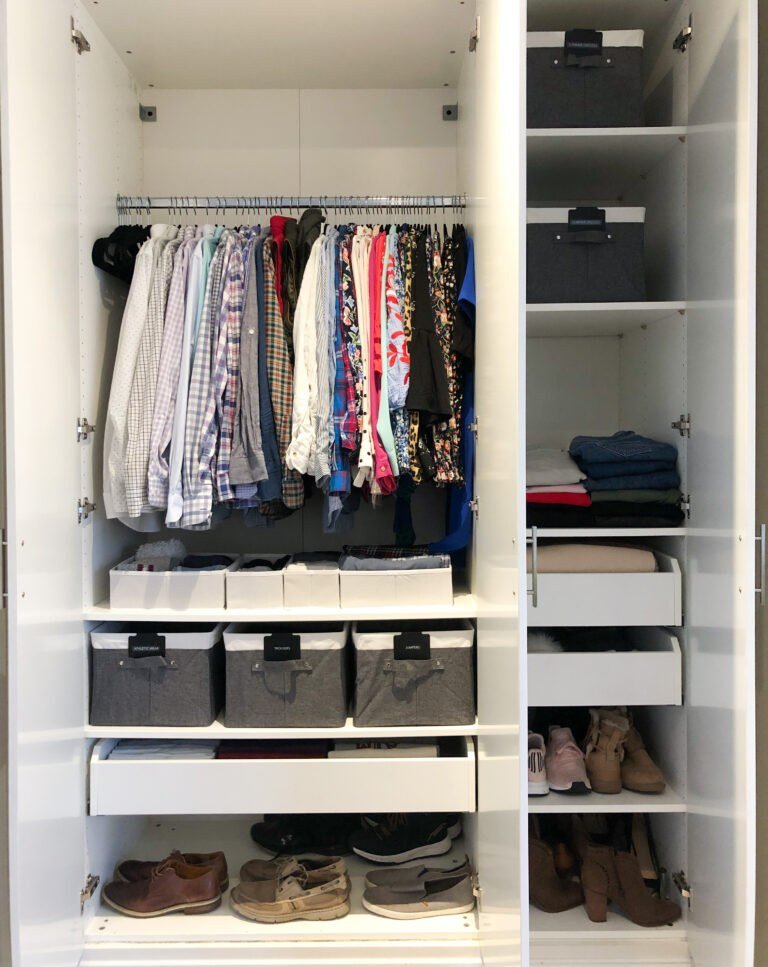
What is the Best Way to Organise a Small Wardrobe
British homes aren’t known for generous wardrobes — a single built-in cupboard, a freestanding rail, or (if you’re renting in London) a corner of the bedroom optimistically called a “dressing area.” Organising a small wardrobe isn’t about clever storage products (though some help); it’s about ruthless editing, smart systems, and making everything visible. A well-organised small wardrobe beats a chaotic large one every time. Here’s how to do it.
Step 1: Edit Ruthlessly (the Uncomfortable Part)
No organisation system survives too many clothes. Before buying a single hanger, declutter:
- The one-year rule: haven’t worn it in a year? It goes (exceptions: occasionwear, maternity, genuinely sentimental).
- The fit test: try everything on. “Might fit again one day” is storage, not wardrobe — box it separately or let it go.
- The duplicate test: five black tops? Keep the best two.
- The feeling test: hold each item — does it make you feel good? “Meh” is a no.
Donate, sell (see selling unwanted clothes online), or textile-recycle the rest. Most people remove 30–40% — and instantly feel richer in wearable clothes. For the full declutter-and-rebuild approach, Sofeminine’s wardrobe declutter guide pairs the clear-out with capsule rebuilding.
Step 2: Zone Your Wardrobe
Divide the space by function, not by whim:
- Prime real estate (eye level, easy reach): what you wear weekly — work clothes, favourite casual pieces.
- Upper shelves: out-of-season, occasionwear, less-worn items (in labelled boxes).
- Lower areas: shoes, bags, folded knitwear.
- Doors/inside panels: hooks for tomorrow’s outfit, belts, scarves.
Step 3: The Hanging System
- Matching slim hangers: the single biggest visual upgrade — velvet slim hangers (£10 for 30) save space and stop clothes slipping. Ditch the wire/plastic chaos.
- One item per hanger: doubling up hides clothes and creases them.
- Hang by category, then colour: all shirts together, arranged light to dark; then trousers; then dresses. You can find anything in seconds.
- Face the same direction: sounds obsessive; looks transformative.
- Double hanging: install a second rail below the first (tension rods, £8–£12) — tops above, trousers/skirts below. Doubles capacity instantly.
- The hanger trick: turn all hangers backwards; after wearing, hang normally. In 3 months, backwards hangers = unworn = candidates for removal.
Step 4: Folding and Drawer Systems
- File folding (KonMari): fold clothes into rectangles and stand them upright in drawers like files — everything visible, nothing buried. Transformative for t-shirts, knitwear, and jeans.
- Drawer dividers: cheap spring-loaded dividers or simple boxes keep categories separated.
- Knitwear folded, never hung: hanging stretches knits. Fold and stack (max 3–4 high) or file-fold in drawers.
- Underwear/socks: small boxes or drawer organisers — the “sock drawer of chaos” is optional, not mandatory.
Step 5: Seasonal Rotation
The small-wardrobe superpower: only the current season lives in the wardrobe.
- Pack off-season clothes in vacuum bags or labelled boxes, stored under the bed, on top of wardrobes, or in a loft.
- Rotate twice a year (October and April-ish) — it’s also a natural declutter moment.
- Clean everything before storing (moths love body oils and food stains).
- This effectively doubles your wardrobe space and makes getting dressed dramatically easier.
Step 6: Shoes, Bags, and Accessories
- Shoes: a hanging shoe organiser on the door, stackable clear boxes, or an under-bed box. One pair per slot — no pile.
- Bags: stuffed and upright on a shelf (see handbag storage for the full method).
- Accessories: hooks inside wardrobe doors for belts/scarves; a small tray or box for jewellery; sunglasses in a case, not loose.
Small Space Hacks
- Freestanding rail: if the built-in wardrobe is tiny, a sturdy garment rail (£20–£30) in the bedroom adds hanging space and looks intentional (keep it tidy — it’s visible).
- Over-door hooks: for robes, tomorrow’s outfit, bags.
- Under-bed storage: shallow boxes for shoes, off-season, or rarely-worn items.
- Vertical space: shelves above the wardrobe, high hooks — use the full height.
- Bedside caddy: for the “chairdrobe” items (the worn-once jeans) — contains the floordrobe.
Maintain the System
- One in, one out: new purchase? Something leaves. This is the rule that prevents re-cluttering.
- Weekly 5-minute reset: rehang strays, refold the drawer explosion, return shoes to homes.
- Seasonal audit: each rotation, remove what you didn’t wear.
The 15-Minute Weekly Reset
Organisation decays — the weekly reset prevents collapse. Every Sunday (or whenever suits), 15 minutes:
- Minutes 1–3: The sweep — collect every item of clothing from chairs, floors, and the bathroom. The “chairdrobe” gets emptied.
- Minutes 4–6: Sort — washing pile, rehang, refold. Be honest: the “worn once, could wear again” items either go back properly or go in the wash. No middle ground (the middle ground is the chair).
- Minutes 7–9: Rehang and refold — everything back in its zone, hangers facing the same way, drawers re-filed.
- Minutes 10–12: Shoes and accessories — shoes back in homes, bags stuffed if needed, jewellery untangled, sunglasses in cases.
- Minutes 13–15: Plan the week — check the forecast, lay out Monday’s outfit (or the week’s, if you are ambitious). Future-you starts Monday dressed and calm.
Do this weekly and the wardrobe never reaches chaos — maintenance beats rescue every time. Skip it for a month and you are back to the floordrobe and the morning panic. Fifteen minutes, once a week, is the entire difference between an organised wardrobe and an aspirational one. Put it in your calendar as a recurring event; treat it like the appointment it is.
When to Reorganise: The Triggers
Do a full reorganisation when: seasons change (swap the heavy/light pieces), you notice the floordrobe returning (systems have failed, not you — redesign them), getting dressed takes more than 10 minutes regularly (decision friction means the organisation is not working), or you buy something significant (integrate it properly rather than stuffing it in). A seasonal reset — 30 minutes, twice a year — keeps the system honest. Organisation is not a one-time event; it is a rhythm.
If the small wardrobe is part of a smaller-space lifestyle, these principles scale — and if you’re packing for trips from your newly organised wardrobe, our city break packing guide applies the same “visible, versatile, edited” logic to a suitcase. A small, organised wardrobe isn’t a compromise — it’s an advantage. Less choice, less clutter, better outfits, faster mornings. The large chaotic wardrobe is the real problem.