
How do I Dress for Unpredictable British Weather
It’s May. The forecast says 18°C and sunny. You leave in a t-shirt. By 2pm it’s hailing. By 4pm it’s 21°C again and you’re carrying a coat you didn’t need, wearing sunglasses you do, and questioning every life choice. Dressing for unpredictable British weather isn’t about owning more clothes — it’s about a system: layers that adapt, fabrics that cope, and always, always having a contingency. Here’s how to dress for British weather without checking the forecast seventeen times a day.
The Layering System (the Whole Secret)
Forget “outfits” — think systems of 3–4 layers you can add or remove as the day changes:
- Base layer: what touches your skin — breathable, moisture-wicking. Merino, cotton, or technical fabric. Avoid cotton in heavy rain scenarios (it stays wet and cold); merino or synthetic base layers regulate temperature far better.
- Mid layer: insulation — jumper, fleece, cardigan, or light quilted jacket. This is your temperature dial: add or remove as needed.
- Outer layer: weather protection — waterproof (not just water-resistant) jacket or coat. The single most important item in a British wardrobe.
- The emergency layer: a packable extra — ultralight down gilet, packable rain jacket, or even just a compact umbrella — that lives in your bag “just in case.”
The magic: with three layers available, you’re comfortable from 5°C to 20°C without changing clothes. That’s the entire British weather range on most days.
The Non-Negotiable Kit List
- A proper waterproof jacket: not “showerproof,” not “water-resistant” — waterproof (taped seams, 10,000mm+ rating). This is the highest-ROI clothing purchase in Britain. A packable one lives in your bag year-round.
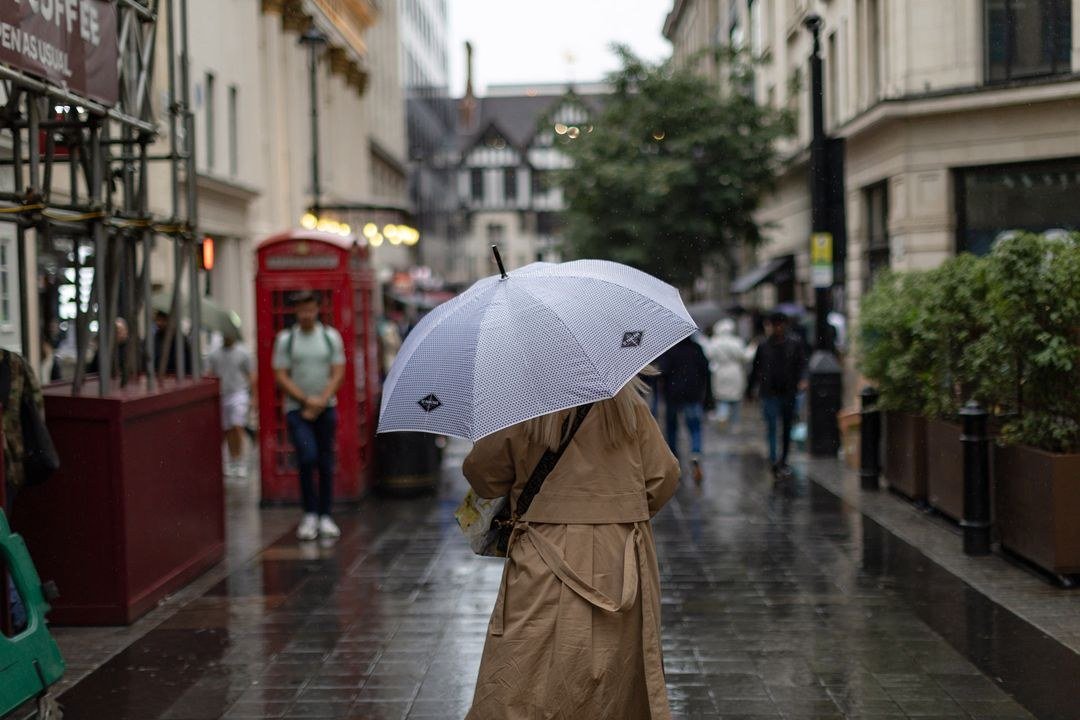
- An umbrella: compact, windproof (cheap umbrellas invert in the first gust — spend £15+ on a windproof one). Lives in your bag, always.
- Layers in your bag: a light scarf and a packable mid-layer cover most surprises.
- Footwear with grip and water resistance: leather boots, waterproof trainers, or wellies for truly grim days. Suede and canvas are fair-weather friends only.
- A hat: you lose disproportionate heat from your head; a packable beanie or cap covers sun and cold.
- Sunglasses: British sun, when it appears, is blinding — low winter sun especially. See choosing sunglasses for your face shape.
Season-by-Season Playbook
Spring (March–May): the trickster
The most unpredictable season. Mornings near freezing, afternoons t-shirt weather, sudden downpours. Strategy: full layering system, waterproof always in bag, sunglasses always in bag. Dress for the afternoon, carry for the morning.
Summer (June–August): the gamble
Could be a heatwave, could be 14°C and horizontal rain — sometimes in the same week. Strategy: summer clothes as base, but always carry a light waterproof and a layer. The British summer holiday packing mistake is assuming summer — our city break packing guide is built around this reality.
Autumn (September–November): the steady decline
Gradually wetter, windier, darker. Strategy: transition to proper coats, waterproof footwear becomes daily, layers thicken. The “one more week of the light jacket” denial phase claims everyone eventually.
Winter (December–February): the honest season
Cold, dark, wet — but at least predictable. Strategy: proper winter coat (see wool coat care — you’ll be living in it), thermal base layers for the coldest days, waterproof boots, hat/scarf/gloves as standard. And check the Met Office forecast for weather warnings — ice and snow need proper preparation, not just warm clothes.
Fabric Choices for British Weather
- Merino wool: the British weather fabric — warm when cold, cool when warm, odour-resistant, handles damp. Worth every penny for base layers.
- Technical synthetics: dry fast, good for rain-exposed layers.
- Avoid: pure cotton as an outer layer in rain (absorbs water, stays cold); suede shoes in wet weather; anything “dry clean only” as daily wear in mud season.
- Jeans: fine in dry cold, miserable when soaked (denim holds water). In persistent rain, switch to technical trousers or waterproof over-trousers.
The Mindset Shift
Stop dressing for the forecast and start dressing for range. The forecast says 16°C and cloudy? Dress for 10–20°C with rain possible. This feels like over-preparation until the first time you’re the comfortable one while everyone else is shivering or soaked. The Brits who look effortlessly prepared aren’t lucky — they’re layered.
And for footwear pairing through the seasons, our winter midi shoe guide covers the style side of weather-practical dressing.
The Emergency Weather Kit for Your Bag
Keep this in your everyday bag from October to April (and arguably year-round) — it weighs almost nothing and has saved thousands of commutes:
- Compact windproof umbrella (£12–£18): the cornerstone. Cheap umbrellas invert in the first gust and become litter; a windproof one survives actual weather.
- Packable waterproof jacket or poncho: ultralight packable rain jackets (£20–£30) compress to fist-size. Lives in the bag, deployed in seconds.
- Foldable tote bag: for the shopping you did not plan, or for protecting your good bag in downpours (put the good bag inside the tote).
- Spare socks (in a zip bag): wet feet ruin days; dry socks resurrect them. The most underrated item on this list.
- Microfibre cloth: for glasses, phone screens, and wiping rain off everything.
- Lip balm and hand cream sachets: wind and cold chap fast; prevention beats cure.
- Hair ties: wind + long hair = tangled misery. Two seconds, solved.
Total cost: under £40, most of it one-off. Total weight: under 500g. The number of times you will use it in a British year: countless. The smug satisfaction of being the prepared one while colleagues sprint for cover: priceless. British weather rewards the ready and punishes the optimistic — choose ready.
The Layering Formula That Never Fails
When the forecast is genuinely unknowable, default to three layers: a breathable base (cotton or merino), a warm mid-layer (jumper or fleece), and a weatherproof outer shell. Too warm? Lose the mid-layer and tie it round your waist. Cold snap? All three on. Rain? The shell handles it. This formula works from 5°C to 18°C — which is to say, most of the British year. It is not fashionable, but it is never wrong, and you can refine it with colour and fit so it looks intentional rather than panicked.
Layers, a real waterproof, and an emergency kit in your bag. That’s the entire system. British weather stops being a problem and becomes just… weather. You’ll still complain about it, obviously — you’re British. But you’ll complain while warm and dry.