When Is the Best Time to Replace Windows in the UK?
The window gives itself away on the coldest evening of the year. A thin draught finds the edge of the curtain, the glass mists between its…
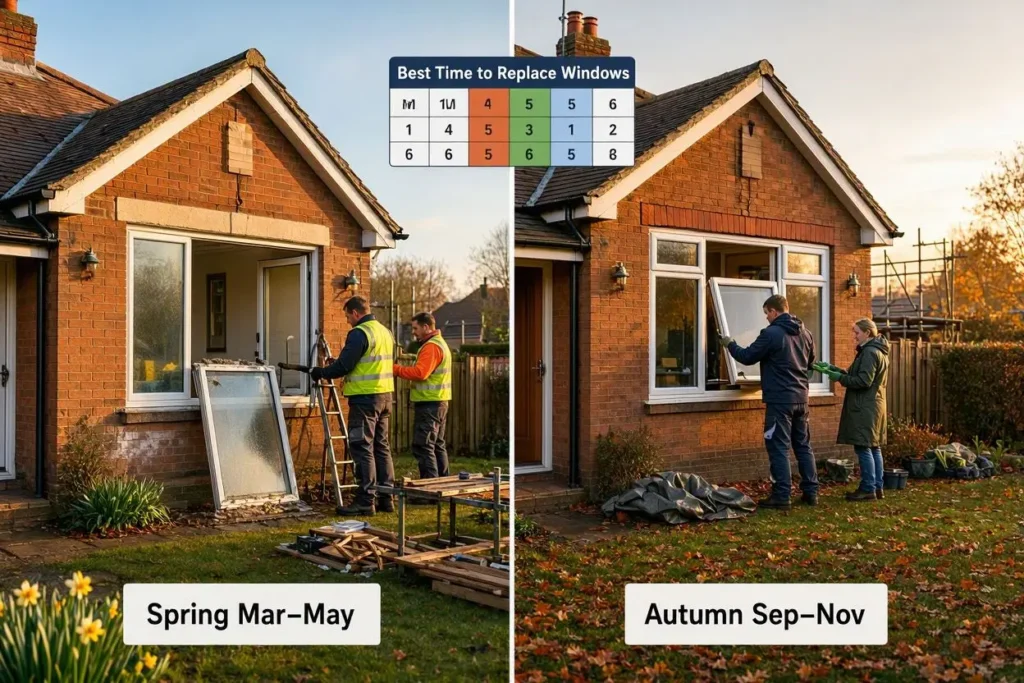
The window gives itself away on the coldest evening of the year. A thin draught finds the edge of the curtain, the glass mists between its panes no matter how often you wipe it, and the room never quite holds its warmth. By the time a window reaches that state, the question is rarely whether to replace it. The question is when, and the honest answer is more interesting than the obvious one.
Spring and early autumn offer the easiest weather for the work, and they are the seasons most installers and most homeowners would name first. Winter, though, is far better than its reputation, because diaries empty, dates come sooner and the benefit of new glass is felt the same evening it is fitted. Summer suits the largest jobs. What you are really choosing between is weather, waiting time and household disruption, and the balance shifts again once you understand how double glazing cost per window in the UK behaves across the year, since quieter months sometimes carry keener quotes while the busiest months carry the longest waits.
Spring under the microscope
Spring earns its popularity honestly. The weather turns milder and drier, the days lengthen, and opening a room up for fitting no longer means heating the street. Installers work comfortably, sealants behave as their makers intend, and a household can carry on around the job without wrapping itself in jumpers. New windows fitted in spring also arrive at the moment when a house is being opened up, cleaned out and looked at critically, so the improvement to its appearance lands when it will be most enjoyed.
The weakness of spring is that everyone shares the idea at the same time. Demand peaks, survey appointments fill, and the wait between ordering and fitting stretches, because most windows are made to measure rather than taken from a shelf. A household set on a spring fitting is really making a winter decision: quotes gathered, surveys booked and orders placed during the quiet months, so that the fitting date, when it comes, falls in the mild weather rather than somewhere in the backlog behind it.
Summer and the larger projects
Summer brings the longest days and the most forgiving conditions for big work. A whole house replacement, with many openings tackled in sequence, runs more smoothly when rain is unlikely to interrupt and when rooms stay comfortable while each window is out. Warm weather also means the household can decamp into the garden during the noisiest hours, which softens the disruption of a multi day job considerably.
Against that, summer remains a busy season, with waiting times and quotes reflecting the demand. Holiday cover thins the teams at many firms, so a job booked casually can drift. New windows fitted in summer are also usually chosen for winter performance, so their full value is not felt until the heating goes on. The season rewards households that plan early and confirm dates firmly, rather than those who begin ringing round in the middle of the school holidays.
Autumn, the season that suits most households
Early autumn is the quiet favourite among people who have done this before. September and October usually stay fairly dry and mild, while demand falls away after the summer rush, so surveys and fitting dates become easier to secure. The timing carries a practical prize as well: new windows fitted in early autumn are in place before the heating season begins in earnest, so the first cold evenings of the year are met with glass and frames that actually keep the warmth inside.
The season narrows as it goes on. By November the weather turns less reliable, daylight shrinks, and a job planned without any slack can slide into the least pleasant weeks of the year. The sensible use of autumn is therefore its first half. Aim for the early weeks, hold a little flexibility in reserve, and the season gives you most of what spring offers with a fraction of the competition for dates.
Winter, better than its reputation
Winter frightens people away from window replacement for one simple reason: the picture of a house standing open to the cold. That picture is wrong. Competent installers work through the house opening by opening, and modern sealants and frames are designed for fitting in any season. A room is exposed briefly, not for a day, and the household routine continues around the work with no more drama than a cool afternoon in one room.
What winter offers in return is considerable. It is the quietest season for most fitting firms, so dates arrive sooner after ordering, and some firms sharpen their quotes to keep their teams busy through the slow months. The improvement is also immediate in a way no other season can match. Draughts that were obvious in the morning are gone by the evening, condensation patterns change at once, and the rooms that prompted the whole project feel different from the first night. Winter has one further honesty to it: it shows you exactly which windows are failing. Cold spots, whistling frames and misted units cannot hide in January the way they can in June.
The drawbacks are real but modest. Rain can push outdoor work back by a day here and there, short days limit the hours a team can spend on site, and the room being fitted will feel cooler while its window is out. A jumper, a closed door and a kettle answer most of it. Weighed against faster dates and an immediate improvement to comfort, winter is not the season to endure. For many households it is the season to choose deliberately.
When the windows matter more than the calendar
Timing refines a replacement. It should never delay one that is already overdue. Certain signs mean the windows have stopped doing their job, and waiting for a prettier season simply extends the damage. Draughts felt around a closed frame, condensation trapped between the panes where no cloth can reach it, timber that has gone soft under peeling paint, and handles or locks that have become stiff or unreliable all belong on that list. So does a noticeable rise in the noise coming through the glass, and heating that seems to pour out of a house as fast as it is put in.
Condensation between the panes deserves a particular word, because it is so often treated as a cleaning problem. It is not. It means the seal on the unit has failed and the insulating layer inside it has gone with the seal. Wiping changes nothing. A window in that state is losing heat every hour of every day, and the arithmetic of delay is unkind: several extra months of heat leaking through failed glass can outweigh any saving a quieter season might have offered. If the windows fail in midwinter, replace them in midwinter.
Rules, certificates and permissions
Building regulations apply to replacement windows across England and Wales. Installers registered with the competent person scheme known as FENSA can certify their own work as compliant, and the householder receives a certificate once the job is complete. That certificate matters beyond the day itself, because it is normally asked for when the property is sold. Keep it with the deeds and other house papers rather than in a drawer of good intentions. Where an installer is not registered under such a scheme, the work needs to be notified to local building control instead. Scotland and Northern Ireland follow different arrangements, so the safe habit everywhere is to check the local position before the work begins, not after it ends.
Listed buildings and homes in conservation areas sit under a further layer of control. Permission may be needed before windows are changed at all, and the style, materials and method of opening can all be restricted. That process takes time, sometimes a great deal of it, and it can dictate your season for you. A household in a protected property should start with the local council, well before gathering quotes, because an early conversation costs nothing and a late discovery can stop a booked job in its tracks.
Materials, lead times and the shape of the booking
The material of the frames shapes the timetable as much as the season does. Standard uPVC windows suit most homes, need little looking after beyond cleaning, and are usually the quickest to be made. Timber suits period properties beautifully and repays regular care, but it is commonly made to order in a way that stretches lead times. Sash windows, especially for older houses, are typically built to measure, and measuring, making and fitting them is a longer road than swapping like for like in a modern opening.
However the frames are made, the sequence of a replacement runs the same way. Quotes come first, ideally several, compared on the same specification rather than on the headline amount alone. A survey follows, with each opening measured properly. The windows are then manufactured, which is where most of the waiting happens, and fitting day comes last. Replacing every window in one project usually works out more efficient per window than scattering the job across several years, and it spares the household repeated rounds of disruption. Grants and support schemes for energy saving improvements change from time to time, so check local council pages alongside official government guidance for what currently exists, rather than relying on anything a salesperson mentions.
Fitting day and the life of the household
The best season on paper can still be the wrong season for a particular household. A new baby, a house full of guests, a pet that panics at strangers, a stretch of working from home on calls all day: each of these argues for shifting the job by a few weeks in one direction or the other. Fitting itself is usually swift. A handful of windows commonly takes a day, and a whole house several days, depending on access and construction. Clearing the space around each window in advance, moving curtains, furniture and anything fragile, and keeping children and pets away from the working rooms all help the team move quickly and safely.
Before the fitters leave, walk the job with them. Open and close every window, check the locks, look at the sealing and the finish, and make sure the certificate arrangements are clear. Then settle into what the new windows actually give you, which is less about the glass than about the rooms: quieter evenings, warmth that stays where you put it, and frames that open and close as though they mean it. Spring and early autumn remain the easiest seasons for the work, winter the fastest and often the keenest, and summer the natural home of the largest projects. Choose the season that fits your house and your life, book earlier than feels necessary, and let the state of the windows, not the calendar alone, have the final word.