
Stretching Properly Before Workouts: DIY or Professional?
Stretching properly before workouts: diy or hire a professional - which is better? Sports science on warm-ups, static vs dynamic, and when coaching helps.
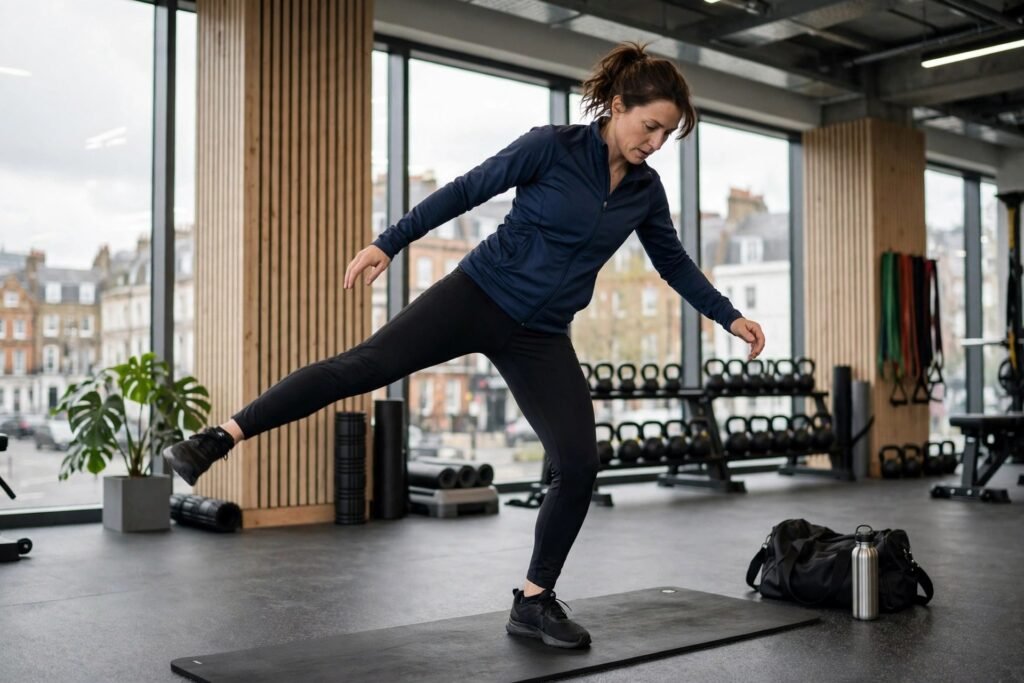
Most people stretch the way they were shown at school, hold a pose, count quietly and hope for the best, yet a warm-up that actually protects you looks quite different from that old routine.
The old routine fails for a simple reason: it treats stretching as a single activity, when in fact there are two very different kinds, and they belong at opposite ends of a workout. Moving stretches, where joints travel through their range with control, warm the body and prepare it for effort, while held stretches, where a position is kept still, belong after exercise, when muscles are warm and pliable. Understanding that split is the foundation of everything that follows, and it is also why so many people who stretch faithfully still pull muscles. The routine below works for general fitness, running, gym sessions and recreational sport, and it needs no equipment and no professional help, although what you eat around training matters too, so it is worth knowing what to eat before and after a workout alongside the warm-up itself. Fuel and warm-up work together, and getting both right makes the session itself feel noticeably easier.
What Stretching Is Supposed to Achieve
A warm-up carries three duties, and a sound one covers all three instead of only one. Stretching properly before workouts rewards anyone who learns the knack, and the routine below sets out exactly how. First, it lifts the warmth of the muscles and the tissues round them, which leaves them more supple and less prone to tearing under sudden strain. As warmth climbs a degree or two, muscle tissue grows plainly more springy, nerve signals travel quicker, and the fluid inside joints thins and greases the movement better. Second, it rehearses the moves the session will call for, so the brain sharpens the coordination pattern ahead of the effort. Third, it lifts the heart rate step by step, so the body never has to leap from rest to full effort in one moment. A warm-up covering only one of those duties falls short, which explains why a brief jog alone fails, and why a handful of held stretches alone fails too.
The distinction between moving and held stretches matters because they do opposite things at the wrong time. Held stretches, kept for half a minute or longer immediately before power or strength work, can temporarily reduce the force a muscle produces, which means you walk into the session slightly weaker than you would have been without them. Short holds of a few seconds seem harmless, yet the old routine of five minutes of held stretching before exercise is counterproductive, and the evidence on this point is now consistent. Moving stretches have the opposite effect: they raise temperature, mobilise joints and rehearse patterns, all without the performance cost. That is why the order matters so much, and why the steps below follow the sequence they do, with moving work first and held work saved for the end.
Step One: Raise Your Temperature With Light Movement
Begin with five minutes of light, rhythmic movement that raises your pulse and warms you gently. A brisk walk that builds into an easy jog works well, as does easy cycling, rowing or skipping, and the choice matters less than the effect: you should feel warm, breathe a little harder than at rest, and notice a light glow rather than a sweat. The goal is not fitness at this stage but temperature, because cold tissues are stiffer, less elastic and more vulnerable to strain, and the few minutes spent warming them pays for itself many times over in the session that follows. If you train outdoors in cold weather, allow a little longer here, because the body takes more time to reach the same warmth.
Hold the effort gentle enough that talking stays easy, and fight the urge to hurry this phase. Warmth inside tissue needs minutes to build, and a brief dash to the squat rack or one circuit of the pitch counts as no warm-up at all, however brisk it seems. A handy test is whether your breathing has shifted and whether your limbs feel freer than at the start; when neither has shifted, carry on for another minute or two. People who miss this phase often report stiffness through the opening part of the session, and that stiffness is the body signalling the warm-up ran too short. Five minutes stands as the floor for most sessions, and a touch longer beats a touch shorter when the session ahead asks a lot.
Step Two: Move Through Dynamic Stretches
Once warm, spend five minutes on moving stretches, meaning governed moves that carry joints through their range instead of freezing in one spot. Leg swings to the front and side, walking lunges with a soft twist, arm rotations, hip openers, bodyweight squats and inchworms all serve well, and eight to ten repeats of each makes a sensible aim. The moves should feel fluid and easy, with range widening bit by bit as the body loosens, instead of forcing the limit on the opening repeat. Give attention to the joints the session will stress hardest, since a warm-up that skips the shoulders ahead of upper-body work, or the hips ahead of a run, leaves the most exposed spots cold.
Match the selection to the session ahead rather than copying a routine designed for a different sport. Runners should emphasise hips, calves and ankles, with extra attention to the hip flexors that tighten from sitting all day. Lifters should emphasise the upper back, hips and shoulders, because those areas determine whether a squat or a press feels smooth or restricted. Desk workers, which means most people, should add extra upper-back and hip work regardless of the session, because hours of sitting leave those areas stiff before training even begins. The point of this stage is not to tick boxes but to arrive at the main session feeling mobile in exactly the places the session will test, and that requires a little thought rather than a memorised sequence.
Step Three: Save the Long Holds for Afterwards
The most common mistake in warm-ups is putting held stretches at the start, so this step is about what not to do as much as what to do. Long holds belong after the session, when muscles are warm, pliable and ready to be lengthened gently, and a hold of around half a minute per muscle group is a sensible target at that point. After exercise, add five minutes of easy movement first, such as a slow walk, to let the heart rate fall gradually, then move through the held stretches for the muscles used most, breathing slowly and never forcing a position that causes sharp discomfort. A gentle pull is the right sensation; pain is a signal to ease off rather than push through.
The logic behind the order is plain. A held stretch ahead of exercise asks a cold muscle to lengthen, which works less well and carries a touch more risk than stretching that same muscle warm, and when the hold runs long it can also leave the muscle briefly less able to summon force. That is a poor bargain ahead of a session calling for strength or speed. After exercise, that same stretch turns both safer and more helpful, since the muscle is warm and the aim has shifted from preparation to recovery. People who shift their held stretching to the close of the session often spot two changes: the session itself feels stronger, while the stiffness next day feels milder. Both are worth keeping, and neither asks for more than a change of order.
Step Four: Target the Areas Your Session Uses Most
Once the general warm-up is done, spend two to three minutes on the specific areas your session will load hardest, because general mobility is not the same as specific readiness. A runner might add ankle circles, calf raises and a few easy strides that build gradually toward running pace. A lifter might add empty-bar repetitions of the lifts to come, starting light and adding load gradually, so the movement pattern is rehearsed before any real weight is involved. A racquet player might add shadow swings and short lateral shuffles. The principle is the same in every case: rehearse the actual movements at low intensity, so the nervous system has already practised the coordination before the effort counts.
This rehearsal stage is the most underrated part of a warm-up, because it feels unnecessary to people who are already warm and mobile. Yet the nervous system needs practice just as the muscles need warmth, and a body that is warm but unrehearsed is still unprepared for a demanding movement. The difference shows most clearly in the first few repetitions of the main session: with rehearsal, they feel smooth and controlled, while without it they feel awkward and slightly off balance. Keep this stage short and focused, two to three minutes is enough for most sessions, and longer only when the session involves heavy lifting or sprinting. The aim is readiness, not fatigue, so if you feel tired before the session starts, you have done too much.
Step Five: Finish Calmly and Notice What Feels Tight
The closing move is a brief halt ahead of the main session, spent listening to the body instead of charging straight into effort. Stand quiet for a moment, breathe slowly, and sense whether any spot still feels stiff, tight or uneasy. When a hip still feels tight after the warm-up, add a few more easy repeats for that spot. When a shoulder still feels tight, add a few more arm rotations. When something aches sharply or in a strange way, treat that as a message instead of a hurdle to push past, since sharp discomfort while moving through the warm-up often gives the earliest hint that something wants care, and working round it merely masks the message.
This habit of noticing also helps over time, because patterns become visible. A knee that feels stiff every Monday after a weekend of sitting, a lower back that tightens whenever the warm-up is rushed, or a calf that complains whenever running volume rises are all useful pieces of information, and they are far easier to act on early than after an injury forces a layoff. Professional guidance earns its keep in exactly these situations: returning from injury, living with a diagnosed movement problem, training for competitive performance, or dealing with pain that has no clear cause are all good reasons to see a physiotherapist, who can design a warm-up that protects the vulnerable area while the rest of the body trains normally. A single assessment often provides a personalised routine that can then be used independently for months, which is the ideal model of expert diagnosis followed by self-reliant execution. For everyone else, the five steps above are enough, and the habit of finishing calmly and noticing what feels tight is what turns a routine into a skill.


2 replies