
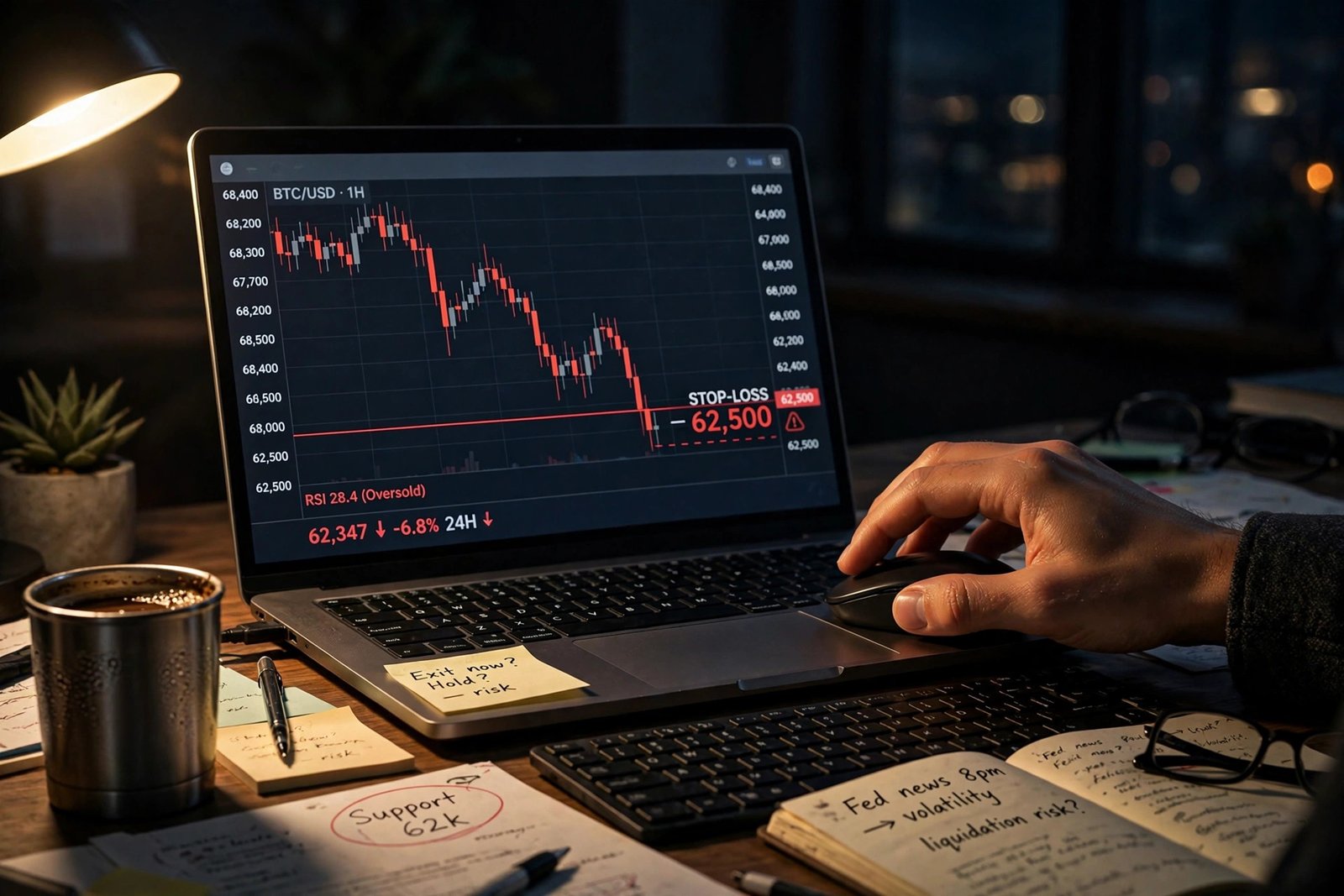
Stop-Loss Orders on Volatile Coins: The Real Cost
A stop-loss order sounds like the responsible thing to do: set a price, and if your coin falls to it, sell automatically — losses capped, emotions removed, sleep preserved. On volatile crypto coins, though, stop-losses have a sneaky cost structure that beginners rarely see coming. Between exchange fees, slippage, spread costs, and the infamous “wick” that triggers your stop seconds before the price rebounds, the real cost of using stop-losses in Devon — or anywhere — is measured in more than the loss you capped. This guide prices every component honestly, explains when stop-losses help and when they quietly bleed you dry, and shows the alternatives professionals actually use.
What a Stop-Loss Really Costs: The Full Price Tag
The obvious cost is the loss itself: you set a stop 10% below your buy price, it triggers, you’re down 10%. But the hidden costs stack up fast. Trading fees apply to the exit — typically 0.1–1% depending on your exchange, charged on the full position. Slippage is the gap between your stop price and the actual fill price: in a fast-moving crypto crash, your market sell order can execute several percent below your trigger, especially on thinly traded altcoins. Spread costs — the gap between buy and sell prices — widen during volatility, quietly taxing every exit.
Then there’s the cost nobody prices: whipsaw. Crypto routinely spikes down 8–12% and recovers within hours — “wicking” through stop levels before rebounding. Your stop triggers at the wick’s bottom, locking in the loss, and by evening the coin is back where it started — without you. Studies of retail trading behaviour consistently show that frequent stop-outs followed by rebounds are among the largest drags on small accounts. Each whipsaw costs you the loss, the fees, the spread — and the position you actually wanted to keep.
Add it up for a typical beginner scenario: a £1,000 position, stopped out at -10% (£100 loss), plus ~£5 in fees and slippage, then rebuying later at a higher price after the rebound (another £5–£10 in fees and a worse entry). One whipsaw cycle can easily cost £115–£120 — 12% of the position — to achieve precisely nothing. Do that a few times a year and stop-losses become a subscription to losing money.
When Stop-Losses Actually Help
None of this means stop-losses are useless — they’re essential in the right context. If you trade with leverage, a stop-loss is the difference between a bad trade and a liquidated account; leveraged positions require hard risk limits because losses can exceed your stake. They’re also sensible for short-term trades with a defined thesis (“I’m buying this breakout; if it falls 5%, my thesis was wrong”) and for protecting profits on positions that have run hard — a trailing stop that locks in gains while giving the trade room to breathe.
The key distinction: stop-losses are a trading tool, not an investing tool. If your time horizon is years and your thesis is “Bitcoin over the next cycle”, a stop-loss at -15% just guarantees you’ll be shaken out during the routine 20–30% drawdowns that long-term holders sail through. Match the tool to the timeframe.
The Devon Beginner’s Reality Check
For a beginner in Devon with a few hundred pounds in volatile coins, consider what you’re actually buying with a stop-loss: emotional comfort. And it’s expensive comfort. The cheaper alternatives: position sizing — invest only what you can watch fall 50% without panic, and you don’t need a stop at all; time-based reviews — check positions weekly, not hourly, and sell on thesis change rather than price wick; and alerts instead of orders — set a price alert at your “would-sell” level, then decide calmly when it triggers rather than letting an algorithm decide mid-panic.
Whatever you choose, keep the plumbing cheap and clean: compare fee structures the way you’d compare currency exchange rates — the principle is identical, and disciplined budgeting of your trading capital matters more than any single order type. And remember the FCA’s standing warning: crypto is high-risk, and no order type changes that. If you trade actively, the tax position matters too — HMRC’s crypto tax guidance covers disposals, and MoneyHelper’s investment guides are the free, impartial starting point for understanding risk.
The Professional Alternative: Hedging Instead of Stopping Out
Professionals managing volatile positions often skip stop-losses entirely and hedge instead. The simplest hedge: hold a smaller position. A £500 position with no stop behaves better than a £2,000 position with a tight stop — the small position survives volatility that would whipsaw the large one, and your maximum loss is naturally capped at £500. More advanced traders use options (where available) to buy defined-risk downside protection: you pay a known premium upfront, and your loss is capped no matter how violent the move. Options aren’t available for every coin or every UK retail user, and they have their own learning curve — but understanding that stop-losses are the crudest risk tool, not the only one, reframes the whole decision. Sometimes the right “stop” is simply a smaller starting bet.
Setting Stops That Don’t Get Hunted
If you do use stops, use them well. Place them where the market isn’t obviously placing them — round numbers and recent swing lows are where everyone clusters, and clusters get wicked. Give volatile coins room: a 5% stop on an asset that routinely moves 8% intraday is just a donation to market makers. Consider stop-limit orders (which cap your worst fill price) instead of plain market stops, accepting that they can fail to fill in a true crash. And never move a stop further away mid-trade to “give it room” — that’s not risk management, that’s hope with extra steps. Decide the level when you’re calm, honour it when you’re not, or don’t set it at all.
So what does using stop-loss orders on volatile coins really cost? The sticker price is the capped loss; the real price includes fees, slippage, spreads, and the whipsaws that shake you out before rebounds. For leveraged trades and short-term speculation, they’re indispensable. For long-term beginners, they’re usually an expensive substitute for proper position sizing. Know which game you’re playing — then pick the tool that fits.
Practise for Free: Paper Trading Your Stops
Before risking real money on stop-loss strategy, paper trade it. Most major exchanges offer testnet or demo accounts where you trade with fake money at real prices. Run your planned stop strategy for a month: set the stops you’d set, log every trigger, and count how many were whipsaws versus genuine saves. Beginners are consistently shocked by the whipsaw rate on volatile coins — seeing it in your own demo data is worth a hundred articles. Paper trading also teaches the unglamorous mechanics (order types, trigger vs limit, what happens during volatility halts) without tuition fees. A month of demo data will tell you more about whether stops suit your style than any amount of theory.
Frequently Asked Questions
What is slippage on a stop-loss?
The difference between your trigger price and the price your sell actually executes at. In fast crashes, market sell orders can fill several percent below the trigger, especially on low-liquidity coins.
Should beginners use stop-losses on Bitcoin?
For long-term holding, usually not — routine 20–30% drawdowns will stop you out repeatedly. For short-term trades or leveraged positions, yes, they’re essential risk management.
What’s a trailing stop?
A stop that follows the price upward at a set distance, locking in profits while giving the position room. If the coin rises 50% then falls 10%, a 10% trailing stop sells near the top — useful for protecting gains.
Do stop-losses guarantee my maximum loss?
No. In extreme volatility or exchange outages, fills can be far worse than the trigger price, and stop-limit orders may not fill at all. They limit typical losses; they don’t cap worst-case ones.