
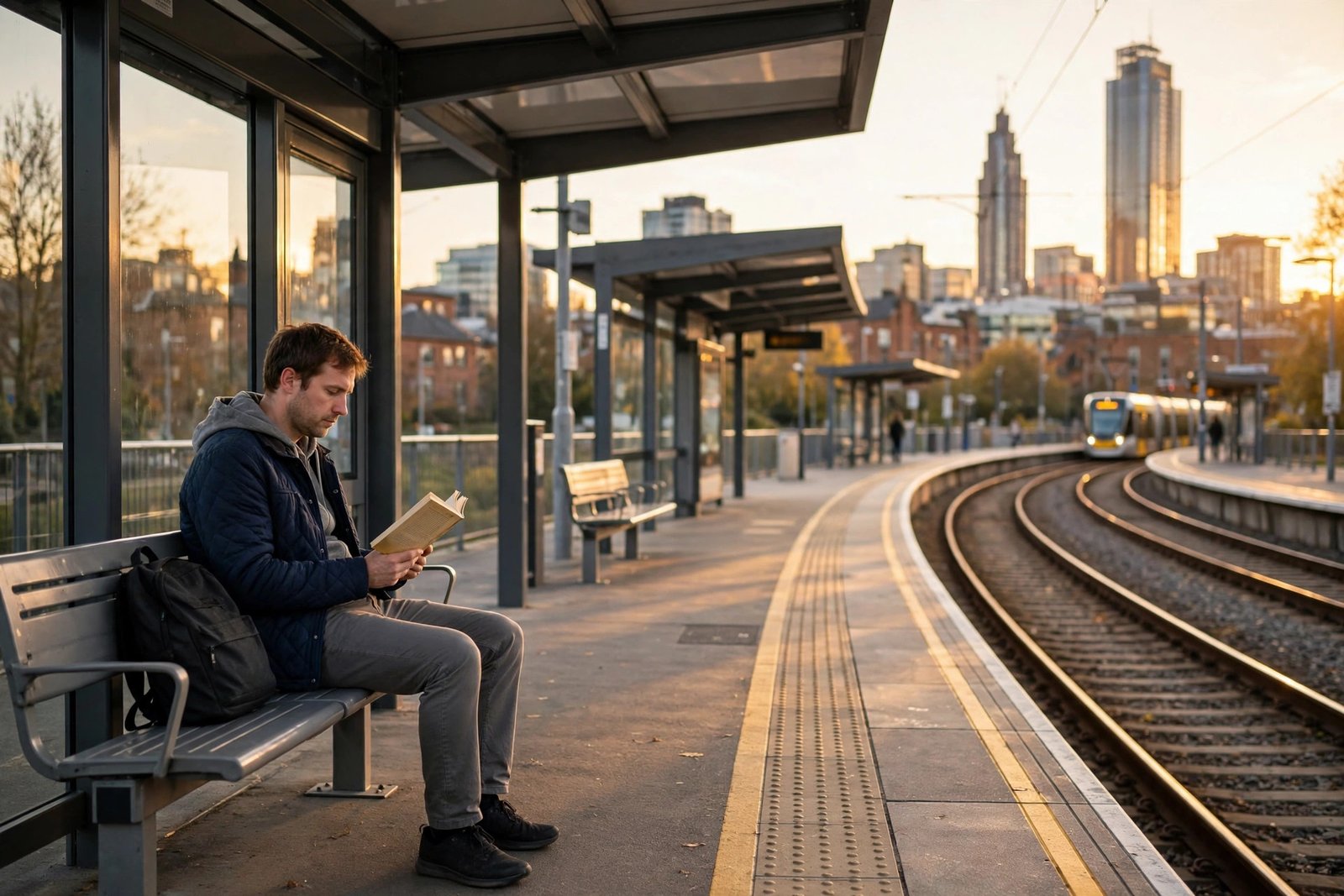
Developing More Patience: The Real Cost in Greater Manchester
Patience is having a terrible century. Everything is on demand, every queue feels like an insult, and the ability to wait, once a basic adult competency, now feels like a superpower. Yet the research keeps vindicating it: patience predicts everything from financial health to relationship satisfaction, and its absence quietly taxes every part of life. So let us price it properly. What does developing more patience actually cost in Greater Manchester, and what is impatience already costing you?
This article covers the psychology of patience, the free practices that build it, Manchester course and therapy prices for those who want guided help, and an honest accounting of impatience’s hidden bill.
The Hidden Bill of Impatience
Price impatience first, because it is the number nobody calculates. Financially: impulse purchases, the premium paid for immediacy (next-day delivery, the first flat viewed), investment churn from reacting to headlines. Behavioural economists estimate that present bias, the systematic overweighting of now over later, costs ordinary households thousands annually in foregone savings and interest. Relationally: snapped responses, abandoned projects, the argument that a ten-second pause would have prevented.
Professionally, impatience masquerades as decisiveness but functions as error: the email sent angry, the negotiation conceded early, the career move made from restlessness rather than strategy. And physiologically, chronic impatience sustains the stress response, with the cardiovascular costs that implies; the famous Friedman and Rosenman research on Type A behaviour found impatience and hostility among the strongest behavioural predictors of heart disease. The bill is already being paid, monthly, in money, relationships and health. The only question is whether to keep paying it unconsciously or invest deliberately in the alternative.
What Patience Actually Is (and Is Not)
Patience is not passivity, resignation, or the suppression of desire. Psychologists define it as the capacity to tolerate delay, frustration or suffering without becoming agitated, and crucially, it is partly a skill rather than a fixed trait. The marshmallow-test story, that childhood waiting predicts life success, turned out to be heavily confounded by background advantage; what predicts outcomes better is the learned ability to manage delay, which adults can train.
This matters because it reframes the project from “become a different person” to “practise specific capacities”: tolerating uncertainty, reframing waiting time, and separating urgency feelings from urgency facts. Most impatience is not about the queue; it is about the story (“this is wasting my life”, “they’re disrespecting me”). Change the story and the same queue becomes neutral. The anxiety-stress distinction helps here, since much impatience is low-grade anxiety about time running out, and free stress-reduction practices directly train the same tolerance muscle.
The Free Practices That Build Patience (£0)
One: deliberate waiting. Choose small daily delays on purpose: the longer queue, the kettle rather than the instant coffee, the walk instead of the tram for one stop. Each is a rep for the tolerance muscle, and the stakes are trivial. Two: reframe waiting time as found time. The queue becomes the chapter, the commute the podcast, the hold music the breathing exercise. Impatience feeds on “wasted” time; reclaimed time starves it.
Three: the ten-second rule for irritation. When impatience spikes, pause ten seconds and label what is actually happening (“I am feeling urgency, not facing an emergency”). Affect labelling, naming the emotion, measurably reduces amygdala reactivity in brain-imaging studies. Four: mindfulness practice, even ten minutes daily, which trains exactly the capacity patience requires: noticing an urge without obeying it. Free apps and YouTube channels cover this adequately; the paid ones sell convenience, not superior technique. Five: voluntary discomfort in tiny doses, the cold shower’s less dramatic cousins, which teach the nervous system that unpleasant sensations pass. Total cost: £0 and mild, repeated discomfort, which is the actual tuition.
Manchester Prices: Courses and Therapy (£)
For guided help, Manchester offers the full range. Mindfulness courses: an eight-week MBSR (mindfulness-based stress reduction) course, the gold standard with the strongest evidence, typically costs £200-350 privately in Manchester, with taster sessions from £15-30 and free introductions widely available. Buddhist and meditation centres across the city offer donation-based sitting that teaches the same core skill for the price of a contribution.
Therapy for chronic impatience, usually framed as anger management or anxiety work: private CBT £50-90 per session as elsewhere, with NHS talking therapies free via self-referral. Patience-specific coaching is rarer and the evidence thinner; spend there only after the free practices and, if needed, CBT. Mind’s Manchester services and the NHS talking-therapies finder are the sensible starting points, both free to explore.
Patience and Money: The Financial Payoff
Nowhere does patience pay more literally than in personal finance. The patient investor who buys index funds and ignores headlines captures the market’s long-run return; the impatient one trades on news and lags by percentage points annually, which compounds into tens of thousands over a career. The patient saver who automates transfers before lifestyle inflation arrives builds wealth on autopilot; the impatient one waits for “the right time” indefinitely.
The same logic governs purchases. The 30-day rule for non-essential buys, wait a month, buy only if you still want it, eliminates most impulse spending without any budgeting software. The patient job-seeker who waits for the right role rather than grabbing the first offer often gains thousands in starting salary. Money is simply stored patience: every pound saved is a present desire deferred, and the interest, literal and figurative, accrues to those who can wait. Saving on a low income is harder, which makes the patience dividend there even more valuable.
Patience in a Manchester Life: Where to Practise
The city supplies endless low-stakes training ground. The Metrolink at rush hour: practise the ten-second rule instead of the sigh. The M60: reframe as found podcast time rather than stolen life. Queues at the Christmas Markets: deliberate waiting reps with mulled wine as reward. Parenting, for those doing it, is the advanced course: children operate on geological time, and every slow shoe-tying is patience practice disguised as morning routine.
At work, the highest-value patience practice is email: the draft saved, the reply delayed until morning, the negotiation where you let silence work. Impatience in professional life almost always presents as speed and is almost always costly haste. The patient professional is not the slow one; they are the one whose timing serves their interests rather than their impulses.
Conclusion
Developing more patience in Greater Manchester costs nothing if you use the free practices, deliberate waiting, reframing, the ten-second rule, mindfulness, and £200-350 for a proper MBSR course or £400-1,000 for CBT if you want guided help. Set against impatience’s quiet lifelong tax on money, relationships and health, even the expensive end is a bargain. Patience is not waiting well. It is choosing, repeatedly, what your attention serves.
Frequently Asked Questions
Can adults actually become more patient?
Yes. Patience is partly trainable: practices like mindfulness, deliberate waiting and cognitive reframing measurably improve delay tolerance. It is a skill, not just a temperament.
How long does it take to develop patience?
Small shifts appear within weeks of daily practice; substantial, stable change typically takes two to three months. Mindfulness courses run eight weeks for good reason.
Is impatience linked to health problems?
Chronic impatience and hostility correlate with cardiovascular risk in long-running studies, largely through sustained stress physiology. Managing it is a health intervention, not just a character project.
What is the cheapest way to build patience?
Deliberate small waits, reframing waiting as found time, and free mindfulness resources. The entire starter programme costs nothing but repeated mild discomfort.