
Choosing the Right Running Shoes: When Should You Start?
When is the right time to start choosing the right running shoes? Gait analysis, fit tips and the signs your current trainers are holding you back. Read our guide.
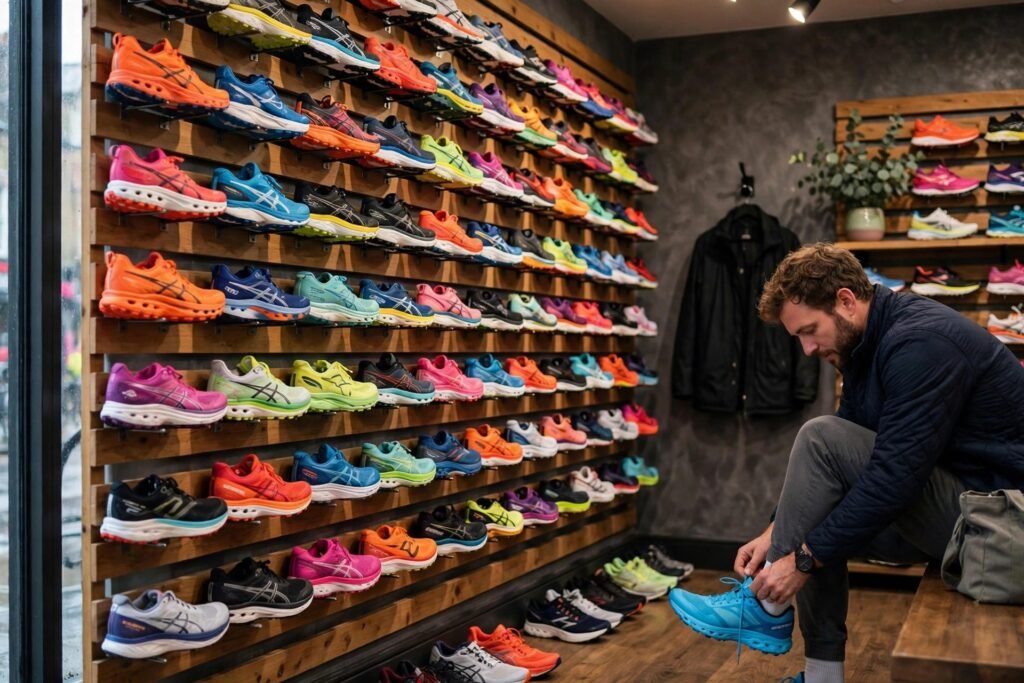
A month into running, something starts to complain. Knees, shins, the soles of your feet — the body sends its first invoices, and the first suspect is usually the footwear. The truth is less dramatic than the shops suggest and more useful than the forums admit. Comfortable athletic shoes will carry a beginner through the first gentle weeks without any harm done. But once running becomes a regular habit, shoes that fit badly begin to charge interest: blisters that always appear in the same place, toes going numb, joints aching after every outing. The moment to spend money on proper shoes is not the first day, and not half a year in. It is the week running turns from an experiment into a routine.
Once running has settled into a weekly habit, the question of footwear stops being abstract and starts being practical. The shoes that carried you through the first gentle outings may still be fine, or they may be the reason your knees ache on the stairs the morning after a run. Sorting that out means looking at fit, wear and the surfaces you run on, rather than trusting a brand name or a price tag. Runners who wear glasses face one more practical question about sight on the move, and many of them end up weighing up how much laser eye surgery costs in the UK before deciding whether contact lenses, sports glasses or a permanent fix suits their running life best.
What You Actually Need Before You Start
The truth at the very beginning is far plainer than the sales talk in running shops suggests. During those opening weeks of easy run and walk intervals, nearly any comfortable sports shoe will serve you well. The impact involved when you jog in short bursts is gentle, and your body is adjusting to a whole set of new demands at once. Shoes rank near the bottom of what counts at that point, well behind keeping a steady pace, warming up properly and simply heading out of the door on a regular basis.
That is not a licence to run in whatever happens to be by the door. Anything that could do harm should be retired before your opening outing: thin fashion trainers with no padding at all, pairs whose tread has worn completely smooth, or anything that already rubs you raw on an ordinary walk. The standard for starting is not flawless, it is simply harmless. Footwear that aches on a walk will ache far worse at a running pace, and no amount of keenness makes up for a sole that puts nothing between your foot and the pavement. Choosing between a road model and a trail model can wait until your regular routes are clear, because the surface question settles itself once you have a few weeks of running behind you.
There is also a trap in waiting for the perfect pair. Some beginners spend weeks researching shoes instead of running, treating the purchase as a permission slip. Running does not require permission. Lace up whatever reasonably supportive athletic shoes you own, start gently, and let the habit form first. The right pair matters enormously later, but at the very beginning it is the running that matters, not the equipment.
The Right Time to Invest in Proper Shoes
The sweet spot arrives a few weeks in, once you are running several times a week and intending to carry on. By then you have proved the habit to yourself, which matters more than people admit. Buying a dear pair on day one creates a pressure that can curdle into guilt if motivation dips for a week. Buying after a few steady weeks feels like a reward for commitment, and rewards keep people going far better than guilt ever does.
Your needs are also much clearer after a few weeks of running. You know by then whether your toes go numb halfway through a run, whether your arches ache afterwards, and whether you mostly run on roads, park paths or a treadmill. That information makes a fitting dramatically better, because the person helping you is working with real evidence about your feet rather than guesses about a beginner who has never run at all.
When you should spend the money matters for staying injury free as well. As your outings stretch longer and come round more often, shoes begin to count in a way they never did during those first easy weeks. Buying proper footwear ahead of a rise in distance is sensible prevention, not a treat. The niggles that show up as your weekly total climbs are often the earliest hint that your starter pair has reached its limit, and responding to that hint promptly costs less effort than sitting out an injury further down the line.
The Fitting That Matters Most
When the moment comes for a first serious pair, head to a specialist running shop and request a gait assessment. The assistant will generally record your feet moving on a treadmill and study how each foot strikes the ground, revealing whether you roll inward, outward or land fairly level. That pattern settles which broad family of shoe fits you, and it is real information rather than a sales routine. The check usually costs nothing when you buy the shoes there.
The fit itself follows a short checklist that is worth memorising. Leave about a thumb width between your longest toe and the front of the shoe, because feet swell as you run and a snug fit in the shop becomes a crushed fit on the road. Shop later in the day when your feet are slightly swollen, bring the socks you run in, and make sure your heel stays locked while your toes can still wiggle freely. Any decent shop will let you jog on a treadmill or outside, and you should take that offer, because a shoe that feels fine while walking can feel very different at running pace.
Comfort comes first, ahead of every other consideration. Study after study has found that how a shoe feels predicts staying injury free more reliably than any technical feature a maker can advertise. If a pair feels wrong the instant you slip it on, it will not get better with wear, because present day running shoes need no breaking in period. Footwear that pinches, chafes or feels rigid on the first day will still be doing so a month later, and you will have paid good money for a pair you quietly leave in the cupboard.
Signs Your Shoes Are Holding You Back
Sometimes your feet settle the question themselves. Blisters that return again and again in precisely the same spot are an unmistakable warning, as are toes that lose feeling mid run, which generally means the shoe is too short or too tight across the front. Fresh soreness around the knees or shins that turns up as your outings stretch longer often points the same way, above all when the discomfort appears only while you run and eases shortly after you stop.
Look at the shoes themselves as well. A midsole full of deep creases, tread worn smooth in patches, or a heel that has collapsed to one side all show that the cushioning and support have given up. Cushioning dies invisibly long before the outside of a shoe looks ruined, so a pair that looks respectable can still be offering nothing. Keeping a rough note of how many months you have run in a pair helps, because the decline is gradual and easy to miss day by day.
The rule is simple: when the same problem keeps returning, change the shoes before you change anything else. Runners often blame their fitness, their route or their age for aches that are really about worn out footwear. A fresh pair that fits properly removes a whole category of problems at once, and if the ache disappears with the new shoes, you have your answer without a single appointment or scan.
Road Versus Trail: Matching the Surface
Where you run decides what you need underfoot. Road shoes are built for smooth, hard surfaces, with cushioning that softens the impact of tarmac and a shape that rolls you forward with each stride. Trail shoes trade some of that cushioning for grip, with lugs that bite into mud, tougher material that resists stones and roots, and a stiffer sole that protects your feet on rough ground.
Most newcomers in Britain cover a blend of surfaces: pavements on the way to the park, paths through the park itself, and the odd stretch of trail. A road shoe with solid tread copes with that blend perfectly well, and buying a specialist trail shoe for the occasional muddy patch means surrendering cushioning you rely on daily in exchange for grip you seldom need. Only spend on trail shoes once the bulk of your running is truly away from tarmac, week after week, whatever the weather.
Hybrid models that promise to handle both surfaces exist, but they tend to master neither. They are heavier than a road shoe and less grippy than a trail shoe, which leaves you compromised on both. Pick the surface you run on most, buy for that, and accept that the occasional muddy path is a small price for comfort on the miles you actually run. If your routes change completely later, that is the moment to reconsider, not before.
When a Second Pair Earns Its Place
Once you are out most days of the week, a second pair begins to earn its keep. Rotating between two pairs shifts the load on your feet a little with every outing, which plenty of runners find keeps minor niggles at bay. It also lets the cushioning in each pair rest for a full day between runs, because the foam inside a shoe needs time to bounce back after being squeezed flat.
A second pair is also a practical safety net. When one pair is soaked through from a wet run, the other is dry and ready. When one pair starts to wear, you have a comparison sitting in the cupboard, which makes the decline much easier to spot. And rotating pairs means each one lasts longer in calendar terms, even though the total distance they cover is the same.
That said, a second pair is a luxury, not a necessity. One good pair that fits well will carry a regular runner perfectly happily, and money spent on a second pair before the first one is right is money wasted. Buy the second pair only once the first pair is settled, comfortable and doing its job. The goal is not a collection. The goal is feet that feel the same at the end of a run as they did at the start.



2 replies