
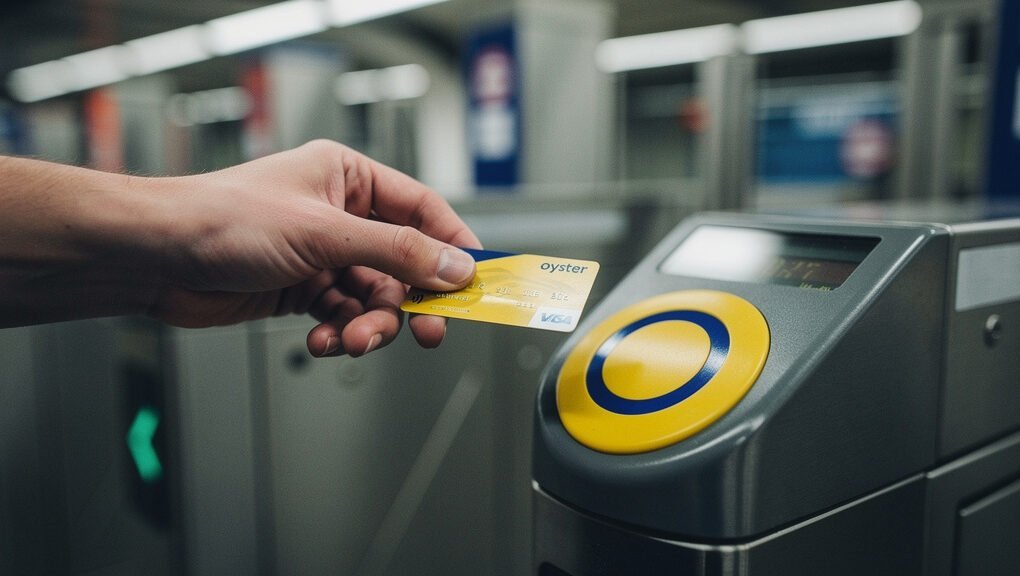
Oyster Card vs Contactless in London
If you’ve been searching for “how do i use an oyster card vs contactless in london”, you’re in the right place. How do you use an Oyster card vs contactless in London? If you’re visiting the capital — or even if you live here and never questioned your tap habits — the answer matters more than you’d think. Pick wrong and you could pay more, miss discounts, or faff at barriers. Here’s the definitive comparison, including the situations where each one wins.
The Short Answer
For most people, most of the time: just use contactless (your bank card or phone). It’s the same fares as Oyster, with automatic daily and weekly capping, and zero setup. Oyster still wins in specific situations — mainly railcard discounts and certain edge cases. Details below.
How They Work (The Basics)
Both Oyster and contactless use the same fare system across Transport for London: Tube, buses, trams, DLR, London Overground, Elizabeth line, and most National Rail services within the zones. Always touch in AND out on rail services (yellow readers) — touching in only on buses (no need to touch out). Miss a touch and you get charged the maximum fare.
Contactless
- Cost: Free to use — just tap your debit/credit card, phone or watch.
- Capping: Automatic daily cap (never pay more than the equivalent Day Travelcard) and Monday-Sunday weekly cap — unique to contactless, and the killer feature for regular travellers.
- Setup: None. It just works. (Check your bank doesn’t charge foreign transaction fees if you’re visiting from abroad.)
- Tracking: View journey history at contactless.tfl.gov.uk.
Oyster card
- Cost: £7 for the card itself (non-refundable since 2020 — it used to be a deposit).
- Capping: Daily cap only — no weekly cap. This is the main disadvantage.
- Setup: Buy at stations, top up at machines or online (allow 30 mins for online top-ups to register).
- Advantage: Can have discounts loaded — railcards, 18+ Student, 16+ Zip — which contactless cannot.
How Do I Use an Oyster Card vs Contactless in London? Who Should Use Which
Use contactless if you:
- Visit London occasionally or are a tourist — zero setup, best fares automatically.
- Travel 3+ days in a week — the Monday-Sunday weekly cap saves real money versus daily caps.
- Live in London and travel regularly without a railcard — weekly capping beats Oyster.
- Hate carrying extra cards — your phone is already in your hand.
Use Oyster if you:
- Have a railcard (16-25, 26-30, Senior, Disabled, etc.) — load it onto Oyster at a Tube station for 1/3 off off-peak fares and caps. This is the #1 reason Oyster still exists. Our cheap train tickets guide covers railcards in full.
- Are under 18 — Zip Oysters give free or half-price travel.
- Want to separate travel spending from your bank account (budgeting, kids’ cards).
- Your bank card doesn’t do contactless, or you’re worried about card clash (see below).
The Traps (Read This Part)
- Card clash: If your Oyster and contactless cards are in the same wallet/phone case, the reader may charge the wrong one — or charge both. Keep them separate, or use one consistently.
- Same card in, same card out: Touch in with your phone, touch out with your phone — not the physical card. Mixing them creates two incomplete journeys and two maximum fares.
- Incomplete journeys: Always touch out on rail. If you forget, claim a refund via TfL customer services — they’re reasonable about genuine mistakes.
- Foreign cards: Most work fine, but check for foreign transaction fees — a 3% fee on every tap adds up. A fee-free card (Chase, Starling) solves it — see our currency exchange guide.
- Buses are flat fare: £1.75 with free hopper transfers within an hour — touch in only, no touch-out needed.
- Peak vs off-peak: Peak fares (Mon-Fri 6:30-9:30am and 4-7pm) cost more; the daily cap accounts for this automatically.
Beyond the Zones
Contactless now works far beyond central London — to Gatwick, Heathrow (all terminals), and many commuter towns. For regular longer journeys, compare against paper Travelcards or train-specific tickets — our Gatwick taxi guide covers the airport run specifically, and day trips from London for getting out of the city.
Oyster for Visitors: The Tourist Setup
Visiting London for a few days? Here’s the optimal setup:
- Staying 1-2 days: Just use contactless — daily capping handles it, zero setup, zero leftover balance.
- Staying 3-7 days: Still contactless — the Monday-Sunday weekly cap is the best deal in London transport. (Note: the “week” is fixed Mon-Sun, not any 7 days — a Wed-Tue trip gets two partial weekly caps, still usually fine.)
- With kids under 11: They travel free on Tube/DLR/Overground with a paying adult (up to 4 kids per adult) — no card needed. Ages 11-15 need a Zip Oyster for half fares.
- From abroad: Contactless works with most foreign cards — but check for foreign transaction fees. A fee-free card (or Apple/Google Pay with one) avoids the 2-3% skim on every tap.
- Don’t buy the Visitor Oyster: The old tourist advice is outdated — the £7 card fee plus no weekly cap makes it worse than contactless for almost everyone now.
What’s Changing in London Fares
The system keeps evolving: contactless acceptance keeps expanding to more National Rail stations (now reaching well beyond the traditional zones), daily caps adjust yearly, and TfL continues its slow march toward fully account-based ticketing. The direction is clear — physical tickets are disappearing, and the phone-as-ticket is the future. The fundamentals in this guide (tap in/out, same device, let caps work) will remain true whatever the technology. One thing to watch: mooted changes to off-peak definitions and potential tourist levies — check tfl.gov.uk before big trips for the latest.
The Takeaway
Oyster vs contactless: contactless wins for most people (same fares, weekly capping, zero setup); Oyster wins if you have a railcard discount to load or need separate travel budgeting. Either way: touch in and out on rail, same device throughout, watch for card clash, and let the caps do the work. London’s fare system is complex underneath — but used right, you never have to think about it. Just tap and go.
One thought on “Oyster Card vs Contactless in London”