When Is the Best Time to Replace Windows in the UK?
You are staring at a draughty window. Maybe it has misted up again. Maybe the frame is rotting. Now you wonder: should you wait for spring, or book it now?
Here is the short answer.
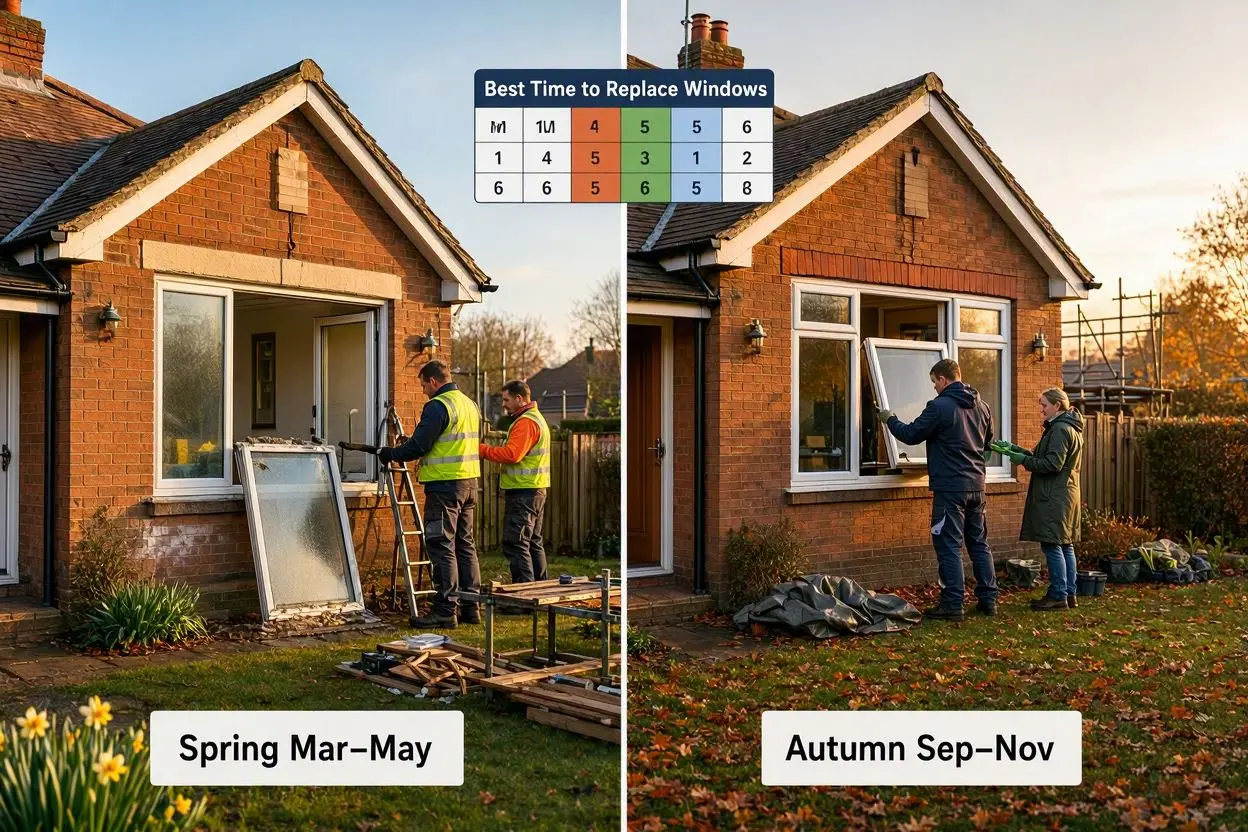
The best time to replace windows in the UK is spring (March to May) or early autumn (September to October). The weather is mild and dry. Installers can work comfortably. But winter is a smart choice too. It is quieter, so you often get quicker dates and better deals.
Read on. I’ll show you how each season stacks up, so you can pick what suits your home and your budget.
Quick Answer: Best Season to Replace Windows
| Season | Weather | Installer demand | Best for |
|---|---|---|---|
| Spring (Mar–May) | Mild, drier | Very high | Comfort and curb appeal |
| Summer (Jun–Aug) | Warm, long days | High | Big projects, whole-house jobs |
| Autumn (Sep–Nov) | Cool, mostly dry | Medium | Beating the cold and the rush |
| Winter (Dec–Feb) | Cold, wet | Low | Quick dates and deals |
No season is “wrong.” The right one depends on what matters most to you.
Replacing Windows in Spring
Spring is the classic choice. The days get longer. The rain eases off. People start thinking about home projects.
Why it works
- Mild weather is easy on installers and on your home.
- You can open doors and windows during the work without freezing.
- Fresh windows lift your home’s look just as the garden wakes up.
The catch
Everyone has the same idea. Spring is busy. You may wait longer for a survey and an install date. If you want spring, book early. Start the process in winter.
Replacing Windows in Summer
Summer gives you long daylight hours. That helps with big jobs. Fitting a whole house takes less hassle when the weather behaves.
Why it works
- Dry days mean fewer delays.
- Warm air keeps the house comfortable while openings are exposed.
- New windows help keep heat out too, if you pick the right glass.
The catch
Summer is popular, so prices and waiting times can stay high. Holiday season also means some firms run short of staff. Plan ahead.
Replacing Windows in Autumn
Autumn is a quiet favourite. It is the sweet spot for many homeowners.
Why it works
- The weather is still fairly dry and not too cold.
- Demand drops after the summer rush.
- You get warmer rooms before the heating bills climb.
The catch
The weather gets less reliable as November nears. Leave a little buffer in your plans. Aim for September or October if you can.
Replacing Windows in Winter
Many people think winter is a bad idea. It is not.
Good installers replace windows one at a time. They do not leave your home open to the cold. Modern windows and sealants are made to be fitted all year round.
Why it works
- It’s the quietest time for most firms. You may get a quicker date.
- Companies sometimes offer better deals to fill their diaries.
- You feel the benefit straight away. New windows cut draughts and help your heating work less.
- Winter shows you exactly which windows fail. Cold spots and condensation are hard to ignore.
The catch
Rain can delay outdoor work. Short days mean less time on site. Your rooms may feel cooler on fitting day. Wear a jumper and keep the kettle on.
Which Month Is Best?
If you want one month, think about what you want to win.
- Best for weather: April, May, or September.
- Best for speed and deals: January or February.
- Best for a big, whole-house job: late spring or early summer.
- Best to beat the cold: September or October.
Don’t Let the Calendar Decide for You
Timing helps. But your windows matter more. Don’t wait for the “perfect” month if you see these signs.
- Draughts. You feel cold air near the frame.
- Condensation between the panes. The seal has failed. The glass cannot insulate well.
- Rot or damp. Soft timber frames and peeling paint are warning signs.
- Stiff or broken handles and locks. This is a safety risk.
- Noise. Street sound seems louder than it used to be.
- High energy bills. Heat leaks out through old frames and glass.
If your windows fail in January, replace them in January. A few extra months of heat loss can cost more than any seasonal saving.
What Matters More Than the Season
Your type of window
uPVC windows suit most UK homes. They are durable and easy to look after. Timber looks best on period homes, but it needs care. Sash windows often need a longer lead time because makers build them to measure.
Conservation areas and listed buildings
Live in a conservation area? Or own a listed home? You may need permission before you change your windows. Check with your local council first. This can take weeks, so start early. It may also decide your timing for you.
FENSA and Building Regulations
In England and Wales, replacement windows must meet Building Regulations. A FENSA-registered installer can self-certify the work. You get a certificate when the job ends. Keep it safe. You will need it when you sell your home.
Not using a registered installer? Then you need to notify your local council’s building control. Rules differ in Scotland and Northern Ireland, so check locally.
Energy prices
Energy bills move. The price cap changes every few months. Cutting heat loss gets more valuable when prices rise. Newer windows with good glazing can help you keep more of the heat you pay for.
Your own life
Think about your plans. Are you hosting a family event? Working from home? Do you have a baby, or a pet who hates strangers? Pick a window of time that causes the least stress.
How Far Ahead Should You Book?
Plan for weeks, not days. The process usually runs like this:
- Get a few quotes.
- Book a survey so the installer can measure.
- The factory makes your windows to measure.
- Fitting day.
Made-to-measure windows take time to build. Peak seasons stretch the wait. If you want a spring install, start looking in winter. If you want to fit before winter, start in late summer.
Simple Tips to Save Money
- Get at least three quotes. Compare the same specification, not just the price.
- Ask about off-peak deals. Winter slots can be cheaper.
- Replace in one go if you can. Doing the whole house at once often costs less per window than spreading it out.
- Check for grants. Some schemes support energy-saving upgrades. Rules change, so check the official government and local council pages.
- Don’t pick the cheapest quote blindly. A poor fit wastes your money in the long run.
Fitting Day Checklist
- Clear the space around each window.
- Move furniture, curtains, and fragile items.
- Protect floors if the installer does not cover them.
- Keep pets and children away from the work area.
- Ask the installer how long each room will be open.
- Check the work before the fitters leave.
- Get your FENSA certificate or building control certificate.
Final Thoughts
So, when is the best time to replace windows in the UK?
Spring and early autumn give you the easiest weather. Winter gives you the quickest dates and the best deals. Summer suits large projects. Every season can work with a good installer.
Don’t chase the perfect month. Replace your windows when they stop doing their job. Book early, pick a registered installer, and keep your certificate. Your home will feel warmer, quieter, and calmer for years.
Frequently Asked Questions
What is the best month to replace windows in the UK?
April, May, and September are the best for weather. January and February are best if you want speed and lower prices. Choose the one that fits your priorities.
Is it OK to replace windows in winter?
Yes. Installers replace windows one at a time and seal each one. Modern products are designed to be fitted all year. Rain can cause small delays, but the job is safe.
Is it cheaper to replace windows in winter?
It can be. Winter is the quietest time for many firms. Some offer discounts or quicker dates to keep teams busy. Always compare quotes. Prices vary by company and area.
How long does it take to replace windows?
Fitting a few windows often takes a day. A whole house can take several days. The wait before fitting is longer, because windows are made to measure. Ask your installer for a clear timeline.
How far ahead should I book window replacement?
Start looking several weeks ahead. In spring and summer, start even earlier because demand is high. If you need a conservation area permission, add extra time.
Do I need planning permission to replace windows?
Most homes do not. But if you live in a conservation area, or your home is listed, you may need permission. Check with your local council before you order.
Do I need a FENSA certificate?
In England and Wales, replacement windows must comply with Building Regulations. A FENSA certificate is proof the work meets them. You will usually need it when selling your home.
How do I know it’s time to replace my windows?
Look for draughts, misted glass, rot, damp, noise, and hard-to-use locks. If repairs keep adding up, replacement often makes more sense.
How long do replacement windows last?
It depends on the material and care. Many good quality windows last for decades with proper maintenance. Timber needs regular upkeep. uPVC needs little more than cleaning.
Will new windows lower my energy bills?
They can cut heat loss, which helps your heating work less. Savings depend on your old windows, your home, and the glazing you choose.