
What Experts Recommend for Building Core Strength at Home
What do experts recommend about building core strength at home in Devon? The exercises, progressions and mistakes to avoid — no gym required. Start here today.
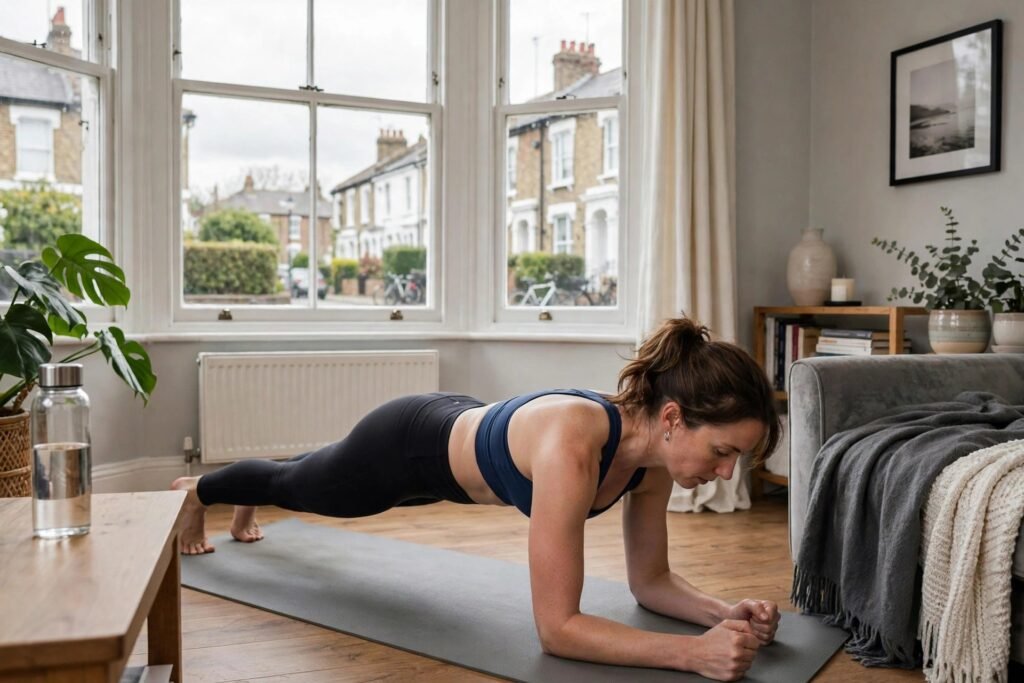
Somewhere between the glossy fitness challenge and the physiotherapist’s lecture lies the truth about the muscles that hold you upright. The core is not the visible stomach muscles of magazine covers. It is a system of deep stabilisers that keep your spine steady, your balance honest and your back quiet — and it is trained by stillness and control, not by endless repetitions of the same crunch. Experts are clear about what works at home and what wastes time, and the answer is refreshingly modest: a handful of movements, done well, several times a week, with progression so gradual you barely notice it happening.
The truthful answer is pleasingly modest: a small set of moves, performed properly, several times a week, with progress so gentle you scarcely notice it taking place. Core strength and posture are one topic viewed from two sides, and a feeble middle reveals itself first at a desk, where long hours of sitting lay bare every weakness in stability. That is also why pairing the plan with a read of fixing your posture at your desk alongside any training plan makes sound sense. What comes next is what specialists genuinely advise, without the challenge hype or the crunch marathons.
The Short Answer: It Is Not Your Abs
If you take one idea from this article, take this: the core is not the visible stomach muscles of magazine covers. A strong middle is a system that keeps your spine steady, your balance honest and your back quiet, and it is trained by stillness and control, not by endless repetitions of the same crunch. The glossy challenge that promises a flat stomach in a month is selling an image, not strength.
So what should you actually do? Train the deep stabilisers to hold you steady while your arms and legs move, which is the job the core exists to do. That means exercises where you resist movement rather than create it: holding a plank without sagging, pressing a band away from your chest without twisting, extending opposite arm and leg without rocking. These movements look dull. They are also the ones that work.
The time demand stays small. A few brief sessions each week, each running for around ten to fifteen minutes, will develop genuine strength across a handful of months. All you need is floor space, patience and a readiness to advance slowly. No gym membership is required, no drawer crammed with kit, no heroic reserves of willpower. The humble routine you actually stick to beats the grand routine you give up on.
What Your Core Actually Is
What does the core actually consist of? It is a system, not a single muscle. The deep stabilisers sit closest to the spine and include the transverse abdominis, the multifidus, the pelvic floor and the diaphragm. Around them sit the outer movers: the rectus abdominis, the obliques, the muscles along the spine, the glutes and the hip flexors. All of them work together, and training only the front of the system is like strengthening one wall of a house.
That system exists to pass force between your upper and lower halves, shield your spine while it carries weight, and hold you upright against gravity and sudden knocks. Lugging a heavy bag, climbing stairs or steadying yourself after a trip all call on your core. That shifts how the whole topic looks. A powerful core cannot be seen; it can only be felt in use. The bricklayer with no stomach muscles on show often owns a sturdier middle than the gym regular whose six pack was built from crunches.
Specialists judge this sort of strength through steadiness under weight and staying power across time, never through looks. Can you sustain a plank in a straight line from head to heels? Can you push a resistance band out from your chest while your torso stays square? Can you lug something weighty on one side without tipping sideways? Those are the checks that count, and each one can be trained at home with barely any kit.
The Exercises Experts Recommend
Start with the basics, and remain there until they feel comfortable. The dead bug stands out as the finest opening move: flat on your back, you stretch out the opposite arm and leg while pressing your lower back into the floor. It trains the deep stabilisers to switch on as your limbs travel, which is precisely what the middle of the body is for. The glute bridge rouses the glutes, which long days at a desk send to sleep, and firm glutes shield the lower back better than any stomach move. The bird dog, on hands and knees with opposite arm and leg stretched out, teaches the midsection to fight twisting, which serves you better than producing it.
When the basics feel comfortable, bring in the classic plank, performed correctly: ribs lowered, glutes tightened, hips neither drooping nor jacked up at the waist. Form beats length every time. A trio of brief, flawless planks delivers more than a single lengthy, sagging effort. A side plank develops sideways steadiness, the direction most often ignored, and a Pallof press using a resistance band sets the benchmark for anti twist training: fix the band at chest height, push outward, and hold firm against the tug without turning.
At the advanced stage, following a few months of steady effort, the ab wheel rollout stands as the humbling benchmark of the group, while one legged deadlifts with a kettlebell in hand, Copenhagen planks that strengthen the inner thigh side of steadiness, and loaded carries with weighty bags develop power that carries straight into everyday life. A loaded carry is perhaps the most practical movement there is: lift something heavy and walk with it, holding your posture upright. No exercise trains the midsection more truthfully than that.
Programming That Builds Strength Steadily
Haphazard challenges fall short because they miss steady progression and balance, and the expert template supplies both. Choose three or four moves that span separate jobs: one resisting extension, such as the dead bug or plank; one resisting twisting, such as the Pallof press or bird dog; one sideways, such as the side plank; and one led by the hips, such as the bridge. That spans the whole system rather than merely the display muscles.
Progression is the engine. When you can hold a movement for three sets of a comfortable duration with perfect form, make it harder: a longer lever, a slower tempo, a heavier load, a less stable position. The body adapts to demands, so the demands must grow. Doing the same short plank for a year maintains nothing and builds nothing, which is the most common reason home training stalls. Small, regular increases beat dramatic jumps that you cannot sustain.
Integration matters as well. Compound movements such as squats, deadlifts, overhead presses and loaded carries train the middle under real loads, and the dedicated ten minutes supplements that rather than replacing it. Core training also recovers quickly, which is why frequency beats marathon sessions. Short, frequent work, spread across the week, builds the nervous system learning that makes everything else feel easier.
A simple way to keep the habit alive is to anchor it to something you already do. Train right after your morning coffee, or in the ten minutes before your evening meal, and the session stops needing a decision. A wall calendar with a cross for each day you train works surprisingly well, because nobody wants to break a visible streak. The best programme is the one that survives a busy week, a bad night’s sleep and a cold evening, and a short session tied to a daily habit survives all three.
How Long Before You Notice a Difference
So how long before anything shifts? Most people sense steadier balance and fewer back niggles inside the opening month of regular work, because the nervous system picks things up swiftly. The muscles are learning to switch on in the correct sequence at the correct moment, and that coordination appears ahead of any visible difference. Posture gets better, sitting grows less draining, and daily lifting feels safer.
Outward changes in performance arrive afterwards, generally after a couple of months: weightier lifts, smoother runs, sitting without pain through a lengthy working day. That delay between feeling stronger and looking different trips plenty of people up, since they expect the mirror to echo what their body already senses. It will do, in its own good time, and hunting for visible stomach muscles through exercise alone mistakes how the body operates. Definition stems from overall body fat, which is shaped by what you eat, while training builds the capability beneath.
When nothing has shifted after a couple of months of honest regularity, the routine wants tweaking rather than scrapping. Most often the answer is sharper progression, wiser move selection, or tackling a particular weak spot such as sleepy glutes. Steady effort pays off far more richly than bursts of intensity. Turning up three times a week for ten minutes will serve your middle better than one heroic session every fortnight, no matter how hard you drive yourself.
The Time Wasters to Leave Behind
The fixation on crunches wastes more time than anything else. Sit ups and crunches work a single job, bending the spine forward, while repeatedly loading the spinal discs. They are not wicked, yet they make a feeble base. Establish steadiness first, and treat bending exercises as a minor side dish when you enjoy them, never as the main event. The same holds for chasing the burn. That scorching sensation in the stomach is tired muscles talking, not proof of strength gained. A trembling Pallof press with no burn at all develops more genuine power than hundreds of effortless crunches.
Overlooking the rear half of the system is the next error. The glutes and the muscles running down the spine form half of the core, and working only the front breeds unevenness that the lower back ends up paying for. Holding your breath ranks third: bracing calls for measured breathing out under strain, not trapping air until you feel light headed. Breathe steadily through the brace, and the strength comes after.
Lastly, drop the hope that one move can cover everything. No single exercise spans extension, twisting, sideways steadiness and hip power together, which is why a compact set of varied moves outperforms a lone favourite done over and over. Keep the routine brief, keep the form truthful, advance a little at a time, and allow the months to do their work. Your living room floor, one resistance band and a few months of steady effort will shape a middle that looks after you for decades.


1 replies