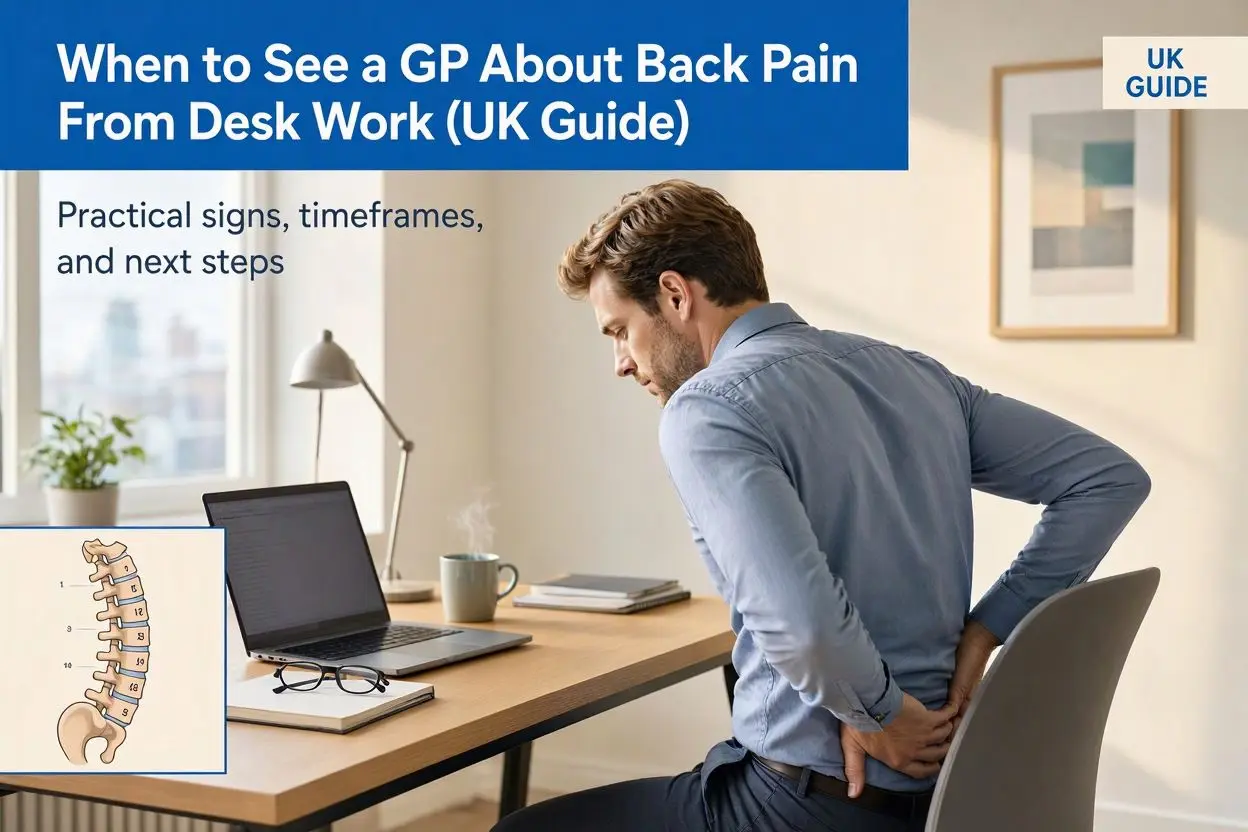
When to See a GP About Back Pain From Desk Work (UK Guide)
You sit at a desk all day. By 3 pm, your back aches. By evening, it feels stiff and tired.
Sound familiar?
You are not alone. Back pain is one of the most common reasons people seek medical advice. Desk work is a big reason why.
But here is the real question. When is it just a sore back, and when should you see a GP?
This guide gives you clear answers. No jargon. No panic. Just what you need to know.
Why Desk Work Hurts Your Back
Your body is built to move. Sitting still for hours puts steady strain on your spine, hips, and shoulders.
Here is what usually goes wrong:
- Poor posture. Slouching or leaning toward your screen strains your muscles.
- No movement. Muscles tighten when they stay in one position too long.
- A bad chair or desk setup. Your screen is too low. Your chair has no support. Your feet do not reach the floor.
- Stress. Tense shoulders and a tight back often go together.
Most desk-related back pain is non-specific. That means there is no serious damage behind it. It is a muscle or ligament problem. The good news is that it usually gets better on its own.
How Long Does Normal Desk Back Pain Last?
Most people recover within a few weeks. Many feel better within six to eight weeks.
During this time, you can look after yourself at home:
- Keep moving. Rest makes back pain worse. Short walks help.
- Stand up often. Get up every 30 minutes if you can.
- Use heat or cold. A hot water bottle or cold pack can ease pain for a short time.
- Try gentle stretches. Stop if any move makes the pain worse.
- Ask a pharmacist. They can suggest pain relief that is safe for you.
You do not need to see a doctor for every ache. But some signs mean you should not wait.
When to See a GP About Back Pain
Book a routine GP appointment if you notice any of these:
- Your pain is not improving after a few weeks. If you have been trying self-care and nothing helps, get it checked.
- The pain is in your upper back. Lower back pain is more common with desk work. Upper back pain is less typical, so it is worth asking about.
- You have lost weight without trying.
- You see a lump or swelling on your back. Or your back looks different in shape.
- You have problems with your balance.
- The pain is worse at night. Pain that keeps waking you up needs attention.
- The pain keeps coming back. Again and again, even after rest.
A GP can check what is going on. They can also point you to physiotherapy or other help.
Get Urgent Help: Call 111 or Ask for a Same-Day GP Appointment
Some signs are more serious. Do not wait for a routine slot.
Ask for an urgent GP appointment or contact NHS 111 if you have back pain and:
- You feel hot, shivery, or generally unwell. Or you have a fever.
- The pain started suddenly and is severe.
- The pain is getting worse very quickly.
- A joint looks red, hot, or swollen.
Fever with back pain is not a normal desk problem. Get it checked fast.
Call 999 or Go to A&E Straight Away
A few symptoms can point to a rare but serious nerve problem. It is called cauda equina syndrome. It needs emergency care.
Call 999 or go to A&E if you have back pain and:
- You find it hard to pee. Or you lose control of your bladder or bowels.
- You feel numb around your genitals or anus.
- Sex feels different. Or you have new problems with sexual function.
- You feel burning, tingling, or numbness in both legs or feet.
- Your legs or feet feel suddenly weak.
- You have chest pain or breathlessness.
These signs are rare. But if they appear, do not wait until morning. Do not wait for a GP slot.
A Quick Self-Check
Ask yourself these questions:
- Is the pain slowly getting better? Keep up self-care.
- Has it lasted more than a few weeks with no change? See a GP.
- Do I have fever, weight loss, or night pain? See a GP soon.
- Do I have numbness, weakness, or bladder or bowel changes? Get emergency help now.
What to Expect at the GP
Many people feel nervous before an appointment. It helps to know what happens.
Your GP will ask about your pain. They will ask how long you have had it. They will ask about your job, your daily habits, and any other symptoms. They may check how you move and test your legs.
Most people with desk back pain do not need scans or X-rays. Your GP will usually suggest exercise, pain relief, and physiotherapy. They may also talk about stress, sleep, and mood. These all affect back pain.
Tip: Before you go, write down when the pain started, what makes it worse, and what you have tried. It saves time and helps your GP.
How to Stop Desk Back Pain From Coming Back
A few small changes make a big difference.
Fix your setup
- Keep your screen at eye level.
- Sit with your feet flat on the floor.
- Keep your lower back supported.
- Keep your keyboard close so your arms stay relaxed.
Move more
- Stand up every 30 minutes.
- Take a short walk at lunch.
- Stretch your shoulders and hips during the day.
Look after your body
- Stay active outside work. Walking, swimming, and yoga all help.
- Sleep well.
- Manage stress. Tension often ends up in your back.
If you work from home, check your chair and table too. A sofa or kitchen stool is a common cause of back pain.
Final Thoughts
Most back pain from desk work is not serious. It gets better with movement and small changes.
But listen to your body. If the pain lasts, keeps coming back, or comes with other symptoms, see your GP. If you notice nerve, bladder, or bowel changes, get emergency help right away.
When in doubt, ask. A quick check gives you peace of mind.
FAQs
Should I see a GP for back pain from sitting too much?
Not always. Mild pain often improves with movement and self-care. See a GP if the pain does not get better after a few weeks, keeps returning, or comes with other symptoms.
How long should I wait before seeing a GP about back pain?
If your pain is not improving after a few weeks of self-care, book an appointment. Do not wait if you have red flag signs like fever, numbness, or weakness.
Can sitting at a desk all day cause serious back problems?
Sitting itself usually causes muscle strain, not serious damage. A small number of back problems are serious. That is why it helps to know the warning signs.
What are the red flag symptoms of back pain?
Key signs include trouble controlling your bladder or bowels, numbness around the genitals or anus, weakness in both legs, fever, unexplained weight loss, and severe pain that gets worse fast. Some of these need emergency care.
Is walking good for desk-related back pain?
Yes. Staying active is better than resting in bed. Short, regular walks keep your muscles loose and help you recover.
Do I need a scan for back pain from desk work?
Usually no. Most desk-related back pain does not need an X-ray or MRI. Your GP will decide if a scan is needed.
When should I call 111 about back pain?
Call 111 if you have back pain with fever, feel generally unwell, or the pain starts suddenly and is severe. Call 111 as well if it is getting worse quickly.
When is back pain an emergency?
Call 999 or go to A&E if back pain comes with bladder or bowel problems, numbness around your genitals or anus, numbness in both legs, or new leg weakness.
Can stress make desk back pain worse?
Yes. Stress, low mood, and anxiety can make back pain feel stronger. Rest, movement, and good sleep all help.
Can a physiotherapist help instead of a GP?
Often, yes. In many areas you can refer yourself to NHS physiotherapy. But see a GP first if you have any red flag signs.
Medical disclaimer: This article is for general information only. It does not replace advice from a doctor. If you are worried about your health, speak to a GP, call NHS 111, or call 999 in an emergency.