
The Microplastics Problem in Devon: What It Really Costs Us
Microplastics, fragments smaller than five millimetres, have been found everywhere scientists have looked: Arctic ice, deep-sea trenches, human blood, breast milk, the summit of Everest. Devon’s coastline, from the surf beaches of the north coast to the estuaries of the south, sits on the front line of a pollution problem that is invisible, ubiquitous and still being understood. But what does “understanding microplastics” actually cost, in money and effort, and what can a Devon resident do about it?
This article covers the science as it stands, the main sources, what action costs (spoiler: mostly nothing), and why Devon’s coast makes this personal.
The Science So Far
Microplastics come in two kinds: primary (manufactured small, like microbeads, now largely banned in UK cosmetics) and secondary (broken down from larger items, the vast majority). Sources include tyre wear (possibly the largest single source), synthetic clothing fibres released in washing, degraded packaging and fishing gear, and road paint. They travel via rivers, air and sewage to the sea, where they persist for centuries, fragmenting ever smaller.
The health picture is honestly incomplete. Laboratory studies show concerning effects at high exposures, but real-world human exposure levels and their significance remain under active research; scientists counsel concern without panic. The ecological evidence is stronger: microplastics are ingested across the food web, from plankton to whales, with documented harm to marine life. The prudent response, given persistence and uncertainty, is the precautionary one: reduce inputs now rather than awaiting perfect proof. This is the same logic that eventually vindicated action on lead, asbestos and CFCs, where waiting for certainty meant decades of avoidable harm. With microplastics, the exposure is involuntary and near-universal, which strengthens the precautionary case: nobody consented to plastic in their blood, and consent matters even when the dose-response curve is still being drawn. Act on what is known, fund research into what is not, and do not let uncertainty become an excuse for inertia. Devon’s strandlines will thank you, one fragment at a time, and the data you collect on Devon’s beaches may one day change national policy for the better, which is the real prize worth working towards together always. The Marine Conservation Society’s data, gathered partly through Devon’s own beach cleans, documents the local scale.
Devon’s Coastal Front Line
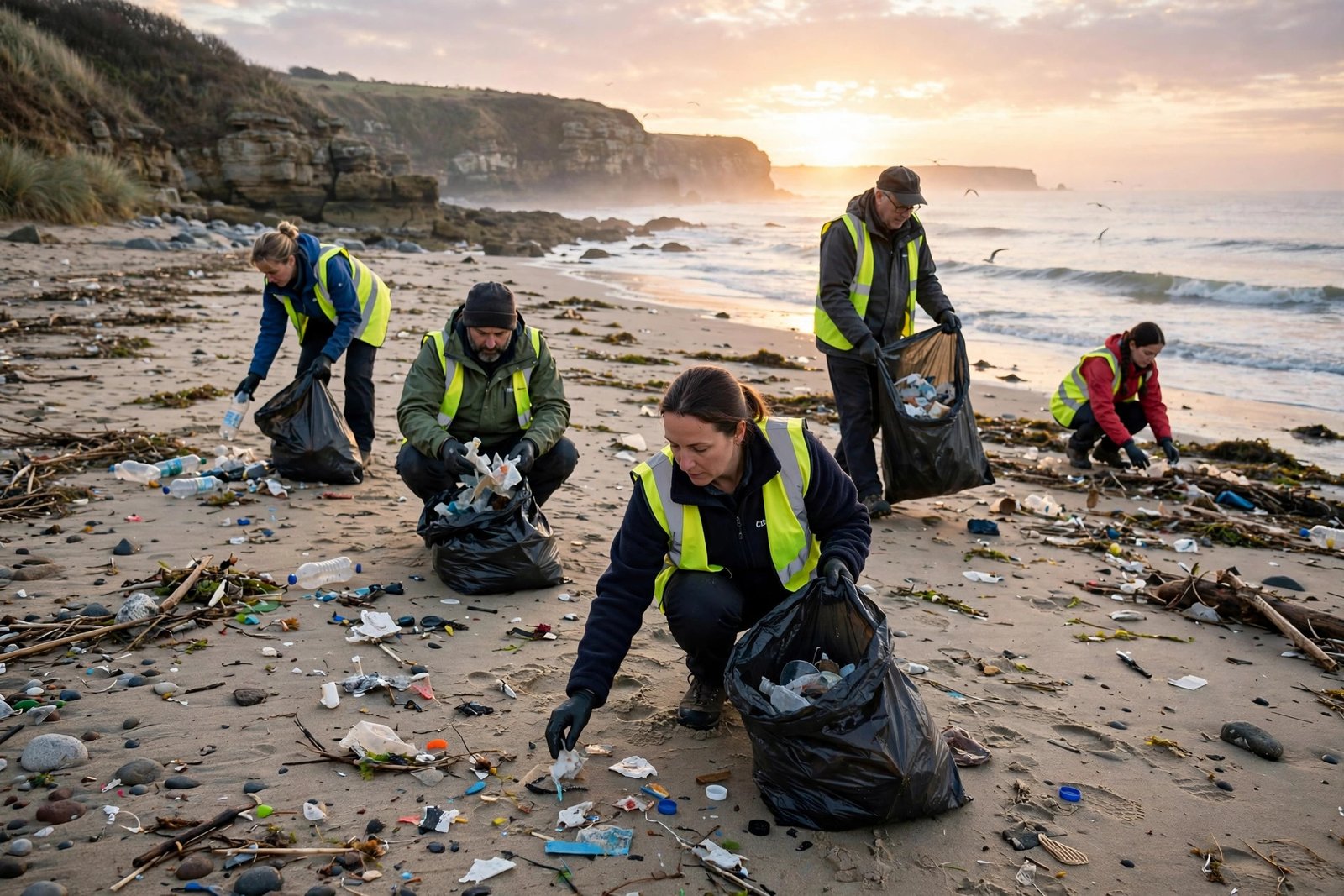
Devon experiences microplastic pollution distinctively. The north coast’s Atlantic-facing surf beaches accumulate marine litter from ocean currents; the south coast’s estuaries (the Exe, Dart, Teign, Tamar) trap river-borne plastics; and the county’s popularity as a tourist destination adds seasonal visitor waste. Organisations from Surfers Against Sewage (founded in Cornwall, active across Devon) to local beach-clean groups turn this geography into action, with regular cleans that both remove plastic and generate the data that drives policy.
The cost of joining in is zero: beach cleans are free, social, and weirdly addictive, with the visible before-and-after supplying a satisfaction that abstract environmentalism rarely offers. For the time-poor, the two-minute beach clean (pick up litter whenever you visit) scales across thousands of visitors into serious tonnage. Devon’s coast is both the warning and the classroom; understanding microplastics here means seeing them, literally, in the strandline.
What Action Costs (£): The Honest Ledger
The highest-impact microplastic reductions cost nothing or save money. Wash synthetic clothes less and in fuller loads (free, saves energy); the fibre release per wash is roughly constant, so fewer washes means fewer fibres. Fit a washing-machine microfibre filter (£25-35, e.g. PlanetCare or Guppyfriend bag at £25): the main purchase in the microplastic toolkit, paying back in nothing but conscience, which is fine because the cost is trivial.
Choose natural fibres when buying new (often cheaper secondhand); avoid single-use plastics that become tomorrow’s secondary microplastics (the kitchen plastic audit covers this); drive smoothly to reduce tyre wear (saves fuel too). Total meaningful spend: under £35, mostly optional. Wider eco-friendly home habits reinforce the same reductions, and gov.uk’s microbead ban guidance shows regulation handling the primary-microplastic side. Understanding microplastics costs an evening’s reading; acting on them costs less than a takeaway.
Microplastics in Food and Drink
The question everyone asks: are we eating them? The answer is yes, in small quantities, from multiple routes. Sea salt, shellfish, drinking water (bottled worse than tap), beer, honey and even fruit and vegetables have all tested positive for microplastics in various studies. The amounts are tiny, micrograms per serving, and the health significance at these levels remains unknown, which is the honest scientific position.
The practical response is proportionate, not panicked. Drink tap water over bottled (cheaper, and lower in microplastics). Eat a varied diet rather than fixating on any single source. Support the systemic measures that reduce inputs at scale. And keep the risk in perspective: the known harms of air pollution, processed food and inactivity dwarf the speculative harms of dietary microplastics by orders of magnitude. Worry about microplastics exactly as much as the evidence warrants, which is: enough to act, not enough to lose sleep over. The precautionary reductions are the same cheap habits as before; no special diet required.
The Bigger Sources You Cannot Shop Your Way Out Of
Honesty requires acknowledging that consumer action, while worthwhile, cannot touch the biggest sources. Tyre wear, the probable number-one source, needs regulation and better materials, not consumer choice. Fishing gear losses need industry and international action. Agricultural plastic films need farming-policy reform. The microfibre filter on your washing machine is virtuous but marginal against these.
This is not an argument for inaction but for correctly aimed action. Do the household measures (they are cheap and they help), join the beach cleans (they generate data and community), and add your voice to the systemic campaigns: the deposit-return scheme, extended producer responsibility, tyre-wear standards. The Global Plastics Treaty negotiations, the most significant environmental diplomacy of the decade, will shape all of this; informed public support matters. Microplastics are a systems problem wearing a consumer-problem costume; treat both halves accordingly, and remember that today’s beach-clean volunteer is tomorrow’s informed voter on the policies that actually move the needle.
Conclusion
Understanding microplastics in Devon costs nothing but an evening, and acting on them costs under £35, mostly optional. The science counsels precaution, Devon’s beaches make the problem visible, and the action hierarchy runs from free household habits through beach cleans to systemic campaigning. You cannot shop your way out of tyre wear, but you can wash smarter, filter your machine, clean your beach, and raise your voice. For under £35, that is a remarkable return.
Frequently Asked Questions
What are microplastics?
Plastic fragments under 5mm, either manufactured small (microbeads, now largely banned) or broken down from larger items. They are found throughout the environment, including human bodies.
Are microplastics harmful to humans?
The honest answer: research is ongoing. Lab studies show effects at high exposures; real-world significance is still being established. Scientists advise precautionary reduction without panic.
What is the biggest source of microplastics?
Likely tyre wear, followed by synthetic clothing fibres, degraded packaging and fishing gear. Consumer action helps most with fibres and packaging; tyres need regulation.
Do washing-machine filters work?
Yes, they capture a significant share of fibres per wash. Combined with washing less, fuller loads and cooler temperatures, they meaningfully reduce household fibre release.