Link Farms in 2026: How UK Businesses Can Spot and Avoid Them
Link farms can look like a quick route to better search visibility: a business pays for a batch of backlinks, sees a list of websites and…
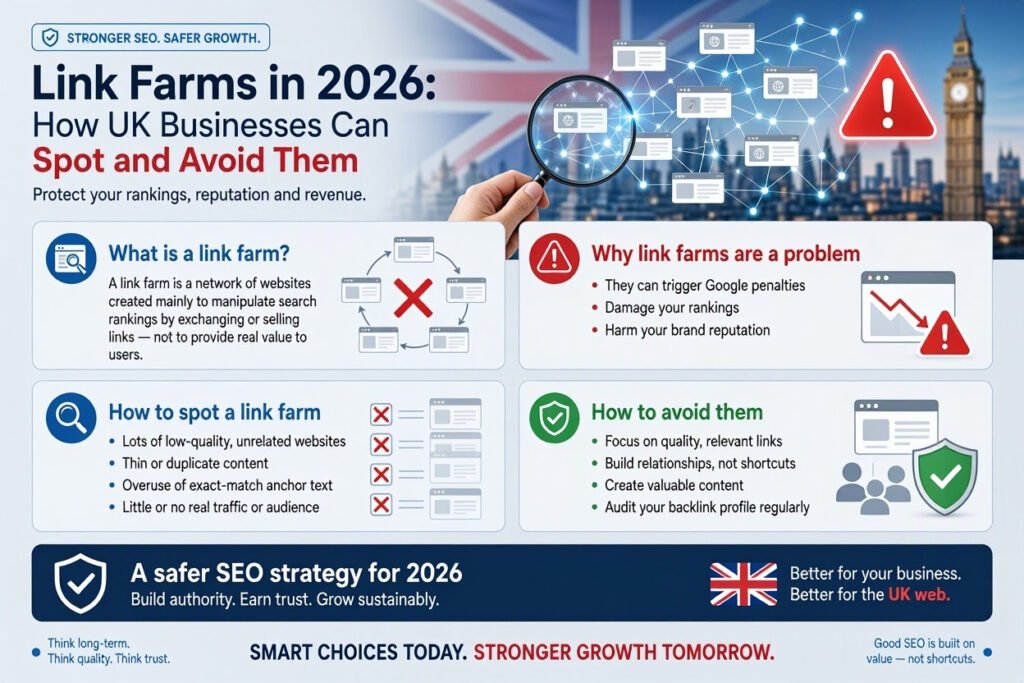
Link farms can look like a quick route to better search visibility: a business pays for a batch of backlinks, sees a list of websites and expects its pages to climb. The trouble is that links built mainly to manipulate rankings can put a site’s reputation and organic traffic at risk. For UK businesses weighing up digital marketing offers in 2026, the useful question is not how many links a package promises, but whether the websites and articles behind them would make sense to real readers.
What a Link Farm Actually Is
A link farm is a website, or a network of websites, created chiefly to link out to other sites and influence search rankings. The pages may be thin, repetitive or unrelated to one another, with little reason to exist beyond hosting links. Some are built as obvious networks; others are ordinary-looking blogs with a steady stream of paid placements and little editorial oversight.
Not every site that publishes guest articles is a link farm, and not every backlink is a problem. A link can be useful when it comes from a relevant publication, appears in a genuinely helpful article and gives the reader a sensible next step. The distinction is purpose and quality: is the page serving an audience, or does it exist mainly to pass ranking signals? A practical guide to spotting link farms can help marketers assess warning signs before committing to a campaign.
Warning Signs to Look For
Start by reading the site, not its sales pitch. If it publishes articles on unrelated subjects in quick succession — say, plumbing, cryptocurrency, pet care and business software — with no clear audience or editorial identity, be cautious. A broad publication can cover several topics legitimately, but the pages should still show consistent standards and a reason for those subjects to sit together.
Look at the articles themselves. Thin copy, generic headlines, awkward phrasing, outdated information and paragraphs that exist only to fit in a commercial link are all signs of low editorial value. Check whether the link destinations are relevant to the article. A post about local travel that links to an unrelated financial product, for example, is unlikely to have been written primarily to help its readers.
Then inspect the site’s wider pattern. A large number of outbound links to commercial services, repeated exact-match anchor text, and many posts that appear to have been published for different advertisers can point to a paid-link operation. Search for the publication’s name alongside terms such as “write for us” or “guest post” and review the results carefully. A guest-posting page is not proof of a problem by itself, but an openly transactional list of placements, with no editorial criteria, deserves scrutiny.
Why Cheap Backlinks Can Cost More Later
Search engines aim to reward useful pages and discourage attempts to manipulate rankings. Links that breach spam policies may be ignored or discounted; in more serious cases, a site can receive a manual action that affects its visibility until the issue is addressed. There is no reliable shortcut in which a certain number of low-quality links guarantees a penalty, but buying links without checking their source creates a risk that is difficult to justify.
The commercial cost is not limited to search rankings. A link on an untrusted site can make a brand look careless to customers, partners or journalists who come across it. It can also waste budget that might have gone towards stronger pages, useful research or genuine relationships with publications. For a small firm, a modest campaign built on relevant coverage is usually easier to assess than a large package of anonymous placements.
How to Vet a Link-Building Offer
Ask for examples of the sites where links may appear, the proposed article topics and the process for choosing publishers. A responsible provider should be able to explain why a site suits your audience, how its editors review submissions and whether links are paid or otherwise incentivised. Treat guarantees of ranking positions, huge link volumes or immediate results as reasons to ask more questions, not as evidence of quality.
Review each proposed placement in context. Would someone who reads the article plausibly want to visit your page? Does the article answer a real question, and does the publisher have signs of an active readership beyond its backlink inventory? Consider the anchor text too. Natural links use a mix of brand names, page titles and descriptive phrases; forcing the same keyword into every link can make a campaign look manufactured.
Guest posting can still be a sound way to reach a relevant audience when the article is original, useful and accepted on editorial merit. The aim should be to contribute something a publication’s readers value, rather than to place a keyword at any cost. If you are assessing guest-posting options, apply the same checks to the publication and its content before agreeing to a placement.
Build Links by Making Useful Things
Businesses have better reasons to earn links than simply wanting a higher position in search results. A clear guide, original survey, local data set, practical calculator or well-made product resource gives other writers something worthwhile to cite. Share it with organisations and publishers whose readers would benefit, and accept that coverage is earned rather than guaranteed.
This approach also helps teams decide where to spend their time. A company planning a digital product, for instance, can first work out what the product is meant to do and what information customers need before launching a broad outreach campaign. For a useful perspective on one part of that planning, Osdire’s mobile app development cost breakdown outlines the kinds of pricing considerations involved in a US app project. It is a reminder that good digital work begins with a clear brief, not a promise of instant results.
When reviewing an existing backlink profile, look for patterns rather than reacting to every unfamiliar domain. Keep records of suspicious placements, ask an SEO specialist to assess meaningful risks, and avoid contacting site owners or using removal tools indiscriminately. A steady focus on relevant publications, genuinely useful content and transparent marketing decisions is more durable than chasing a large link count. If a link offer cannot explain who the content helps, it is probably not a sensible investment.