
How Much Does Two Weeks in Japan Cost?
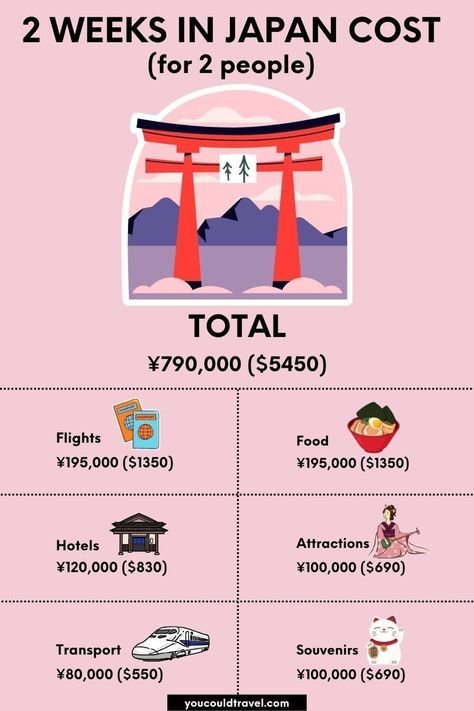
How much does it cost to travel around Japan for two weeks? Japan has a reputation for being eye-wateringly expensive — and it can be, if you do it the luxury way. But here’s the secret the guidebooks bury: Japan is one of the best-value developed countries in the world for travellers right now. The weak yen means your pounds stretch further than they have in decades, and Japan’s budget infrastructure (business hotels, convenience store food, the rail pass) is superb. Here’s the real numbers for two weeks.
The Short Answer
Per person, for 14 days (excluding international flights):
- Budget: £1,200-1,700 (hostels/capsules, konbini food, careful rail pass use, free sights)
- Mid-range: £1,800-2,800 (business hotels, mix of restaurants, 7-day rail pass, paid attractions)
- Comfortable: £2,800-4,500+ (nicer hotels, ryokan night, great restaurants, 14-day rail pass)
Add international flights: £500-900 return from London if booked 3-5 months ahead (see our flight timing tactics — the principles apply to Tokyo too).
Accommodation: £35-120/night
- Hostels/capsule hotels: £15-35/night. Japanese hostels are famously clean; capsules are a fun experience (note: most are single-gender).
- Business hotels: £45-75/night. Tiny, spotless, perfectly located near stations — the sweet spot for most travellers. Toyoko Inn, APA, Super Hotel chains.
- Mid-range hotels: £75-120/night in Tokyo/Kyoto; less elsewhere.
- Ryokan (traditional inn): £100-250/night including kaiseki dinner and breakfast. Expensive but unmissable — budget for one night as the trip highlight.
- Money saver: Tokyo and Kyoto are priciest; Osaka, Hiroshima and smaller cities run 20-30% cheaper. Mix your bases.
Transport: The Rail Pass Question
The Japan Rail Pass got significantly more expensive in late 2023, so the old “always buy it” advice needs updating:
- 7-day pass: ~£200 | 14-day: ~£320 | 21-day: ~£400 (prices fluctuate with the yen)
- Do the maths: A 7-day pass pays off with roughly one long shinkansen return (e.g., Tokyo-Kyoto return is ~£180). Use the Japan Guide rail pass calculator with your actual itinerary.
- Regional passes (Kansai, JR East, etc.) are often better value for focused itineraries — £40-120 for 3-5 days of unlimited regional travel.
- City transport: £5-10/day on subways. Get a Suica/Pasmo IC card (now available as phone apps for tourists) — tap in/out everywhere, works in shops too.
How Much Does It Cost to Travel Around Japan for Two Weeks? Food
Japanese food is the trip’s greatest value surprise:
- Konbini (convenience store) meals: £3-6 — onigiri, bento, noodles. Genuinely delicious; locals eat this way daily.
- Ramen/udon/gyudon shops: £5-9 for a superb bowl. Ticket-machine restaurants are fast, cheap and excellent.
- Mid-range restaurants: £12-25 per person — sushi sets, izakaya spreads, tonkatsu.
- Splurge meals: £40-100+ — the ryokan kaiseki, a proper sushi omakase.
- Daily food budget: £20-30/day eating well on a mix; £40-60/day eating very well.
No tipping culture — the price is the price. And the £3 konbini breakfast of onigiri + coffee will ruin Pret for you forever.
Sights and Experiences: £100-300 Total
Many of Japan’s best experiences are free: temples and shrines (most free or £2-4), parks, the Shibuya crossing, Osaka’s Dotonbori, Hiroshima’s Peace Park. Paid highlights: teamLab digital museums (£15-25, book ahead), sumo tournament tickets (£20-80), the Ghibli Museum (£8, book months ahead), day trips (Nara’s deer park, Nikko’s shrines — transport cost mainly). Budget £100-200 for two weeks of sights; more if you’re doing the big-ticket experiences.
Sample 14-Day Budget (Mid-Range, Per Person)
- Flights: £700
- Accommodation (13 nights @ £60 avg): £780
- 7-day rail pass + city transport: £280
- Food (£35/day): £490
- Sights/experiences: £150
- Shopping/souvenirs/buffer: £200
- Total: ~£2,600
Practical Money Tips
- Cash is still king in smaller establishments — carry yen. 7-Eleven ATMs accept foreign cards reliably.
- Fee-free card (Chase/Starling/Monzo) for card payments — our currency guide covers the strategy.
- Travel insurance with good medical cover — Japan’s healthcare is excellent and expensive. See our insurance principles (get worldwide cover).
- Pack light: You’ll be hauling luggage through stations — our long-haul packing guide and two-week luggage guide apply perfectly.
The Classic 14-Day Itinerary (First-Timers)
- Days 1-4: Tokyo — Shibuya, Asakusa and Sensō-ji, Meiji Shrine, teamLab, day trip to Nikko or Kamakura. Stay near a Yamanote line station.
- Days 5-6: Hakone — Mt Fuji views (weather permitting), the open-air museum, onsen ryokan night. The classic Fuji + hot spring combo.
- Days 7-9: Kyoto — Fushimi Inari at dawn, Arashiyama bamboo grove, Kinkaku-ji, Gion evenings. The cultural heart.
- Day 10: Nara (day trip from Kyoto) — deer park, Tōdai-ji’s giant Buddha, tranquil temples.
- Days 11-12: Osaka — Dotonbori food streets, Osaka Castle, the city’s legendary casual dining. Many travellers’ favourite city.
- Day 13: Hiroshima + Miyajima (long day from Osaka) — Peace Memorial, then the floating torii gate at sunset.
- Day 14: Shinkansen back to Tokyo, last-minute shopping, fly home.
This hits the highlights without rushing — and the 7-day rail pass covers days 5-11, the heaviest travel stretch. Adjust to taste: swap Hiroshima for the Japanese Alps, or add extra Kyoto days if temples are your thing.
Japan Etiquette in 60 Seconds
- Shoes off indoors — temples, ryokans, some restaurants. Watch for the step-up and the provided slippers.
- No tipping — it’s not done and can cause confusion. Good service is the default, not a transaction.
- Quiet on trains — phone on silent, no calls. The Shinkansen hush is sacred.
- Cash for small places — cards widely accepted in cities, but rural restaurants, temples and small shops are cash-only.
- Chopstick rules: Never stick them upright in rice (funeral imagery), don’t pass food chopstick-to-chopstick.
- Onsen etiquette: Wash thoroughly before entering, no swimwear, tattoos may be an issue at traditional baths (check ahead — attitudes are relaxing).
The Takeaway
Two weeks in Japan costs roughly £2,000-3,500 per person mid-range including flights — far less than the reputation suggests, thanks to the weak yen. Business hotels, konbini food, a well-chosen rail pass and free temples keep costs sane while the experience stays extraordinary. It’s the trip of a lifetime at the price of a fortnight in the Med. Go.
One thought on “How Much Does Two Weeks in Japan Cost?”