
How Much Does a Smart Meter Installation Cost in the UK?
How much does a smart meter installation cost in the UK? Here’s the good news first: for the vast majority of UK households, it costs nothing at all. Your energy supplier is obliged to offer you one, and the fitting itself is free. But that simple answer hides a few wrinkles worth knowing about — because while the meter is free, there are situations where you could end up paying, and plenty of people find the process more fiddly than it should be.
I’ve been through the smart meter process twice now — once in a flat in Manchester and once in a semi in Leeds — and the two experiences couldn’t have been more different. Let me walk you through what it genuinely costs, what to watch out for, and whether it’s even worth the hassle.
How Much Does a Smart Meter Installation Cost in the UK?
Your supplier covers the full cost of a standard smart meter installation. The government set it up this way when the national rollout began: suppliers recover the cost of the programme through everyone’s energy bills (a few pounds a year per household, folded into standing charges), so there’s no upfront charge to you. When you book an appointment, the engineer arrives, fits the meter, shows you the in-home display, and leaves. Done. No invoice, no awkward “that’ll be £150 please”.
Ofgem is clear on this: if a supplier tries to charge you for a standard domestic smart meter installation, they’re in the wrong. You can complain and, if needed, escalate to the Energy Ombudsman.
When You Might Actually Pay Something
There are a handful of edge cases where money changes hands:
- You want a smart meter sooner than the schedule allows. Some suppliers used to offer paid fast-track appointments. This is rare now that the rollout has matured, but if you’re offered one, think twice.
- Your meter cupboard needs work first. If your meter is in a dangerous spot, boxed in behind kitchen units, or the wiring is ancient, the engineer may refuse to fit the smart meter until the area is made safe. Sorting that out — an electrician visit, building a proper housing — is on you, and that can easily run to £100–£250.
- You’re a business, not a home. Small business smart meter installs are usually still free, but some suppliers charge for non-standard commercial setups.
- You’ve already got a smart meter and want it moved. Moving a meter to a different spot in the house is not part of the free rollout — expect quotes around £150–£300 depending on the supplier and the complexity.
What the Appointment Is Actually Like
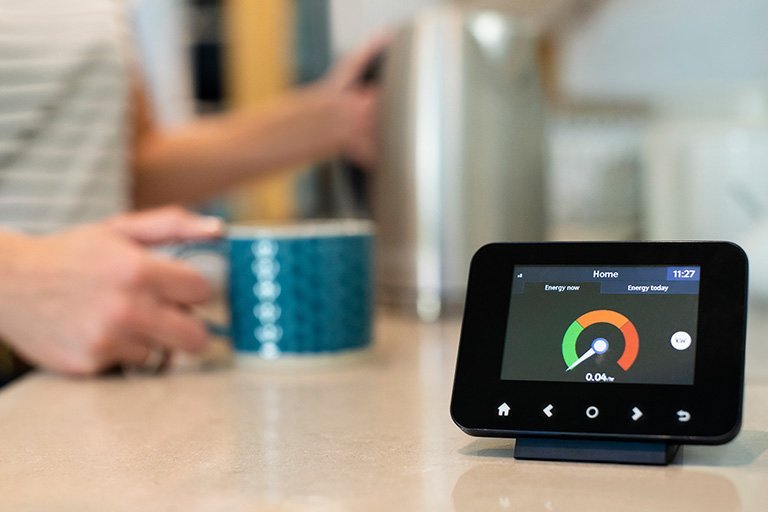
Booking was painless in my case — a phone call, an appointment slot two weeks out. The engineer spent about an hour and a half fitting both the electricity and gas meters, and yes, your power goes off for part of it. My advice: don’t book it on a day you’re working from home with back-to-back video calls, and unplug anything sensitive first. The engineer in Leeds was brilliant — he walked me through the in-home display, showed me the traffic-light budget indicator, and even waited while I paired the display to the meters.
One thing that surprised me: the in-home display shows your usage in pounds and pence as it happens, not just kilowatt-hours. Watching the number tick up when the kettle goes on is oddly addictive — and, I’ll admit, it’s genuinely changed how I use the tumble dryer.
Do Smart Meters Save You Money?
This is the question everyone really wants answered. A smart meter doesn’t magically cut your bill — it’s a measuring device, not a money-saving gadget. But studies by the government’s own rollout body have consistently found that households with smart meters use a bit less energy, simply because they can see what they’re spending in real time. Most people save somewhere between 2–5% a year, which on a typical bill works out at roughly £30–£70 annually.
The bigger win is accuracy. No more estimated bills, no more trudging out to the meter cupboard with a torch in December. And if you want to switch to a time-of-use tariff — cheap overnight electricity for an EV or storage heaters — you’ll need a smart meter to do it. In that sense, the smart meter guidance from Ofgem is worth a read before you decide.
Smart Meters and Second-Generation Meters (SMETS1 vs SMETS2)
Worth a quick note: the earliest smart meters (SMETS1) could “go dumb” if you switched supplier, losing their smart features. That’s been largely fixed now, and every new installation uses SMETS2 meters, which stay smart when you switch. If you’re offered an installation today, you don’t need to worry about this — but if a neighbour warns you about smart meters going dumb, that’s the old first-generation kit they’re remembering.
What If You’d Rather Not Have One?
You’re allowed to say no. There’s no legal requirement to accept a smart meter in a domestic property. Suppliers have to offer, not force. Some people refuse over privacy worries or because they had a bad experience with an early meter. That’s entirely your call — though it does mean you’ll keep submitting manual readings and won’t be able to access the cheapest time-of-use tariffs.
The Bottom Line
A smart meter installation costs you nothing out of pocket in almost every case, takes under two hours, and gives you the first honest look you’ve probably ever had at what your home actually costs to run. If your supplier is offering appointments, take one — just avoid the two rookie mistakes: don’t pay for a “priority” slot you don’t need, and check your meter cupboard is accessible before the engineer turns up. If you’re also wondering about your home’s energy habits more broadly, it’s worth checking how much electricity a gaming PC actually uses per hour — those figures surprised me more than anything the smart meter showed me. And if smart-home kit is your thing, you might like our look at how much it costs to install a Ring doorbell too.
Smart Meter Questions, Answered
Do I have to accept a smart meter?
No. There’s no legal obligation for households to have one, and you can decline your supplier’s offer without penalty. The trade-off is that you’ll keep submitting manual meter readings and you won’t be able to access time-of-use tariffs that could cut your bills — particularly valuable if you charge an electric car overnight or run storage heaters.
Will my smart meter still work if I switch supplier?
Yes — as long as it’s a second-generation (SMETS2) meter, which every new installation has been for years now. SMETS2 meters stay smart when you switch, and your new supplier picks up the readings automatically. The old first-generation meters that “went dumb” on switching were a real problem in 2017–2019, but that generation is long gone from new installs.
What happens to the smart meter when I move house?
It stays with the property — meters belong to the energy infrastructure, not to you. Tell your supplier you’re moving, give final readings (the smart meter usually handles this itself), and the new occupier inherits it. If you’re moving into a house with a smart meter, the in-home display may need re-pairing to your new account, which your supplier sorts out.
Can renters get a smart meter installed?
Yes. Your energy supplier’s obligation to offer smart meters applies whether you own or rent, and your landlord can’t unreasonably refuse. It’s polite to tell them, and if the tenancy agreement says something about alterations, a quick written heads-up covers you — but fitting a smart meter is considered a minor, reversible change in most cases.