
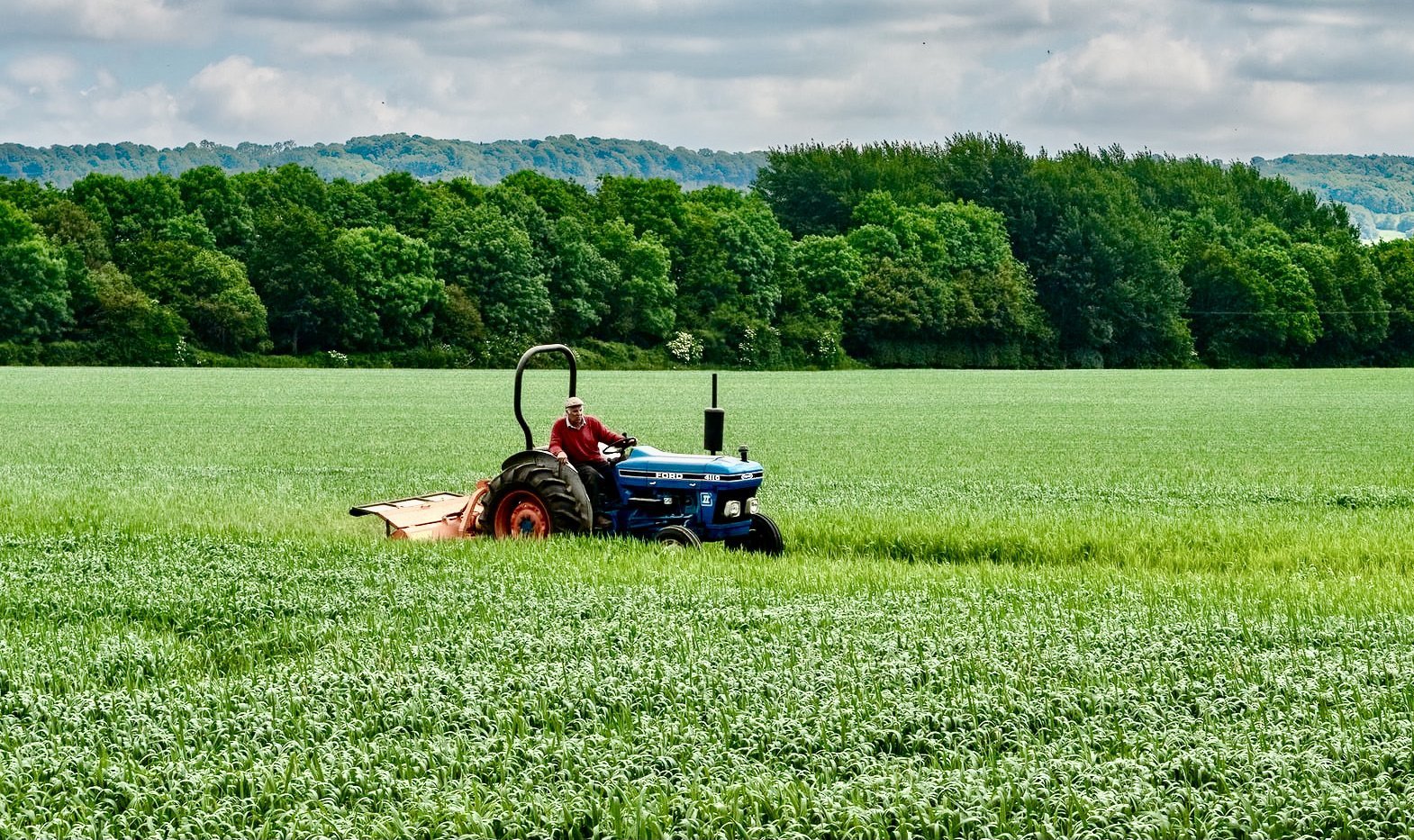
How AI Is Used in Farming in the UK
Farming might seem like the last place you’d find artificial intelligence — muddy boots, unpredictable weather, and animals don’t scream “tech industry.” But British agriculture is quietly becoming one of AI’s most interesting frontiers. Understanding how AI is used in farming in the UK reveals a story of drones over wheat fields, robots milking cows, and algorithms predicting crop disease — all happening right now, often on family farms. Here’s what’s going on down on the farm.
Precision Agriculture: Treating Every Plant Individually
The core idea transforming arable farming is precision agriculture — using data to treat each square metre of field according to its needs, rather than blanket-treating the whole farm. AI is the engine:
- Satellite and drone imagery analysis. AI models analyse multispectral images of fields to spot crop stress, nutrient deficiency, pest damage, and disease — often weeks before the human eye would notice. A farmer gets a map showing exactly which patches need attention.
- Variable-rate application. Guided by AI analysis, tractors apply fertiliser, seed, and pesticide at varying rates across the field — more where needed, less where not. This cuts input costs and chemical use dramatically, which matters both economically and environmentally.
- Yield prediction. Machine learning models combine weather data, soil sensors, satellite imagery, and historical yields to forecast harvests — helping with everything from storage planning to forward-selling crops.
Robots in the Field
- Robotic weeders. AI-guided robots identify weeds among crops and eliminate them mechanically or with micro-doses of herbicide — targeting individual weeds rather than spraying entire fields. Several UK trials are showing dramatic chemical reductions.
- Autonomous tractors. GPS-guided tractors have existed for years; AI is adding obstacle detection, adaptive behaviour, and full autonomy for suitable tasks. Labour shortages in agriculture make this particularly attractive.
- Harvesting robots. Strawberry-picking robots using computer vision to identify ripe fruit are being trialled on UK farms — addressing the seasonal labour crunch that Brexit intensified. Delicate, variable produce is the hard case; progress is real but gradual.
- Drones for spraying and monitoring. Beyond imaging, agricultural drones now handle targeted spraying in difficult terrain and livestock monitoring across large grazing areas.
Livestock: AI in the Barn
British livestock farming is adopting AI rapidly:
- Robotic milking. Already widespread on UK dairy farms — cows choose when to be milked, robots handle the process, and AI monitors yield, milk quality, and each animal’s health indicators. Changes in behaviour or output flag illness early.
- Health monitoring. Wearable sensors and computer vision track feeding, movement, and vital signs. AI detects lameness in cattle, respiratory issues in pigs, and distress signals — enabling intervention days earlier than visual inspection.
- Precision feeding. AI-optimised rations tailored to each animal’s needs, growth stage, and production — improving efficiency and reducing waste and emissions.
Weather, Disease, and Prediction
Farming is fundamentally about managing uncertainty, and AI is a prediction technology:
- Disease and pest forecasting. Models combining weather data, spore counts, and field conditions predict outbreaks of threats like potato blight or wheat rust — enabling preventive action rather than reactive spraying. Given AI’s growing role in weather prediction, farm-level forecasts are getting sharper every year.
- Irrigation optimisation. Soil moisture sensors plus weather forecasts plus crop models equals watering exactly when and where needed — increasingly important as UK summers get drier.
- Market and price forecasting. AI analysis of commodity markets helps farmers time their selling — though this remains as much art as science.
The Challenges: It’s Not All Smooth
Honest assessment requires the caveats:
- Connectivity. Many rural areas still lack reliable broadband and mobile coverage — the foundation everything else needs. The UK’s rural connectivity gap is AI farming’s biggest bottleneck.
- Cost. The technology is expensive, favouring larger operations. Making precision agriculture accessible to small and tenant farmers is an unresolved equity question.
- Data ownership. Who owns the data generated on a farm — the farmer, or the equipment manufacturer whose sensors collected it? This is contested and important.
- Skills. Modern farming increasingly demands data literacy alongside traditional skills — a transition the industry is navigating through training and advisory services.
For the policy and support landscape, DEFRA publishes guidance on farming innovation funding, including grants for agricultural technology.
What It Means for Consumers
You don’t need to be a farmer to feel AI agriculture’s effects. Precision farming is already changing what’s on supermarket shelves: more consistent quality, potentially lower pesticide residues (targeted application means less chemical use overall), and better availability as yield prediction smooths supply. As the technology matures, expect “precision-grown” to become a quiet selling point — produce grown with minimal inputs through data-driven care.
There’s also a transparency angle. AI-tracked supply chains can tell you exactly where your food came from, how it was grown, and its environmental footprint — farm-to-fork traceability that goes far beyond today’s vague labelling. For consumers who care about provenance and sustainability, this data could transform food shopping from guesswork into informed choice. Some UK retailers are already piloting such schemes.
And if the technology interests you as a career, agritech is hiring: data scientists, drone operators, robotics engineers, and — crucially — people who understand both farming and technology. Agricultural colleges are adding digital skills to their courses, and the sector needs translators between the field and the algorithm. British farming’s future will be written by people comfortable with both muddy boots and machine learning — a combination rarer, and more valuable, than either alone. Sharper forecasts matter enormously here — our guide to whether AI can predict the weather better than humans explains what is improving and why it matters for growers.
The Bottom Line
AI in UK farming means precision agriculture treating each square metre individually, robots weeding and harvesting, AI-monitored livestock health, and predictive models for disease, weather, and markets. The benefits — lower costs, less chemical use, better animal welfare, higher yields — are real and growing. The constraints — rural connectivity, cost barriers, data ownership — are real too. British farming’s AI revolution isn’t about replacing farmers; it’s about giving them superhuman eyes over every plant and animal in their care.