Drew Barrymore Net Worth, Age, Family and Career — Full Profile
Drew Barrymore Net Worth, Age, Family and Career — Full Profile Drew Barrymore has had three careers in one lifetime: the child star of E.T. the…
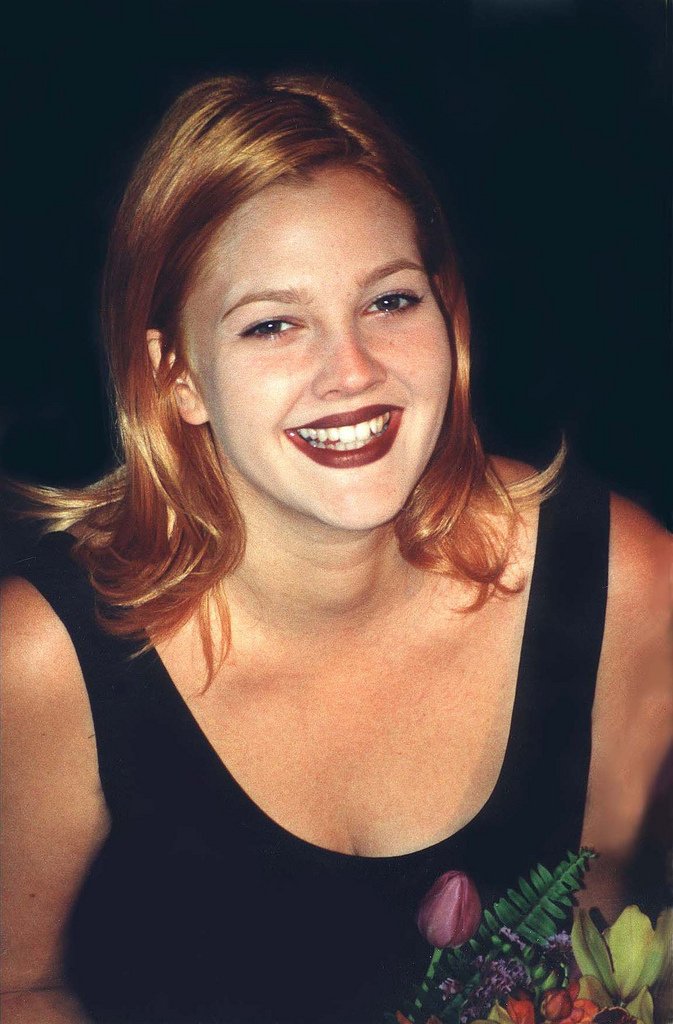
Drew Barrymore Net Worth, Age, Family and Career — Full Profile
Drew Barrymore has had three careers in one lifetime: the child star of E.T. the Extra-Terrestrial at seven, the romantic-comedy lead who defined the genre for a decade, and the presenter and lifestyle founder whose daytime programme and interiors ranges rebuilt her fortune on her own terms. Celebrity Net Worth puts her fortune at an estimated $85 million. This profile sets out the facts plainly — her age, height, former husband, daughters, parents, half-siblings and best-known screen work — in one scannable digest.
Now in her early fifties, Barrymore presents The Drew Barrymore Show, renewed through 2028, and runs the production company she co-founded at twenty. The story below runs from a famous acting dynasty to that position, in order.
Before Fame: School, Family and Life in Culver City
Drew Blythe Barrymore was born on 22 February 1975 in Culver City, California, into the most famous acting family in the business. Her father, John Drew Barrymore, was a performer whose own career had been derailed by drink and drugs; her mother, Jaid Barrymore, née Makó, was an aspiring performer born in a displaced persons camp in West Germany to Hungarian refugees. Her paternal grandparents were John Barrymore, regarded in his day as the greatest stage performer of his generation, and Dolores Costello, a star of the silent era. Barrymore’s godfather is Steven Spielberg, who would direct her breakthrough.
She was working before she could walk: a first advertisement at eleven months, a first speaking role at five in Altered States (1980). Her parents divorced in 1984, when she was nine, and the childhood that followed was famously unsupervised — she was a regular on the nightclub circuit before she was a teenager, and in her memoir Little Girl Lost, published when she was fourteen, she described addiction and treatment in terms no publicist would have chosen. At fourteen she won legal emancipation from her parents, a court decision that made her, in law, an adult responsible for herself.
The second act was built deliberately, and much of it was built around the idea of a settled, comfortable private life — the opposite of the one she grew up in. Her later interiors and lifestyle work, from her Beautiful by Drew kitchenware range to her magazine and programme segments on small, warm corners for reading and rest, comes straight from that instinct; readers setting up their own corner will find the practical steps in our guide to creating a cosy reading corner, which covers light, seating and shelving in a small space.
Building a Career: E.T. and Instant Fame and the Big Leap
1982 — E.T. and instant fame
Spielberg cast Barrymore, at six, as Gertie in E.T. the Extra-Terrestrial, released in 1982, and the picture became the highest-grossing release of its era. Her performance — funny, unimpressed, entirely natural — made her the most famous child performer in the world. Firestarter followed in 1984, with Barrymore in the lead as a girl with a dangerous gift, and Irreconcilable Differences the same year earned her a Golden Globe nomination. The fame arrived faster than any structure to hold it, which is the story of the decade that followed.
1992 — Poison Ivy and the rebuild
After the lost years of her early teens, Barrymore rebuilt her career in independent pictures, and Poison Ivy (1992) announced the strategy: playing against the childhood image entirely, as a manipulative teenager, she reminded casting directors that she could act. Guncrazy (1992), The Amy Fisher Story (1993) and Bad Girls (1994) followed, along with Boys on the Side and Batman Forever in 1995. The parts were chosen, not merely accepted — the first sign of the producer she was about to become.
1995 — Flower Films
In 1995, aged twenty, Barrymore co-founded the production company Flower Films with her business partner Nancy Juvonen. The company gave her ownership of her own work rather than a salary inside other people’s, and it is the single most important financial decision of her career. Its first production was her own Never Been Kissed in 1999; its biggest early successes were Charlie’s Angels and Donnie Darko, both made under her banner. Flower Films remains active three decades later, an almost unheard-of lifespan for a performer-led company.
1996 — Scream and the Wedding Singer era
Barrymore’s appearance in the opening sequence of Scream (1996) — a star turn of barely twelve minutes that upended the picture’s expectations — became one of the most talked-about scenes of the decade. Then came the run that fixed her public image for good: The Wedding Singer (1998) opposite Adam Sandler, and Ever After (1998), a Cinderella retelling that became a durable favourite. Never Been Kissed (1999) completed the set. By 2000 she was the defining romantic-comedy lead of her generation, commanding, at her peak, a reported $15 million per picture — a salary figure recorded here as earnings, kept separate from her fortune as a whole.
2000 — Charlie’s Angels and producing power
Charlie’s Angels (2000), which Barrymore starred in and produced through Flower Films, grossed more than $260 million worldwide, and its 2003 sequel repeated the success. Donnie Darko (2001), which she produced and appeared in, failed on release and then became a cult picture of real influence. 50 First Dates (2004), reuniting her with Sandler, and Fever Pitch (2005) extended the comedy run, while Music and Lyrics (2007) paired her with Hugh Grant. The pattern of the decade is ownership: wherever possible, she was on both sides of the camera.
2009 — Grey Gardens and Whip It
Grey Gardens (2009), in which Barrymore played Little Edie Beale across four decades of a life, won her a Golden Globe and a Screen Actors Guild Award and settled any remaining question about her range. The same year she made her directing debut with Whip It, a roller-derby picture that introduced a generation of younger performers. He’s Just Not That Into You, produced by Flower Films, was a commercial success the same year. The child star of 1982 was, by 2009, an award-winning dramatic performer, a director and a producer with a slate.
2017 — Santa Clarita Diet and a streaming lead
From 2017 to 2019 Barrymore led the streaming comedy Santa Clarita Diet, playing a suburban estate agent with an unusual condition, and served as an executive producer. The programme ran three seasons and demonstrated that her audience would follow her to a new format — a fact that mattered greatly to what came next. Alongside it she built the lifestyle side of the business: a cosmetics line, an eyewear range, and, from 2021, the Beautiful by Drew kitchenware and appliance range, sold through Walmart, which became a substantial retail business in its own right.
2020 — The Drew Barrymore Show
The Drew Barrymore Show launched in September 2020, with Barrymore as presenter and executive producer, and grew into a fixture of daytime schedules on the strength of an interviewing style built on warmth and self-disclosure. In 2026 the programme earned a two-season renewal taking it through 2028. Presenting is now the centre of her working life: a daily programme she owns a piece of, made in New York, where she has lived since 2023 to be near her daughters and their father. The reinvention is complete — the third career is the steadiest of the three.
Her Story in Short: From Culver City to E.T. and Instant Fame
| Her Story in Short: From Culver City to E.T. and Instant Fame | Details |
|---|---|
| Born | 22 February 1975, in Culver City, California |
| Age | 51 years old |
| Height | 5 feet 4 inches (1.63 m) |
| Weight | No reliable published figure |
| Former Husband | Will Kopelman (married 2012–2016); previously married to Jeremy Thomas (1994) and Tom Green (2001–2002) — no current husband or confirmed partner |
| Children | Two daughters — Olive Barrymore Kopelman (born 2012) and Frankie Barrymore Kopelman (born 2014), with former husband Will Kopelman |
| Parents | John Drew Barrymore (father) and Jaid Barrymore, née Makó (mother) |
| Family | Youngest of the Barrymore acting dynasty; mother of two daughters; three older half-siblings through her father |
| Siblings | Three older half-siblings — John Blyth Barrymore (born 1954), Blyth Dolores Barrymore (born 1960) and Jessica Blyth Barrymore (1966–2014) |
| Movies and TV Shows | E.T. the Extra-Terrestrial, Firestarter, Poison Ivy, Scream, The Wedding Singer, Ever After, Never Been Kissed, Charlie’s Angels, Donnie Darko, 50 First Dates, Fever Pitch, Grey Gardens, Santa Clarita Diet, The Drew Barrymore Show |
| @drewbarrymore | |
| Net Worth | Estimated $85 million (Celebrity Net Worth) |
The Fortune in Detail: $85 million, Sources and Doubts
Celebrity Net Worth puts Barrymore’s fortune at an estimated $85 million, and notes that roughly half of it derives from her performing salaries and half from her business ventures and property. Some trackers outside the allowed set for this profile put the figure higher, up to around $125 million, but those totals were not used as the headline. Forbes publishes no competing net-worth total for her.
The composition explains the shape. The first pillar is the salary years: a reported $15 million per picture at her peak in the early 2000s, across a run of hits she frequently also produced, which meant a producer’s share sat on top of the performer’s fee. The second pillar is Flower Films itself — three decades of production, including two Charlie’s Angels pictures and a library of titles that continue to earn. The third is the consumer business: the Beautiful by Drew range and her other licensing ventures convert her name and her taste into retail income that does not depend on her appearing anywhere. The fourth, since 2020, is presenting: a daily programme, renewed through 2028, in which she holds an executive producer’s stake.
Set against that is what the fortune had to survive: a childhood career whose earnings were spent before she was emancipated, a decade of rebuilding in low-paid independent pictures, and three divorces. The $85 million was not accumulated in a straight line from E.T.; it was built twice, the second time with ownership attached to almost everything she touched. That, more than the salary years, is why it has lasted.
That is the digest: a dynasty child who was famous at seven, legally grown at fourteen, a producer at twenty, an award winner at thirty-four and a daytime fixture in her fifties — holding an estimated $85 million fortune, most of it built the second time around.
Life Off Camera: Family and the People Close to Her in Culver City
Barrymore has been married three times. The first marriage, to bar owner Jeremy Thomas in 1994 when she was nineteen, lasted a matter of weeks. The second, to comedian Tom Green in 2001, ended in divorce in 2002. The third was the substantial one: she married art consultant Will Kopelman on 2 June 2012, and their daughters, Olive, born on 26 September 2012, and Frankie, born on 22 April 2014, are the centre of her private life. The marriage ended in divorce in 2016, announced in a joint statement that put the daughters first, and the two have since become a public example of cooperative co-parenting; Barrymore is close to Kopelman’s wife, Alexandra Michler, and speaks of the whole arrangement as family.
She has no current husband and no confirmed partner. Barrymore has said repeatedly, on her own programme and in print, that she is single, content to be so, and in no hurry — telling an interviewer in a widely shared exchange that she was “so single” and very happy with her life. She has also said she will not marry again. The accurate label is former husband, and this profile upgrades nothing: no reliable report records an engagement or a new marriage.
Through her father she has three older half-siblings: John Blyth Barrymore, born in 1954, himself a performer; Blyth Dolores Barrymore, born in 1960; and Jessica Blyth Barrymore, born in 1966, who died in 2014, a loss Barrymore marked publicly with sadness at a relationship that had never had the chance to become close. Her father died in 2004. Her relationship with her mother, Jaid, has been publicly complicated for decades — the emancipation at fourteen saw to that — and Barrymore has written and spoken about it with a candour that has become her trademark. The dynasty she inherited was heavy; the family she built is deliberately light.