Diana Ross Net Worth, Age, Family and Career — Full Profile
Diana Ross Net Worth, Age, Family and Career — Full Profile Diana Ross is the voice that carried Motown around the world: lead singer of the…
Diana Ross Net Worth, Age, Family and Career — Full Profile
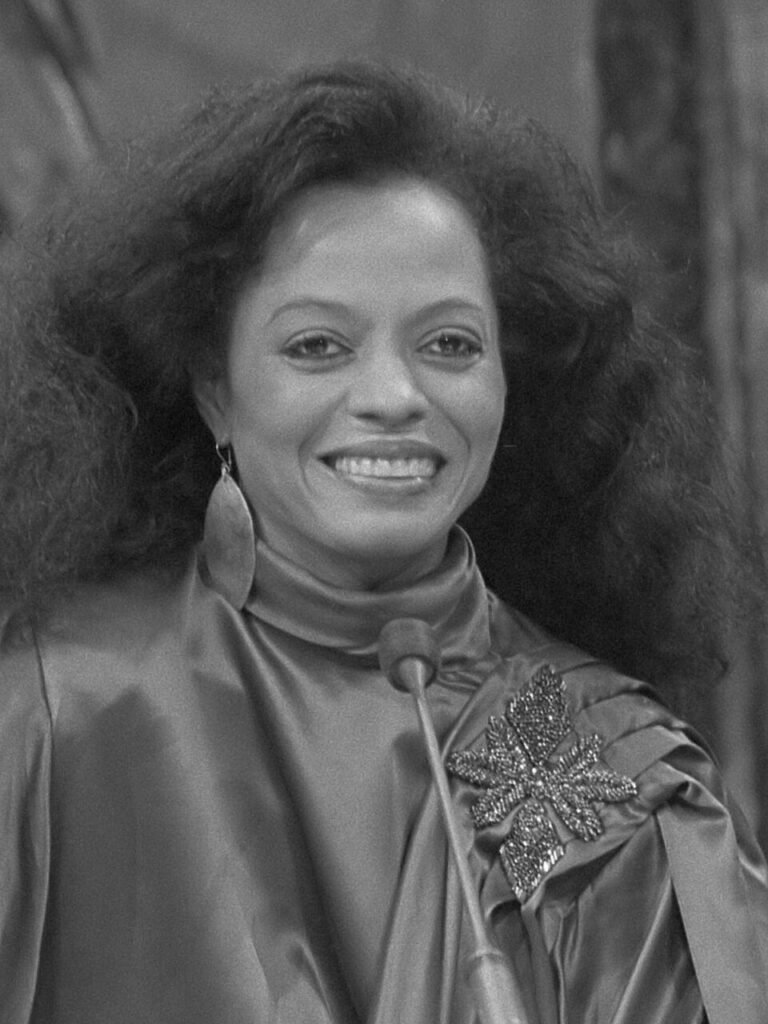
Diana Ross is the voice that carried Motown around the world: lead singer of the Supremes through twelve number one singles, then a solo star whose recordings have defined pop and soul for six decades, and a style icon whose stage wardrobe set the template for every diva who followed. Celebrity Net Worth puts her fortune at an estimated $350 million. This profile sets out the facts plainly — her age, height, former husbands, five children, parents, best-known recordings and catalogue — in one scannable digest.
Now in her early eighties, Ross is still performing, with major tours running through 2025 and 2026, more than sixty years after she first signed to Motown as a teenager. The story below runs from a Detroit housing project to that position, in order.
A Detroit Childhood in the Brewster Projects
Diana Ernestine Earle Ross was born on 26 March 1944 in Detroit, Michigan. Her birth name was Diane — the name her mother chose — but a clerical error on the birth certificate recorded her as Diana, and Diana is the name the world came to know. Her father, Fred Ross Sr., worked in a factory, and her mother, Ernestine Ross, née Moten, raised the family in Detroit, including a period in the Brewster housing projects on the city’s east side. Money was short, but music was constant, and the teenage Ross sang with friends from the neighbourhood.
With Florence Ballard, Mary Wilson and Betty McGlown, she formed a singing group, the Primettes, and the four spent months seeking an audition with Berry Gordy, the founder of the young Motown label, whose office stood within walking distance of the projects. Persistence did the work that connections could not: the group was eventually heard, and in January 1961, while its members were still teenagers, Gordy signed them. He renamed them the Supremes. The group’s early recordings went nowhere commercially — the young women were teased inside the company as the no-hit Supremes — but Ross’s light, precise voice was already the sound Gordy was building around.
The polish was deliberate. Motown trained its performers in presentation as carefully as in singing, and Ross absorbed the lesson completely: the gowns, the wigs, the choreography of a glance. Her standing as a style icon dates from those years, and it has never left her — readers who want the enduring core of that look, rather than the passing trend, will find it in our guide to the wardrobe essentials every woman needs, which covers the timeless pieces that outlast fashion cycles.
The Supremes, a Solo Career and the Kennedy Center
1964 — Where Did Our Love Go and the run begins
The breakthrough came in the summer of 1964. Where Did Our Love Go, a recording the Supremes had not wanted and other Motown acts had passed over, reached number one in the United States, and Baby Love and Come See About Me followed it to the top within months. Between 1964 and 1969 the Supremes scored twelve number one singles in the United States, among them Stop! In the Name of Love, You Can’t Hurry Love, You Keep Me Hangin’ On, Love Is Here and Now You’re Gone, Reflections, Love Child and, finally, Someday We’ll Be Together. For a period in the mid-1960s they were the only act in the world rivalling the Beatles for commercial dominance, and Ross, centre stage in sequins, was their unmistakable face and voice.
1970 — A solo career, launched at number one
Ross left the Supremes in January 1970 to begin the solo career Motown had been preparing for her. Her debut solo album, Diana Ross, produced Reach Out and Touch (Somebody’s Hand) and then a reworked Ain’t No Mountain High Enough, which reached number one in the United States and earned a Grammy nomination. Everything Is Everything and Surrender followed in quick succession, the latter carrying Remember Me, and by the end of 1971 she had established that the solo name could carry the same weight as the group name had.
1973 — Touch Me in the Morning
Touch Me in the Morning, the title recording of her 1973 album, gave Ross another United States number one single, a slow-building ballad that showed the adult direction of her solo work. The album itself reached the top five. Through the middle of the decade she recorded steadily — Last Time I Saw Him, Diana Ross (1976) and Baby It’s Me among the albums — while her concerts grew into full-scale productions that treated wardrobe, staging and lighting as part of the performance.
1976 — Love Hangover and disco
Love Hangover, released in 1976, reached number one in the United States and placed Ross at the front of the disco era without surrendering her identity to it: the recording begins as a ballad and lifts into a dance tempo, a structure that suited her perfectly. The second half of the decade brought The Boss (1979), another album built for the dancefloor, and a run of performances that confirmed her as one of the defining live acts of the period.
1980 — Diana, Upside Down and I’m Coming Out
In 1980 Ross handed production of her next album to Bernard Edwards and Nile Rodgers of Chic, and the result, titled simply Diana, became the best-selling album of her career. Upside Down topped the United States chart for a month, and I’m Coming Out — written, Rodgers has said, after he saw a stage full of Ross impersonators and understood what she represented — became one of her signature recordings and an anthem far beyond its chart life. The album’s success gave Ross the leverage for the next step: in 1981 she left Motown for RCA in a deal reported at the time at around $20 million, then the largest recording contract ever signed. That figure was a contract value reported in the press of the day, recorded here as earnings history and kept separate from her fortune as a whole.
1981 — Endless Love and the RCA years
Her first recording of the new era, Endless Love, a duet with Lionel Richie, spent nine weeks at number one in the United States and became one of the best-selling singles of all time. The RCA albums followed — Why Do Fools Fall in Love, Silk Electric, Swept Away and Ross (1983) among them — carrying singles including Why Do Fools Fall in Love, Mirror Mirror, Muscles and Swept Away. In July 1983 she performed a free concert in New York’s Central Park before an audience estimated in the hundreds of thousands; when a storm cut the first attempt short, she returned the following day and finished the show, and the two days together became part of her legend.
1986 — Chain Reaction and an international number one
Chain Reaction, written by the Bee Gees and released as a single in 1986, reached number one in the United Kingdom and Australia while her records continued to chart across Europe. She returned to Motown at the end of the decade, releasing Workin’ Overtime in 1989 and The Force Behind the Power in 1991, the latter a substantial success in the United Kingdom, where her audience has always been especially loyal. Through the 1990s she toured constantly, and her honours accumulated: induction into the Rock and Roll Hall of Fame as a member of the Supremes had come in 1988.
2007 — Kennedy Center Honors and the honours era
In December 2007 Ross received the Kennedy Center Honors, among the highest cultural distinctions in the United States, in recognition of a lifetime in performance. A Grammy Lifetime Achievement Award followed in 2012. In November 2016 she received the Presidential Medal of Freedom, the highest civilian honour in the United States, at a ceremony in Washington. The citations shared a theme: that a singer from a Detroit housing project had become, over five decades, one of the most recognisable performers on earth.
2021 — Thank You, and back on the road
Thank You, released in November 2021, was Ross’s first studio album of new material in more than two decades, recorded during lockdown and received warmly as a late-career statement rather than a nostalgia exercise. Tours followed through 2024 and 2025, including a symphonic celebration tour that played major halls in the United Kingdom, and touring has continued into 2026 under the Diana in Motion banner. Reviewers of the recent concerts have concentrated on the same qualities noted in 1964: the precision of the voice, the command of the stage, and a wardrobe that remains an event in itself.
A $350 Million Fortune From Music and Film
Celebrity Net Worth puts Ross’s fortune at an estimated $350 million. Readers comparing sources will find an older figure of $250 million still widely reported — Parade, for example, published $250 million in January 2026, attributing it to Celebrity Net Worth before that site’s estimate was revised upward — so the disagreement is one of timing between editions of the same allowed source rather than a dispute between rival authorities. Forbes publishes no competing net-worth total for Ross; its coverage of her has taken the form of earnings and honours reporting, which is kept separate here.
The composition is the product of unusual longevity. The first pillar is the catalogue: twelve number one singles with the Supremes, six solo number ones in the United States, and more than 100 million records sold worldwide across her career, generating publishing and performance royalties for six decades. The second is touring: Ross has performed almost continuously since 1961, from Motown package tours to arena and theatre residencies, and live work has been the steadiest income of her later career. The third is the value of the name itself — licensing, reissues, remix projects such as Supertonic, and the steady demand for her recordings in new formats.
Set against that is the economics of the era in which she began. Motown’s early contracts were written on terms that favoured the label, and the great Supremes hits earned their performers far less, at the time, than comparable hits would earn artists today. The fortune was therefore built in the second half of the career — the RCA deal of 1981, the decades of headlining tours, and the compounding value of a catalogue that has never gone out of print — rather than in the years of her greatest chart dominance. The $350 million estimate reflects exactly that shape: not a payday, but sixty years of them.
That is the digest: a teenager from the Brewster projects who talked her way into an audition, fronted the most successful vocal group of her era, rebuilt herself as a solo star twice over, and is still, at eighty-two, performing the catalogue she started in 1961 — holding an estimated $350 million fortune.
Five Children and a Life Lived in the Spotlight
Ross’s first marriage was to Robert Ellis Silberstein, a music executive who managed her, in January 1971. They had two daughters together, Tracee Ellis Ross, born in 1972, and Chudney Ross, born in 1975, and the marriage ended in divorce in 1977. Her eldest child, Rhonda Ross Kendrick, was born in August 1971; her father was Motown founder Berry Gordy, from Ross’s relationship with him in the 1960s — a fact Ross later discussed publicly, and one Rhonda herself has spoken about openly. Silberstein raised Rhonda as his own daughter, and the two families remained on friendly terms after the divorce.
Her second marriage, in 1986, was to Arne Næss Jr., a shipping businessman and mountaineer whom she had met the year before. They had two sons, Ross Naess, born in 1987, and Evan Ross, born in 1988, and Ross also became stepmother to Næss’s three older children. The marriage ended in divorce in 2000. Næss died in a climbing accident in South Africa in January 2004. Ross, who in a 2011 interview described him as the love of her life, has not remarried, and no reliable report records a current partner: the accurate label is former husband, twice over, and this profile upgrades nothing.
Family is the constant underneath the career. Her five children have built careers of their own — Tracee Ellis Ross as an award-winning performer and business founder, Evan Ross as a performer and recording artist, Rhonda Ross Kendrick as a singer and speaker, Chudney Ross as an author and producer, and Ross Naess in business and adventure sports — and Ross is a grandmother several times over. She has spoken of her children as the centre of her life in a way her touring schedule rarely allowed the public to see, and her recent tours have regularly included family in the audience across three generations.
Detroit to the Supremes: The Short Version
| Detroit to the Supremes: The Short Version | Details |
|---|---|
| Born | 26 March 1944, in Detroit, Michigan |
| Age | 82 years old |
| Height | 5 feet 5 inches (1.65 m) |
| Weight | No reliable published figure |
| Former Husband | Robert Ellis Silberstein (married 1971–1977) and Arne Næss Jr. (married 1986–2000) — no current husband or confirmed partner |
| Children | Five — Rhonda Ross Kendrick (born 1971), Tracee Ellis Ross (born 1972), Chudney Ross (born 1975), Ross Naess (born 1987) and Evan Ross (born 1988) |
| Parents | Fred Ross Sr. (father) and Ernestine Ross, née Moten (mother) |
| Family | Raised in Detroit; mother of five; her children include performers Tracee Ellis Ross and Evan Ross |
| Songs | Where Did Our Love Go, Baby Love, Stop! In the Name of Love, You Can’t Hurry Love, Ain’t No Mountain High Enough, Touch Me in the Morning, Love Hangover, Upside Down, I’m Coming Out, Endless Love, Chain Reaction |
| Albums | Diana Ross (1970), Everything Is Everything (1970), Surrender (1971), Touch Me in the Morning (1973), Diana (1980), Why Do Fools Fall in Love (1981), Silk Electric (1982), Swept Away (1984), The Force Behind the Power (1991), Thank You (2021) |
| @dianaross | |
| Net Worth | Estimated $350 million (Celebrity Net Worth) |