
Coaching Your Kid’s Football Team: The Real Cost (UK)
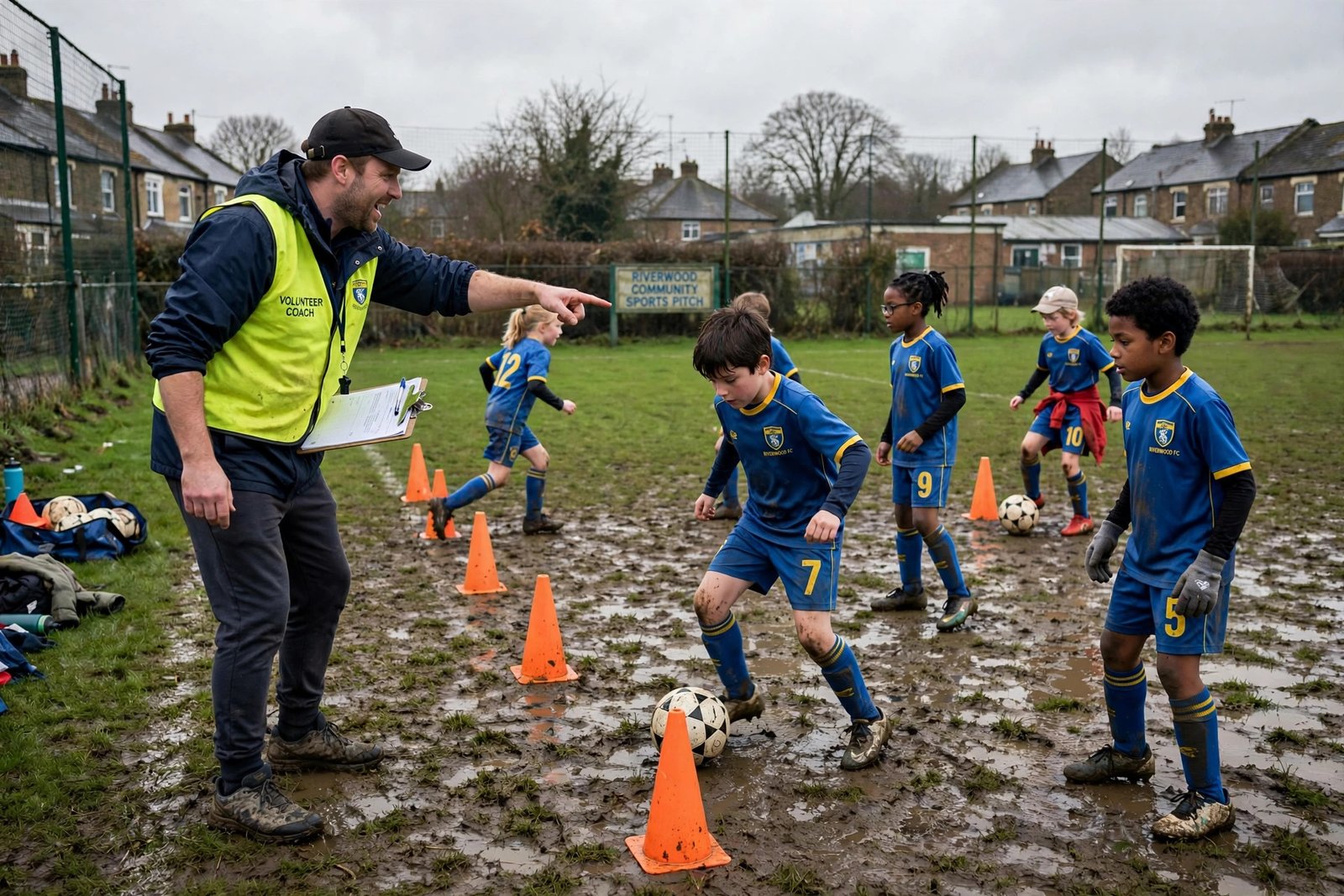
Your kid’s grassroots football team needs a coach, you’re the parent who played a bit at school, and suddenly you’re holding the whistle. It’s one of the most rewarding things a parent can do — and nobody tells you what it actually costs. Not just money (though there’s plenty of that), but time, courses, checks, and the emotional labour of managing twenty kids and their sideline-commentating parents. For a parent in Newcastle upon Tyne considering it, here’s the full, honest accounting: the pounds, the hours, the qualifications, and why — despite all of it — coaches keep coming back season after season.
The Money: What It Really Costs
The essentials (year one): FA Playmaker (free online — the entry-level course) then the FA Introduction to Coaching Football (~£160–£200, the real qualification most leagues expect); DBS check (free for volunteers); first aid qualification (~£50–£100, often subsidised by the club or county FA); safeguarding course (free–£30). Kit and equipment: you’ll want your own whistle, cones, bibs, balls pump (~£50–£100 if the club doesn’t provide); decent waterproofs and boots for standing on touchlines in February (£80–£150 — Newcastle weather is not theoretical). Ongoing: league affiliation and player registration fees (usually paid by the club via subs, but understand the structure — ~£100–£200/team/season plus £10–£30 per player registration); pitch hire if the club doesn’t have its own ground; end-of-season presentations and trophies.
Total realistic year-one cost: £300–£600 out of pocket if the club doesn’t subsidise (many do — ask before paying anything yourself; good clubs cover coaching courses because qualified coaches are gold dust). Ongoing years: £100–£250, mostly replacing worn equipment and CPD. Subs from parents (£10–£25/month per child is typical in the North East) usually cover team costs — the coach’s personal costs are the courses, the kit, and the petrol. Nobody does this for the money, because there isn’t any — it’s volunteering, and the accounts should be honest about that.
The Time: The Real Price Tag
Money is the smaller cost. Weekly: 1–2 training sessions (1–1.5 hours each, plus 30+ minutes setup/takedown), one match (half a day with travel — grassroots away days in Northumberland are not quick), session planning (30–60 minutes if you do it properly — and you should). Seasonal: pre-season organisation, registration admin, kit ordering, tournaments (full weekends), presentation evenings. Realistic total: 6–10 hours a week in season — the equivalent of a serious part-time job, unpaid, in all weathers.
Be brutally honest about this before committing: the teams that fold mid-season almost always fold because the coach’s life changed (new job, new baby, burnout) and nobody replaced them. If you can’t commit for the full season, say so upfront — assistant-coaching or job-sharing beats a heroic start and a February collapse that leaves twenty kids without a team. The FA’s coaching resources are realistic about the commitment; read them before the enthusiasm of the first session writes cheques your diary can’t cash.
What You Actually Need (Qualifications and Checks)
The formal requirements are straightforward: FA Playmaker (free, online, a few hours — do this first, this week); Introduction to Coaching Football (the practical course — one day or evenings, ~£160–£200); DBS check (mandatory for working with under-18s, free for volunteers, arranged through the club); safeguarding children certification (mandatory, usually free/cheap via the county FA); first aid (at least one qualified first-aider per team — often the coach). Your county FA (Northumberland FA for Newcastle) runs all of these and is genuinely helpful — they’re desperate for coaches and will guide you through.
Beyond the certificates, the real qualifications are softer: patience (you’ll explain the offside rule forty times), organisation (twenty kids, one you), and sideline diplomacy (more below). Playing experience helps but is wildly overrated — some of the best youth coaches never played seriously; they just understand children and structure. Enthusiasm plus the FA courses beats a decent playing career with no patience, every time.
Session Planning: What Good Coaching Looks Like
You don’t need elaborate plans — you need a plan. The structure that works for kids’ sessions: arrival activity (something fun running as kids arrive — no standing around), warm-up with the ball (every child with a ball, always — queues are where attention dies), one technical theme (dribbling, turning, finishing — one thing per session, drilled through fun games not lines), small-sided games (3v3 to 5v5 — maximum touches, maximum decisions, the format the FA itself recommends for development), cool-down and recap (what did we learn? who did something brilliant?). The FA’s coaching resources are full of session plans — steal them shamelessly; every coach does. Two golden rules: everyone touches the ball constantly (if kids are standing in lines, the session is wrong), and finish with a game (they’ll remember the fun, and fun is why they come back). Plan for 60–75 minutes; kids’ attention has a hard limit and exceeding it teaches nothing.
The Parts Nobody Warns You About
The parents. Most are wonderful. A few will coach from the touchline, question your selections, and explain tactics at full volume. Set expectations in week one: a parents’ meeting (or message) covering playing-time philosophy (equal time at young ages — non-negotiable), touchline behaviour (encourage, don’t instruct), and communication channels. The FA’s Respect programme gives you framework and backing — use it. The admin. Registrations, availability tracking, kit, subs collection — the WhatsApp group alone is a part-time job. Recruit a team admin (there’s always one organised parent — find them fast). The emotional load. Cutting a child from the squad, managing the kid who cries every week, the parent going through a divorce whose child acts out at training — youth coaching is youth work in boots. It’s the hardest part and, coaches consistently say, the most meaningful.
Protect yourself too: look after your own fitness (demonstrating drills for two hours weekly is real exercise), and remember the wider football world for inspiration — watching the game properly keeps your own love of it alive through the admin winters.
Why It’s Worth Every Penny and Hour
Ask any long-serving grassroots coach and the answer is the same: the kid who couldn’t kick straight in September scoring in May. The shy child who found their voice as captain. The team photo at the end of the season — muddy, grinning, yours. Grassroots football is where the sport actually lives: 100,000+ teams, millions of kids, almost entirely volunteer-run. Without parent-coaches, it doesn’t exist. The FA estimates the social value of grassroots football in the billions — but the value to you is simpler: it’s the most fun you’ll have in a tracksuit, the strongest community you’ll join, and the thing your kid will remember about their childhood. The costs are real — £300–£600 and 6–10 hours a week. The returns don’t fit on a spreadsheet.
Coaching your kid’s football team costs real money and serious time — go in with eyes open, get the courses done, recruit your admin parent, set the touchline rules early. Do that, and you’ll discover what every grassroots coach knows: it’s the best unpaid job in the world.
Frequently Asked Questions
What qualifications do I need to coach kids’ football?
FA Playmaker (free, online) to start, then the FA Introduction to Coaching Football (~£160–£200), plus DBS check, safeguarding certification, and first aid. Your county FA arranges all of it.
How much time does it take each week?
Typically 6–10 hours in season: training sessions, match day (half a day with travel), planning, and admin. Be honest about the commitment before starting — teams fold when coaches burn out mid-season.
Do I get paid as a grassroots coach?
No — it’s volunteering. Clubs often cover course fees and expenses, and parent subs cover team costs, but your time is donated. (Which is exactly why good coaches are treasured.)
What if I’ve never played football seriously?
It barely matters at youth level. The FA courses teach you everything technical you need; patience, organisation, and enthusiasm matter far more than your playing history.