
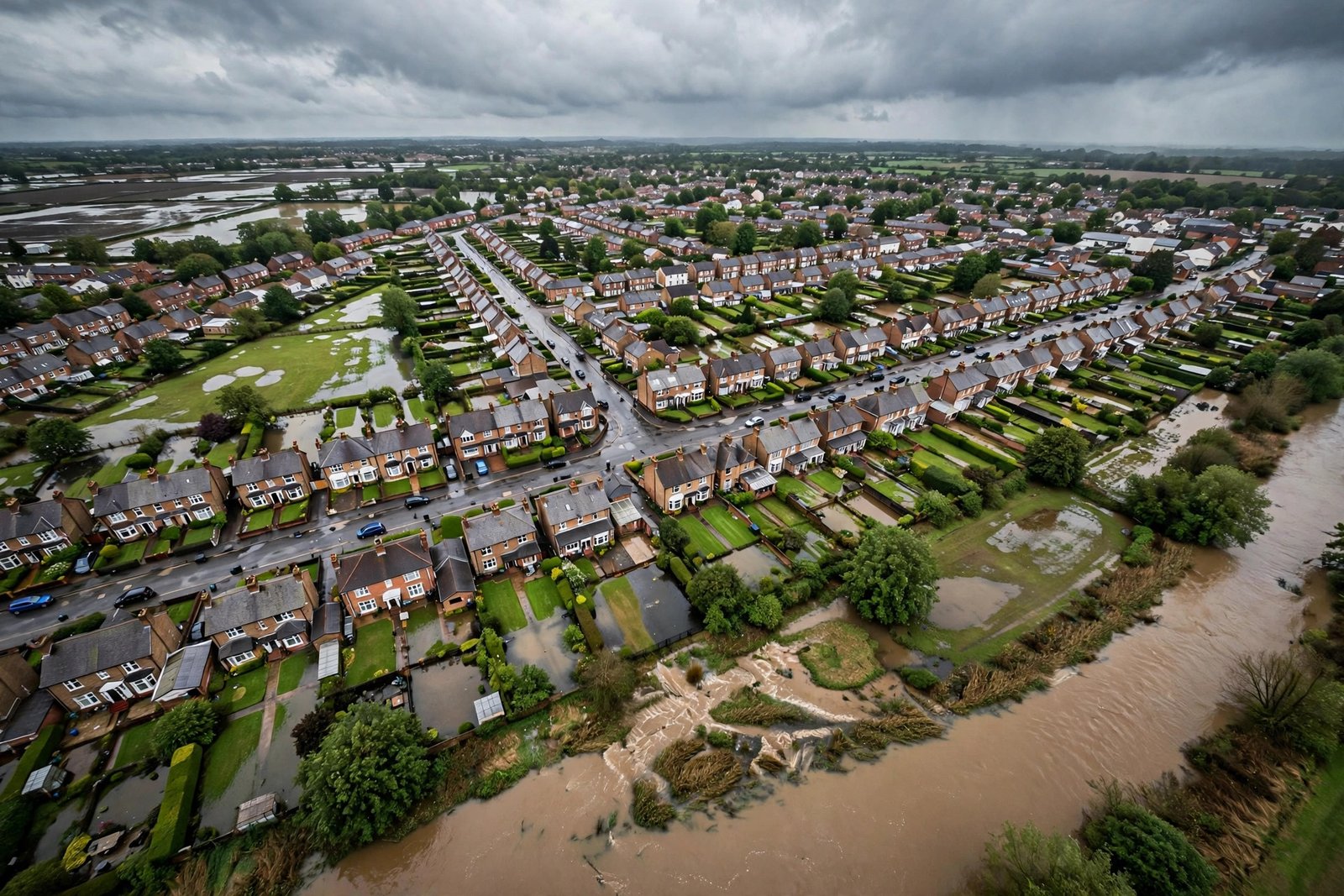
How to Check Flood Risk Before Buying a UK Property
One in six properties in England is at risk of flooding — yet most buyers spend longer choosing a sofa than checking flood risk before buying. A flood can destroy tens of thousands of pounds of your home, make insurance unaffordable, and slash your property’s value overnight. The cruel part? All of this is checkable before you buy, mostly for free, in under an hour. Here is how to check flood risk properly without wasting money on surveys you do not need — or skipping the ones you do.
The Free Checks (Do These Before Anything Else)
The Environment Agency flood maps
Your first stop is the official GOV.UK long-term flood risk checker — free, authoritative, and specific to any postcode in England. It shows risk from rivers and the sea, surface water, and reservoirs, graded from very low to high. Run it for every property on your shortlist before booking viewings; a high-risk result does not automatically disqualify a property, but it changes every question you ask afterwards. Scotland, Wales and Northern Ireland have their own equivalent services via SEPA, Natural Resources Wales and the Rivers Agency.
Flood history: ask everyone
Maps show modelled risk; history shows what actually happened. Ask the seller directly (the TA6 property information form requires them to disclose flooding), ask the neighbours (who remember what the maps do not), and search local news archives for the street name plus “flood.” A property that flooded in 2007, 2012 and 2020 has a story the flood map only hints at. Also check whether the area has new flood defences since the last event — defences change the picture significantly, and the Environment Agency publishes defence locations.
Insurance quotability: the reality check
Before you fall in love, get an indicative buildings-insurance quote for the address. If insurers quote eye-watering premiums or decline cover, that is the market telling you something the estate agent will not. Properties in high-risk areas may still be insurable through Flood Re, the government-backed scheme that keeps flood insurance affordable — but Flood Re has exclusions (including most properties built after 2009), so verify eligibility rather than assuming it.
Understanding What the Risk Levels Mean
Flood risk bands describe annual probability: “high” means a greater than 3.3% chance each year (a 1-in-30 year event or worse), “medium” 1–3.3%, “low” 0.1–1%, “very low” under 0-1%. These are probabilities, not predictions — a “low” risk area can still flood, and climate change is shifting baselines. Crucially, distinguish the type of flooding: river/coastal flooding (defences and geography matter), surface water flooding (intense rainfall overwhelming drains — the growing risk in urban areas, and poorly captured by old assumptions), and groundwater (slow, persistent, miserable). Surface water risk surprises the most buyers because it affects properties nowhere near a river.
Also check the property’s specific position, not just the postcode: a house at the top of a hill in a “medium risk” postcode faces very different reality from one at the bottom. The GOV.UK checker maps risk at property level — zoom in.
On the Viewing: Physical Clues
Flood history leaves traces. Look for: water marks on walls (especially in cellars, garages and ground-floor rooms), recently replaced ground-floor flooring or skirting throughout (why?), electrical sockets mounted unusually high on ground-floor walls (a classic flood-resilience adaptation), airbrick covers or flood barriers stored nearby, and a general “too new” ground floor in an old house. Outside, note the ground levels: does water flow toward or away from the property? Are there watercourses, culverts or drainage ditches nearby? Is the garden lower than the road?
Ask the agent directly: “Has this property or street ever flooded?” Watch the reaction as much as the answer. And view after heavy rain if you can — nothing reveals drainage reality like a downpour. These physical checks complement the paperwork; for the full viewing toolkit, our guide to what to check before buying a fixer-upper covers the rest of what to look for.
When to Pay for Professional Assessment
Free checks suffice for low-risk properties. Pay for more when: the flood maps show medium or high risk, the property has a flood history, insurance quotes look alarming, or the property is expensive enough that the stakes justify it. A specialist flood risk report (£150–£400) gives a detailed assessment including defence standards, climate projections and mitigation options — money well spent on a £300,000 purchase. Your solicitor’s standard searches include an environmental search that flags flood risk, but it is high-level; the specialist report is what informs decisions.
If you proceed on a at-risk property, budget for flood resilience: flood barriers for doors and airbricks (£500–£2,000), raised electrics and boilers, water-resistant plaster and flooring on the ground floor, and non-return valves on drains. These measures do not just protect the property — they protect its insurability and resale value. Factor them into your offer price, not your post-purchase surprises.
The Money Questions
How flood risk affects value and mortgages
Severe flood risk depresses property values — buyers discount for the risk, the insurance costs and the hassle. That can mean opportunity (a genuinely resilient property bought at a flood-risk discount) or a trap (a property you can never sell). Mortgage lenders increasingly scrutinise flood risk; some apply additional conditions or valuations on high-risk properties. Discovering this after your offer is accepted wastes everyone’s time — check before offering.
Insurance: the ongoing cost
Get real quotes, not guesses. Annual buildings insurance on a high-risk property can run into thousands without Flood Re, versus a few hundred with it. This is a permanent annual cost of ownership — capitalise it mentally into the purchase price. A £200,000 house with £2,000-a-year flood insurance is effectively more expensive than a £210,000 house with £300-a-year insurance. Do the maths before you commit, and re-quote annually: the market moves.
For the broader financial picture of buying, our guide to what every new homeowner should know puts flood risk alongside the other costs buyers underestimate.
Conclusion
Checking flood risk before buying without wasting money means doing the free checks first (GOV.UK flood maps, flood history from sellers and neighbours, indicative insurance quotes), understanding what risk bands and flood types actually mean, looking for physical clues on viewings, paying for a specialist report (£150–£400) when risk is medium or higher, and pricing resilience measures and insurance into your offer. An hour of checking before you buy beats a lifetime of mopping up afterwards. Water always finds the properties whose buyers did not look.
Frequently Asked Questions
How do I check flood risk for a UK property for free?
Use the GOV.UK long-term flood risk checker for any English postcode (SEPA, Natural Resources Wales and the Rivers Agency cover the other nations). It is free and shows river, sea, surface water and reservoir risk.
Should I buy a house in a flood risk area?
It depends on the risk level, price discount, insurability and resilience measures. Get a specialist flood report, real insurance quotes and price everything in — then decide with open eyes, not estate-agent optimism.
Does flood risk affect getting a mortgage?
It can — lenders increasingly consider flood risk, and severe risk can trigger additional valuation conditions. Check early, before you offer, to avoid wasted fees.
What is Flood Re?
A government-backed scheme keeping flood insurance affordable for high-risk homes. It has exclusions — notably most properties built after 2009 — so verify eligibility for any specific property rather than assuming cover.