Catherine Zeta-Jones Net Worth, Age, Family and Career — Full Profile
Catherine Zeta-Jones Net Worth, Age, Family and Career — Full Profile Catherine Zeta-Jones is the Swansea performer who became one of the defining leading ladies of…
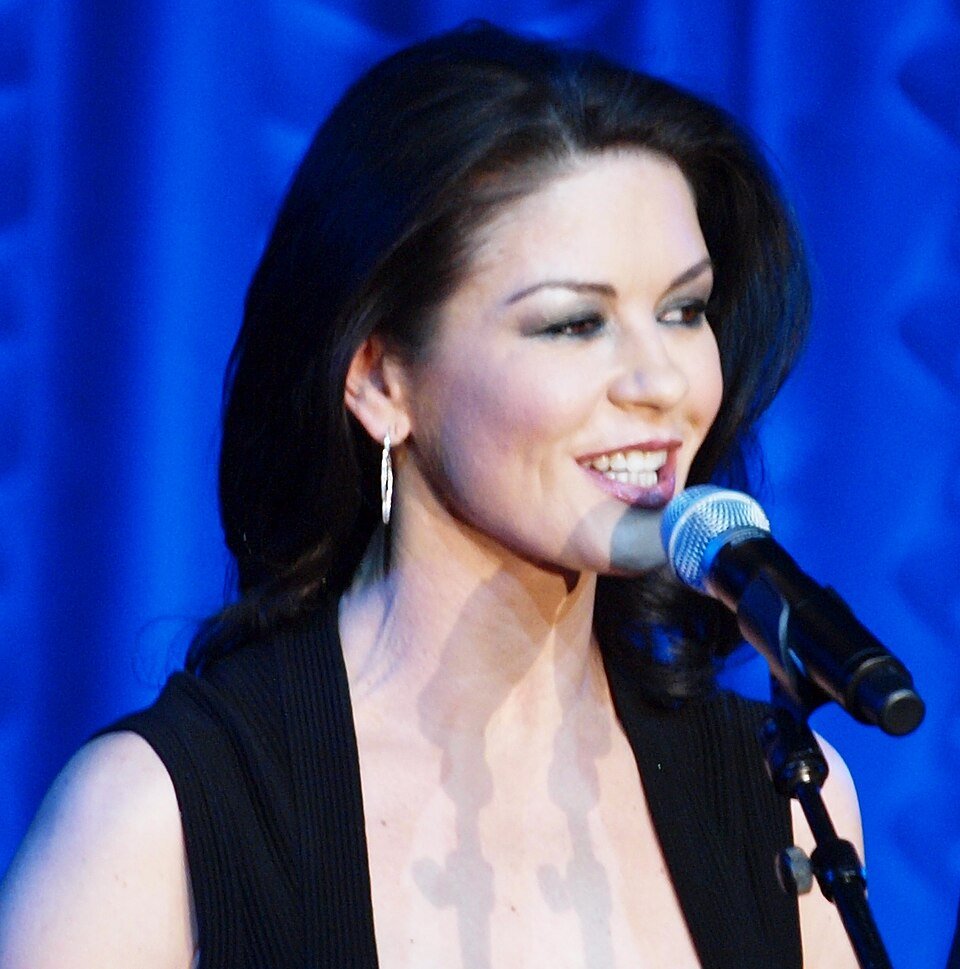
Catherine Zeta-Jones Net Worth, Age, Family and Career — Full Profile
Catherine Zeta-Jones is the Swansea performer who became one of the defining leading ladies of her generation: a stage talent from the age of nine, a familiar face across Britain by twenty-one, and then, in quick succession, the star of The Mask of Zorro, Traffic and Chicago, for which she won an Academy Award. Celebrity Net Worth puts her fortune at an estimated $150 million. This profile sets out the facts plainly — her age, height, husband, children, parents and best-known screen work — in one scannable digest.
Now fifty-seven, she is married to Michael Douglas, shares his birthday, and has introduced herself to a younger audience as Morticia Addams in Wednesday, with a leading role in the 2026 thriller series Kill Jackie on top. The story below runs from a Swansea sweet factory to that position, in order.
A Life in Brief: Swansea Roots, Ocean’s Twelve, $150 million
| A Life in Brief: Swansea Roots, Ocean’s Twelve, $150 million | Details |
|---|---|
| Born | 25 September 1969, in Swansea, Wales |
| Age | 57 years old |
| Height | 5 feet 7 inches (1.70 m) |
| Weight | No reliable published figure |
| Husband | Michael Douglas — married since 18 November 2000 |
| Children | Two — Dylan Michael Douglas (born 8 August 2000) and Carys Zeta Douglas (born 20 April 2003) |
| Parents | David James Jones (father) and Patricia Jones, née Fair (mother) |
| Family | Raised in Swansea and Mumbles; married to Michael Douglas since 2000; two children |
| Movies and TV Shows | The Darling Buds of May, The Mask of Zorro, Entrapment, Traffic, Chicago, Ocean’s Twelve, The Terminal, Feud: Bette and Joan, Wednesday, Kill Jackie |
| Nationality | Welsh |
| @catherinezetajones | |
| Net Worth | Estimated $150 million (Celebrity Net Worth) |
At Home With Michael Douglas: Zeta-Jones’s Private Life
Zeta-Jones met Michael Douglas at the Deauville festival in France in 1998, introduced by Danny DeVito, shortly after The Mask of Zorro had made her famous. Douglas, who had seen the picture, told her on that first meeting that he would be the father of her children — a line that has passed into Hollywood folklore because, in the end, it was accurate. They became engaged on New Year’s Eve in 1999 and married on 18 November 2000 at the Plaza Hotel in New York. The couple share a birthday, 25 September, although Douglas is twenty-five years the elder, a coincidence both have joked about throughout the marriage.
Their son, Dylan Michael Douglas, was born on 8 August 2000, a few months before the wedding, and their daughter, Carys Zeta Douglas, followed on 20 April 2003. Both children were raised largely away from the industry, first in Bermuda and later in New York, and both have moved towards performing as adults: Dylan has begun working as an actor and producer, and Carys made her professional stage debut in New York in 2026, playing Nina in a Brooklyn staging of The Seagull, to warm notices. Zeta-Jones has spoken with evident pride about watching them earn their places rather than inherit them.
The marriage has had its tested periods, and the couple have never pretended otherwise. They separated briefly in 2013, during a stretch that included Douglas’s serious illness and her own treatment for bipolar II disorder, which she first disclosed publicly in 2011 — a decision widely credited with helping to shift the public conversation about the condition. They reconciled in 2014, marked twenty-five years of marriage in November 2025, and in November 2026 reach their twenty-sixth anniversary, having celebrated their shared birthday in September with public tributes to one another. By any measure it is one of the longer and steadier marriages of their Hollywood generation.
From Swansea Streets to the Big Stage
Catherine Zeta Jones was born on 25 September 1969 in Swansea, Wales, and spent her earliest years in the Treboeth area of the city. Her father, David James Jones, known as Dai, owned a sweet factory, and her mother, Patricia, née Fair, worked as a seamstress. She was named after her two grandmothers, Catherine Fair and Zeta Jones, and only later hyphenated the name by which the world now knows her. When she was a child, her parents won £100,000 in a bingo competition, and the family moved to Mumbles, the seaside district west of Swansea, where she was raised.
The performing came first, and it came early. She was dancing and appearing in local stage productions while still at primary age, and she became a national tap-dancing champion as a youngster, travelling regularly to London for auditions. As a child she appeared in a West End staging of Annie, and by her mid-teens she was working on the London stage in earnest. The decisive early break arrived with the West End production of 42nd Street: cast as second understudy to the leading role of Peggy Sawyer, she stepped into the part one night when neither the star nor the first understudy could perform, impressed the producer, and was given the role permanently. She stayed with the production for roughly two years — a professional grounding, earned night after night, that everything later rested on.
That stage grounding explains the quality that has marked her screen career ever since: an old-fashioned, finish-every-detail polish. It is visible in the way she has always presented herself in public, too — a red-carpet record built on clean lines and one or two well-chosen finishing touches rather than excess, the same principle set out in our guide to the accessories that make a simple outfit look polished.
From First Gigs to Ocean’s Twelve: Zeta-Jones’s Rise
1991 — The Darling Buds of May
Her breakthrough with the wider public came as Mariette Larkin in The Darling Buds of May, the gentle period drama adapted from the novels of H. E. Bates, which began in 1991 and became one of the most watched programmes of its era in Britain. Zeta-Jones, barely into her twenties, was suddenly famous — and, she has said since, in danger of being cast for ever as the glamorous girlfriend. Early screen work followed, including Christopher Columbus: The Discovery and Splitting Heirs, but the roles on offer in Britain were narrowing rather than widening, and she made the deliberate decision to try Hollywood instead.
1998 — The Mask of Zorro and the breakthrough
The gamble paid off in one casting. Steven Spielberg, having seen her in a Titanic mini-series, recommended her to director Martin Campbell for The Mask of Zorro, and she was cast as Elena Montero opposite Antonio Banderas and Anthony Hopkins. The part demanded weeks of preparation in sword work, riding and choreography, and she met every bit of it with the discipline of her stage years. Released in 1998, the picture was a major international success, and it established her at a stroke as a Hollywood leading lady — poised, funny and entirely credible in an action role.
1999–2000 — Entrapment, Traffic and range
Entrapment followed in 1999, opposite Sean Connery, and was another commercial hit. The more significant step came with Traffic in 2000, Steven Soderbergh’s interwoven drama about the narcotics trade, in which she played Helena Ayala, the wife of an imprisoned trafficker who gradually takes over his business. It was a cool, unsentimental performance in an ensemble that included Michael Douglas and Benicio del Toro, and it proved the point she most needed to prove: that the glamour was a choice, not a limit. Traffic won four Academy Awards, and her standing rose accordingly.
2002 — Chicago and the Academy Award
Chicago, released in 2002, gave her the screen role of her career: Velma Kelly, the nightclub performer awaiting trial, opposite Renée Zellweger and Richard Gere. The picture won the Academy Award for Best Picture, and Zeta-Jones won the Oscar for Best Supporting Actress, along with the BAFTA and Screen Actors Guild awards for the same performance. She was heavily pregnant with her daughter during the awards season and collected the honours weeks before giving birth. It remains the performance against which the rest of her work is measured, and it made her, for a period, one of the most in-demand actresses in the world.
2003–2005 — Ocean’s Twelve, The Terminal and a Zorro return
The years after the Oscar were spent at the top of studio cast lists. She sparred with George Clooney in the Coens’ romantic comedy Intolerable Cruelty in 2003, joined the ensemble of Ocean’s Twelve in 2004 as detective Isabel Lahiri, and played opposite Tom Hanks in Spielberg’s The Terminal the same year. In 2005 she returned to the role that had made her, starring again opposite Banderas in The Legend of Zorro. No Reservations, Death Defying Acts and The Rebound followed, before she chose to step back from the production line and work more selectively.
2009–2010 — Broadway and the Tony Award
In 2009 she returned to the stage, making her Broadway debut as Desirée Armfeldt in a celebrated revival opposite Angela Lansbury. The performance earned her the 2010 Tony Award for best actress in a leading role, completing a rare double: the highest acting honours of both the screen and the New York stage, held by very few performers of her generation. The award also underlined the thread running through the whole career — the Swansea stage child had never really left the theatre behind; she had simply taken it with her to Hollywood and back again.
2017–2022 — A second screen career in series drama
From 2017 her work shifted decisively towards series drama. She played Olivia de Havilland in Feud: Bette and Joan, took the lead in the dark comedy Queen America as a ruthless pageant coach, and appeared as Dr Vivian Capshaw in Prodigal Son. In 2022 she joined the adventure series National Treasure: Edge of History as Billie Pearce, a formidable antiquities expert. The pattern was clear and deliberate: shorter commitments, strong parts, and work that fitted around a family life she had long refused to subordinate to a shooting schedule.
2022–2026 — Wednesday, Morticia and Kill Jackie
The biggest of those parts arrived in 2022, when she joined Wednesday as Morticia Addams. The series became one of the largest streaming successes of its period, her role grew substantially in the second season in 2025, and she returned for a third season, with production completed in September 2026. In October 2026 she took a leading role of a different kind in Kill Jackie, an eight-part thriller in which she plays Jackie Price, a former smuggler turned art dealer marked for death by a team of assassins; she also served as an executive producer on the series. At fifty-seven, the career has come full circle — from leading lady to character lead, on her own terms.
Counting Zeta-Jones’s $150 million: The Celebrity Net Worth Figure Explained
Celebrity Net Worth puts Zeta-Jones’s fortune at an estimated $150 million. That figure is presented by the source as hers alone; it is not a combined total with her husband, whose wealth is estimated separately, and readers should treat any combined couple figure quoted elsewhere as exactly that — a combined figure, not her individual net worth. No competing total from Forbes or the Sunday Times Rich List was found for her as an individual, so the Celebrity Net Worth estimate stands as the headline here without a rival allowed-source figure to set against it.
The composition is straightforward to trace. The largest part is two decades of leading-lady salaries, from the Zorro breakthrough through the run of studio pictures that followed her Oscar, when she stood among the best-paid actresses in the business. Alongside the salaries came endorsement earnings of an unusual scale: her association with T-Mobile, begun in 2002, paid her $20 million across two consecutive two-year agreements — recorded here as earnings over those years, kept separate from the fortune as a whole — and she also served as a global ambassador for Elizabeth Arden from 2002. In 2017 she moved from endorsing other people’s products to building her own, launching Casa Zeta-Jones, a lifestyle brand spanning bedding, clothing, footwear and beauty lines, which she continues to run.
Set out plainly, the $150 million estimate reflects a career with three distinct earning lives: the stage-grounded British breakthrough, the Hollywood peak of the late 1990s and 2000s with its salaries and endorsements, and the selective, producer-level second act of the past decade, in which series drama and her own brand do the earning. It is a fortune built slowly, across more than thirty years of continuous work, rather than in one windfall.
That is the digest: a Swansea stage child who understudied her way into a leading role, crossed the Atlantic on one recommendation, won an Oscar, a BAFTA and a Tony, raised two children inside a twenty-six-year marriage, and is still taking leading roles at fifty-seven — holding an estimated $150 million fortune, and a Morticia Addams that a new generation knows her by.