Bill Murray Net Worth, Age, Family and Career — Full Profile
Bill Murray Net Worth, Age, Family and Career — Full Profile Bill Murray is the most elusive major star of the past fifty years: a deadpan…
Bill Murray Net Worth, Age, Family and Career — Full Profile
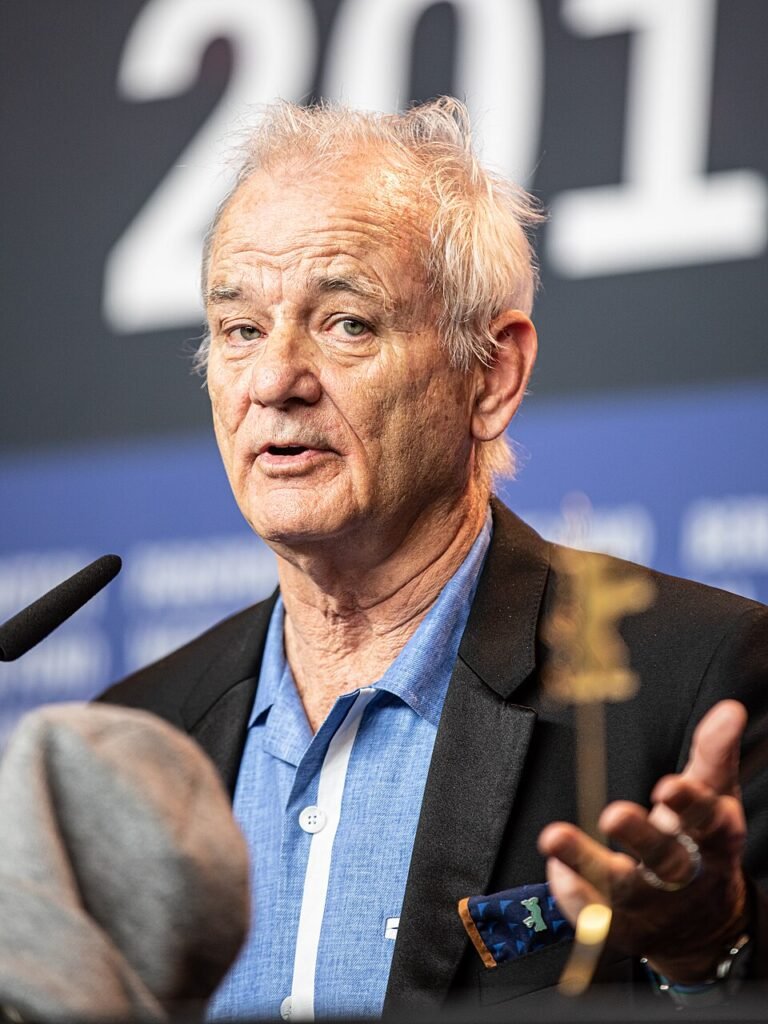
Bill Murray is the most elusive major star of the past fifty years: a deadpan comedian from the Chicago suburbs who moved from Saturday Night Live to Ghostbusters to an unlikely second career as the melancholy leading man of independent productions — all while famously having no agent and taking work through a voicemail number. Celebrity Net Worth puts his fortune at an estimated $180 million. This profile sets out the facts plainly — his age, height, six sons, parents, eight siblings, and his best-known screen work — in one scannable digest, including the honest position on the relationship row: as of November 2026 Murray has no current wife, and none has been reliably reported since his second divorce in 2008.
Now in his mid-seventies, Murray continues to work selectively, and in 2025–26 added an unlikely sideline as frontman of a touring blues-rock band, the Blood Brothers. The story below runs from a large Wilmette family to that position, in order.
From Evanston to Fame: The Key Facts in One Place
| From Evanston to Fame: The Key Facts in One Place | Details |
|---|---|
| Born | 21 September 1950, in Evanston, Illinois |
| Age | 76 years old |
| Height | 6 feet 2 inches (1.88 m) |
| Weight | No reliable published figure |
| Wife | No current wife — formerly married to Margaret Kelly (1981–1996) and Jennifer Butler (1997–2008; Butler died in 2021) |
| Children | Six sons — Homer and Luke with Margaret Kelly; Caleb, Jackson, Cooper and Lincoln with Jennifer Butler |
| Parents | Edward Joseph Murray II (father, died 1967) and Lucille Murray, née Collins (mother) |
| Family | The fifth of nine children, raised in Wilmette, Illinois; father of six sons; twice married and twice divorced |
| Siblings | Eight — brothers Ed (died 2020), Brian Doyle-Murray, John, Andy and Joel Murray; sisters Nancy, Peggy and Laura Murray |
| Movies and TV Shows | Saturday Night Live, Meatballs, Caddyshack, Stripes, Ghostbusters, Scrooged, Groundhog Day, Rushmore, The Royal Tenenbaums, Lost in Translation, Broken Flowers, Moonrise Kingdom, St. Vincent, The Phoenician Scheme |
| No verified official account — Murray has no confirmed personal Instagram presence | |
| Net Worth | Estimated $180 million (Celebrity Net Worth) |
The Work That Made Him Famous: Saturday Night Live and the First Wave
1977 — Saturday Night Live and the first wave
Murray joined Saturday Night Live in 1977, in its second season, and after a slow start — including an on-air appeal in which he asked viewers, in character as himself, to give the new cast member a chance — became one of its defining performers, winning an Emmy Award for writing in 1977. Meatballs, released in 1979, was his first leading role and his first collaboration with director Ivan Reitman. Caddyshack followed in 1980 and Stripes in 1981, and by the time he left the programme in 1980 he was a film star with a persona nobody else occupied: the slouching insider who seemed to be improvising his way through other people’s productions.
1984 — Ghostbusters and the blockbuster years
Ghostbusters, released in 1984, became one of the highest-grossing comedies of all time, and its sequel followed in 1989. Between and around them came Scrooged in 1988, What About Bob? in 1991 and Groundhog Day in 1993 — the last now routinely placed among the greatest comedies ever made, with Murray as a weatherman reliving a single day until he becomes a better man. Readers settling in with that era of comedy may enjoy our guide to how to watch classic British comedy online, a natural companion to Murray’s own classics. His one early attempt at straight drama, The Razor’s Edge in 1984, which he co-wrote, underperformed, and he took four years away from leading roles in the middle of the decade.
1998 — Rushmore and the second career
Rushmore, released in 1998 and directed by Wes Anderson, began the second career: Murray as the wealthy, wounded Herman Bluth, a performance that won major critics’ awards and recast him as an actor of melancholy rather than a comedian slumming in drama. He became a fixture of Anderson’s ensemble — The Royal Tenenbaums in 2001, The Life Aquatic with Steve Zissou in 2004, Moonrise Kingdom in 2012, The Grand Budapest Hotel in 2014 and The Phoenician Scheme in 2025 — and of Sofia Coppola’s, Jim Jarmusch’s and other independent directors’ work.
2003 — Lost in Translation and the Oscar nomination
Lost in Translation, released in 2003, is the peak of the second career: Murray as Bob Harris, a fading star marooned in a Tokyo hotel, won the BAFTA Award for Best Actor and was nominated for the Academy Award for Best Actor. Broken Flowers followed in 2005, Hyde Park on Hudson in 2012, St. Vincent in 2014 — a hit that returned him to the centre of a popular production — and a continuing run of ensemble parts, cameos and voice work, including The Jungle Book in 2016. His working method remained the industry’s favourite legend: no agent, no manager, and an answering service through which directors leave messages and wait.
2025 — The Blood Brothers and still working
In 2025–26 Murray added the sideline nobody predicted, touring as frontman of the Blood Brothers, a blues-rock band, to warm notices — a late-career turn covered as a genuine performing project rather than a novelty. Screen work continued in parallel, including The Phoenician Scheme in 2025, and the pattern of his eighties — selective parts for directors he trusts, sudden unannounced appearances that become local legend, and long stretches entirely out of view — shows no sign of changing. A 2022 production, Being Mortal, was suspended after a complaint about his conduct on set, which Murray addressed publicly at the time and again in 2025, saying he had reflected on it; the production has not resumed, and the episode is recorded here as part of the factual record of his recent years.
Early Days in Evanston: Family, School and First Dreams
William James Murray was born on 21 September 1950 in Evanston, Illinois, and raised in Wilmette, a suburb north of Chicago. He was the fifth of nine children of Edward Joseph Murray II, a lumber salesman, and Lucille Murray, née Collins, who worked as a mailroom clerk. It was a large, close and noisy household, and Murray’s accounts of it — the competition for attention, the teasing, the loyalty — are the ones he gives for his timing as a performer. His father died in 1967, aged 46, from complications of diabetes, when Murray was seventeen; his mother continued working to hold the family together.
After school he enrolled at Regis University in Denver to study pre-medicine, and left without a degree, returning to Chicago and to a famous birthday mishap in 1970, when he was arrested at the airport on his twentieth birthday and given probation and community service. The turning point was comedy: following his older brother Brian into the orbit of The Second City, Chicago’s improvisation company, he joined its touring company and then its main stage, where his loose, deadpan, apparently unbothered style was formed. In 1975 he moved to New York, worked on a national radio comedy hour, and was cast in an off-Broadway production — the stepping stones to the job that made him.
The $180 million Fortune: Where the Money Comes From
Celebrity Net Worth puts Murray’s fortune at an estimated $180 million. It is an estimate built from public information about a fifty-year career; it is not an audited disclosure, and Murray — who has no publicist and gives financial details to nobody — has never confirmed or disputed it. Forbes and the Sunday Times Rich List publish no competing figure for him. Occasional profiles put the number marginally higher, at about $185 million, on sites outside this profile’s allowed sources; they were not used.
The composition rests on three pillars. The first is the blockbuster period: Ghostbusters and its sequel, Groundhog Day and the run of hits around them, in an era when his deals included profit participation that made hit comedies unusually lucrative for their stars — the precise terms were never published, and none is invented here. The second is longevity: five decades of continuous leading and ensemble work, from Saturday Night Live to The Phoenician Scheme, with the second career from Rushmore onwards adding critical prestige to steady pay. The third is his part-ownership, widely reported over many years, in minor-league baseball teams and in a restaurant business run with his brothers — private holdings whose values are not public, recorded here as interests only, never as figures.
No property section appears in this profile, because the keyword set for it does not include one; the same discipline applied to Keoghan’s profile in this batch applies here — each fact appears where it belongs. What can be said within the rules is that Murray’s wealth, on the tracker’s estimate, was built the slow way: no company sale, no catalogue transaction, no single payday dominates it, which is precisely why the estimate has stayed broadly stable while other fortunes in this batch have jumped.
That is the digest: the fifth of nine children from Wilmette, who lost his father at seventeen, bluffed his way from an improv stage to the centre of popular culture, reinvented himself at forty-eight as its saddest leading man, and did all of it without an agent — a father of six sons, twice married and long divorced, with an estimated $180 million fortune and, by his own evident preference, almost no public footprint at all.
Keeping His Private Life Out of the Spotlight in Evanston
Murray has been married twice, and has no current wife. He married Margaret Kelly in January 1981, during the production of Stripes; they had two sons, Homer, born in 1982, and Luke, born in 1985, who became a prominent college basketball coach. The marriage ended in divorce in 1996. In 1997 he married Jennifer Butler, a costume designer he had met during Scrooged; they had four sons — Caleb, born in 1993, Jackson, born in 1995, Cooper, born in 1997, and Lincoln, born in 2001. Butler filed for divorce in May 2008, making serious allegations in the filing, and the divorce was finalised on 13 June 2008. Butler died on 19 January 2021, aged 54. The bank label for this profile is “wife”; the verified position, printed in the table above, is that there is no current wife — both marriages ended in divorce, and no reliable report since 2008 records a remarriage or a confirmed partner.
The family he came from remains the largest fact of his personal life. Of his eight siblings, three brothers — Brian Doyle-Murray, John Murray and Joel Murray — also became actors, and Brian, a comedian and writer, has appeared alongside him across five decades. His eldest brother, Ed Murray, the inspiration in part for the lead character in Caddyshack, died in 2020. His sisters are Nancy, Peggy and Laura Murray. Six sons, eight siblings, and a Wilmette upbringing he still returns to in interviews: the private Murray, so far as the verified record shows, is a family man from a very large family who simply declines to conduct any of it in public.