
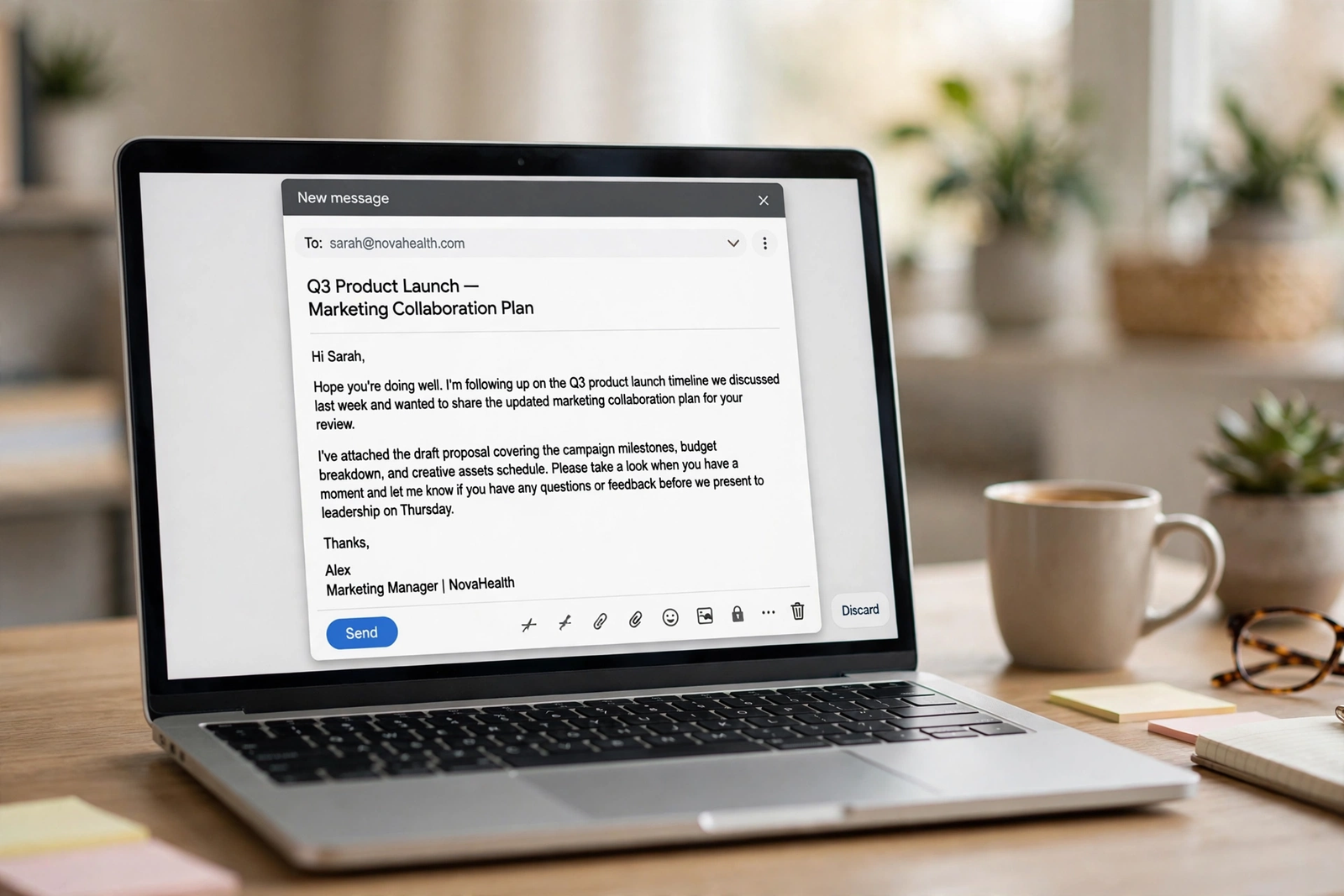
How Do You Begin an Email? (Formal & Casual Openers)
The first line of an email sets the entire tone. Get it right and the reader is receptive; get it wrong and you’ve created friction before your message even begins. Here’s how to open any email with confidence.
Formal Email Openings
Use these for job applications, complaints, official correspondence, and first contact with senior people:
- “Dear Mr Smith,” — the gold standard for formal business
- “Dear Ms Jones,” — use Ms when you don’t know marital status (the safe default)
- “Dear Dr Patel,” — always use professional titles when you know them
- “Dear Sir or Madam,” — when you don’t know the recipient’s name
- “To Whom It May Concern:” — very formal, best for official letters rather than emails
Note the comma after the name — standard in UK business writing. Americans often use a colon (“Dear Mr Smith:”) but the comma is correct for British English.
Semi-Formal Openings
For colleagues, clients you know, and most day-to-day professional email:
- “Dear Sarah,” — friendly but professional; the most versatile opener
- “Good morning, James,” — warm and natural
- “Hello Priya,” — slightly more relaxed than “Dear”
“Dear [First Name]” hits the sweet spot for most workplace email — respectful without being stiff. When in doubt, mirror how the other person addresses you.
Casual Openings
For teammates, friends, and informal contexts:
- “Hi Alex,” — the universal casual opener
- “Hey Sam,” — very informal; fine for close colleagues, avoid upwards
- “Morning all,” — for group emails to your team
What Comes After the Greeting?
The opening line after “Dear…” matters as much as the greeting itself:
- First contact: “I hope you’re well. I’m writing regarding…”
- Following up: “Thank you for your email. Further to our conversation…”
- Request: “I hope this finds you well. I’d be grateful if you could…”
- Complaint: skip pleasantries — “I’m writing to express my concern about…”
Avoid “I hope this email finds you well” if you want to sound human — it’s become a cliché that signals template email. A simple “Hope you’re well” or jumping straight to the point reads more naturally. The BBC Bitesize guide to formal writing covers tone well for students and professionals alike.
Common Mistakes to Avoid
- “Dear Mrs” for a professional woman you don’t know — use Ms
- First-naming someone senior on first contact — start formal, relax when invited
- “Hey” to your boss’s boss — too casual until you know the culture
- No greeting at all — even a quick “Hi” is better than launching straight in
- Overly effusive openers — “I hope you’re having a wonderful day” can read as insincere
- For official guidance on business communication standards, the UK Civil Service communication guidance sets out professional writing principles
- Getting the name wrong — the single worst opener; double-check spelling
Matching Tone to Culture
Email norms vary. UK workplaces tend to be politely formal — “Dear” and “Kind regards” remain standard. American business culture is more casual, with “Hi” common even in first emails. When emailing internationally, err formal; it’s easier to warm up than to recover from seeming rude.
Academia, law, and finance skew formal. Tech startups and creative industries skew casual. Observe the norms of whoever you’re writing to — and when joining a new workplace, watch how others write for a week before settling into your own style. For job applications specifically, our cover letter writing guide covers the full package.
Subject Lines: The Real First Impression
Technically, your subject line comes before the greeting. Make it specific:
- Bad: “Question” / “Hi” / “Following up”
- Good: “Q3 invoice query — order #4521” / “Meeting request: project timeline” / “Application: Marketing Manager role”
Email productivity research from the Radical Candor communication guides shows specific subjects dramatically improve response rates.
A clear subject line gets your email opened and filed correctly. It’s the hardest-working sentence you’ll write.
Related: email sign-off guide.
Frequently Asked Questions
How do you start a formal email in the UK?
“Dear Mr/Ms [Surname],” for named recipients; “Dear Sir or Madam,” when unknown.
Is “Hi” too informal for work email?
It’s fine for colleagues and ongoing threads; use “Dear” for first contact or senior recipients.
What does “To Whom It May Concern” mean?
A formal opener for unknown recipients — best reserved for official letters rather than emails.
Should I use “Dear” or “Hello” in emails?
“Dear” is more formal; “Hello” is friendly-professional. Both are safe in most workplaces.
How do you address two people in an email?
“Dear Mr Smith and Ms Jones,” — or “Dear both,” for less formal contexts.