
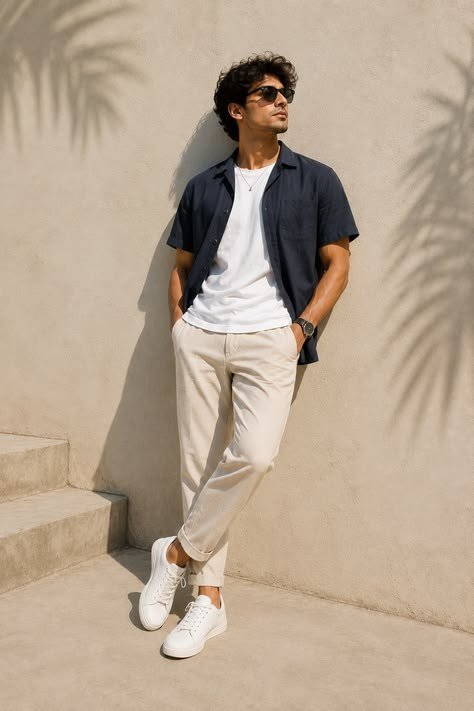
How can Men Dress Well on a Tight Budget
There’s a myth that well-dressed men spend a fortune — fuelled by menswear influencers unboxing £400 knitwear. The reality: some of the sharpest-dressed men I know spend less on clothes than most people spend on coffee. Dressing well on a tight budget isn’t about deprivation; it’s about strategy — knowing where quality matters, where it doesn’t, and how to make £200 a year look like £2,000. Here’s how men can dress well on a tight budget.
The Budget Menswear Philosophy
Three principles govern everything:
- Fit over brand, always. A £20 shirt that fits looks better than a £100 shirt that doesn’t. This is the whole game — get fit right and budget disappears as a factor.
- Fewer, better, versatile. Ten pieces that all work together beat thirty random items. (This is the capsule wardrobe concept — our budget capsule guide was written for women but the principles are universal.)
- Spend where it shows, save where it doesn’t. Shoes, outerwear, and tailoring are visible investments; underwear, socks, and basics are invisible savings.
The Budget Wardrobe Essentials (the Actual List)
A complete, versatile wardrobe for under £300 if shopped smart:
- Dark jeans (1 pair, £25–£40): dark indigo, no rips, well-fitting — works for 80% of casual situations. Our fit principles apply to men’s cuts too.
- Chinos (1–2 pairs, £20–£30 each): navy and stone — the smart-casual workhorse.
- White and light-blue Oxford shirts (£15–£25 each): the backbone. Uniqlo, M&S, and charity shops are goldmines.
- Plain tees (3–4, £5–£8 each): heavyweight cotton, good fit — no logos, no graphics.
- Navy crew-neck jumper (£20–£35): merino if you can find it secondhand; cotton otherwise.
- Navy blazer (£30–£60 secondhand): the single most transformative budget purchase. Charity shops in good areas are full of them.
- Versatile jacket (£40–£70): Harrington, bomber, or field jacket — covers most weather short of deep winter.
- White trainers (£30–£50): clean minimal leather or canvas — keep them clean (see keeping white trainers white).
- Brown leather shoes (£40–£70): brogues or loafers secondhand — leather shoes age well and polish up beautifully.
- Belt, watch, simple accessories: £30 total, massive impact.
Where to Shop (Ranked by Value)
- Charity shops (affluent areas): the undisputed champion. Barely-worn quality brands at fast-fashion prices. Go regularly; learn which shops in your area are best.
- Vinted/eBay: search specific brands and sizes (“Reiss blazer 40R”, “Loake brogues 9”). Patience pays — set alerts.
- Uniqlo: the budget menswear baseline — consistent quality, good fits, honest prices. Their basics are the foundation of a thousand sharp wardrobes.
- M&S: unglamorous, reliable, and their Autograph range punches above its price.
- End-of-season sales: buy winter coats in March, shorts in September — 50–70% off.
- TK Maxx: hit-or-miss, but the hits are spectacular — designer pieces at fraction prices if you dig.
The Fit Fixes (Free or Nearly Free)
- Learn your measurements: chest, waist, inseam, sleeve length. Shop by numbers, not “medium.”
- Tailor the key pieces: £12–£15 to hem trousers, £20 to take in a blazer waist — transforms charity-shop finds into bespoke-looking pieces.
- Iron/steam everything: creases make even good clothes look cheap. A £25 steamer pays for itself in weeks.
- The sleeve roll: pushing up shirt sleeves to the forearm is free, flattering, and instantly more styled.
- Tuck it in: a tucked shirt with a belt looks intentional; untucked often looks unfinished.
Our cheap-clothes-look-expensive guide covers these principles in depth — written for women, applicable to everyone.
Grooming: The Free Multiplier
On a tight budget, grooming is your unfair advantage — it’s free and it amplifies everything:
- Haircut every 3–4 weeks: a £12–£15 trim on schedule beats a £40 cut every 3 months. Find a good local barber and stay loyal.
- Nails, nose, ears: the details people notice subconsciously. Keep them handled.
- Skincare basics: cleanser + moisturiser + SPF. £15 total from Boots/Superdrug. More impactful than any garment.
- Fragrance: one subtle, quality scent (or none) — never overpowering.
- Posture: free, transformative, and the most overlooked “style” factor in existence.
What to Avoid
- Logo-heavy fast fashion: looks cheap, dates instantly, falls apart.
- Buying for a fantasy life: the suit you’ll “need one day” while your daily clothes fall apart. Dress for your actual life.
- Too many trends: one trend piece per season max. Trends are where budgets go to die.
- Ignoring shoes: the most-noticed item. One good pair, kept clean and polished, beats three scruffy ones.
For keeping the whole project financially sane, MoneySavingExpert’s money-saving guides are worth bookmarking — looking sharp shouldn’t mean financial stress.
The £200 Starter Wardrobe Challenge
Can you build a genuinely sharp wardrobe from scratch for £200? Yes — if you are strategic and patient (allow 4–6 weeks of charity-shop and Vinted hunting):
- Jeans, dark, well-fitting — charity shop or Vinted: £10
- Chinos, navy — M&S sale or charity shop: £12
- Oxford shirts x2 (white, blue) — charity shop: £10
- Plain tees x3 — Uniqlo multipack: £20
- Navy crew-neck jumper — charity shop (merino if lucky): £8
- Navy blazer — charity shop + £15 tailoring: £25 total
- White trainers — clean minimal pair, on sale: £30
- Brown brogues — Vinted, polished up: £20
- Belt + watch — TK Maxx / charity shop: £15
- Tailoring budget — hems and nips across the haul: £30
- Grooming — barber trim, basics: £20
Total: ~£200. Result: a wardrobe that handles work, weekends, dates, and events — every item versatile, everything fitting, nothing screaming “budget.” The blazer-and-jeans combination alone covers an astonishing range of situations. This is not theoretical; it is how thousands of sharp-dressed men actually dress. The money was never the point — the strategy was.
The Maintenance Habits That Protect Your Investment
Budget clothes last when maintained: polish leather shoes monthly (a £5 tin of polish lasts a year), wash cold and hang-dry to prevent shrinkage and fading, iron or steam shirts (a £20 handheld steamer transforms charity-shop finds), repair loose buttons immediately before they are lost, and store knitwear folded, never hung. These habits cost almost nothing and double garment lifespan. The man with ten well-kept pieces always looks sharper than the man with fifty neglected ones — maintenance is the invisible half of dressing well.
The well-dressed man on a budget isn’t deprived — he’s deliberate. Fit, grooming, versatile basics, strategic secondhand, and tailoring. That’s the entire formula, and it costs less than most people spend without thinking. Style was never about money; it was always about attention.