
How Can I Make Brown Paint? (3 Easy Methods)
Brown is the most forgiving colour to mix — it’s hard to get it badly wrong. Whether you’re working with acrylics, oils, watercolours, or emulsion for a feature wall, the principles are the same. Here’s how to mix exactly the brown you want.
The Basic Brown: Three Methods
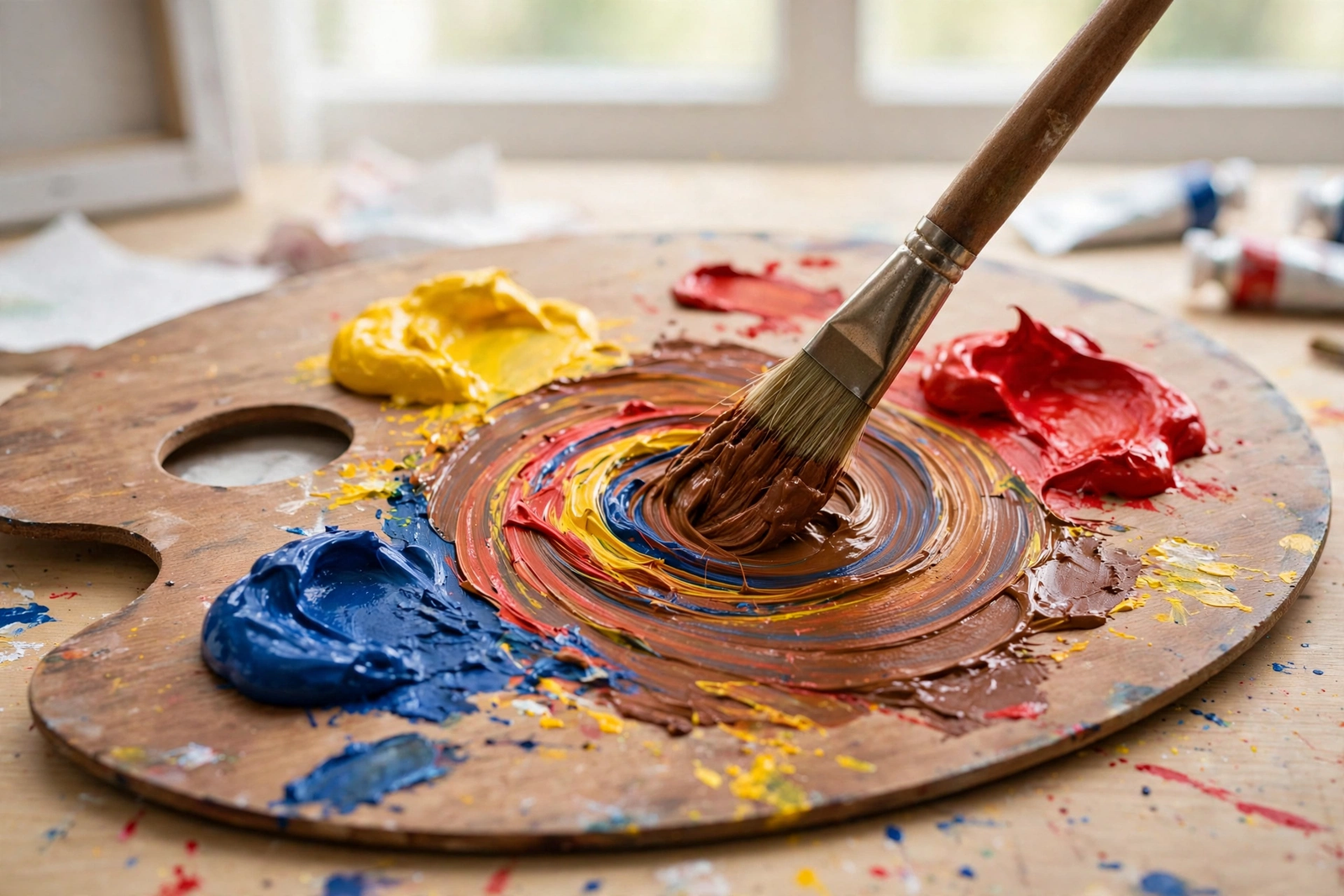
Method 1: The Three Primaries
Mix red, yellow, and blue in roughly equal parts. This gives a neutral, middle brown. It’s the most reliable method because you’re balancing all three primaries — the definition of brown is essentially “dark, desaturated orange.”
Method 2: Orange + Blue (Quickest)
Mix orange (red + yellow) with a touch of blue. Since blue is orange’s complement, they neutralise each other into brown. Start with orange and add blue gradually — a little blue goes a long way.
Method 3: Green + Red
Mix green with red for an earthy, olive-leaning brown. This is perfect for natural, muted browns — think tree bark or soil.
Adjusting Your Brown
- Warmer brown (chocolate, caramel): add more red or yellow
- Cooler brown (taupe, coffee): add more blue
- Lighter brown (tan, beige): add white — a lot of it, as brown darkens white fast
- Darker brown (espresso, umber): add a touch of black or more blue + red
- Richer brown: add a tiny amount of red to deepen without darkening
Key tip: always add dark colours to light ones, not the reverse. It’s easy to darken brown; lightening a too-dark mix wastes paint. The Winsor & Newton colour mixing guide demonstrates these principles with professional paints.
Mixing Brown in Different Paint Types
Acrylics
Acrylics dry darker than they look wet — mix your brown slightly lighter than the target. Work quickly or use a retarder medium; acrylics skin over fast. Keep a spray bottle handy to keep the palette workable.
Oils
Oils are the most forgiving — long working time lets you adjust gradually. Earth tones like burnt umber and raw sienna are essentially pre-mixed browns; learn to mix from primaries first, then use convenience colours to save time.
Watercolours
Watercolour browns are transparent and luminous. Burnt sienna + ultramarine makes a gorgeous granulating brown-grey. Remember: watercolour dries lighter, so mix stronger than you think you need.
Household Emulsion
For walls, buy tester pots rather than mixing large quantities — colour matching a custom mix across multiple tins is notoriously difficult. If you must mix, do the entire quantity at once in a large bucket and keep a sealed jar of the mix for touch-ups.
Common Brown Shades and Recipes
- Chocolate brown: red + yellow + blue, extra red. Or burnt umber + crimson.
- Caramel/tan: yellow ochre + white + touch of red
- Coffee: burnt umber + black, tiny touch of blue
- Mahogany: red + brown base + touch of black
- Taupe: brown base + white + touch of grey (white + black)
- Khaki: yellow ochre + white + touch of green
Why Brown Is Special in Colour Theory
Brown doesn’t appear in the rainbow — it’s not a spectral colour. It only exists as a context-dependent perception: the same wavelengths look orange against a dark background but brown against a bright one. This is why brown is so versatile in art — it recedes, grounds compositions, and makes brighter colours sing.
Earth pigments (ochres, umbers, siennas) were humanity’s first paints — used in cave paintings 40,000 years ago. They’re iron oxides: literally rusted earth. Modern synthetic browns are more consistent, but many artists still prefer the subtle variation of natural earth pigments. For interior inspiration, our warm neutral paint colour guide shows browns in real rooms.
Mixing Brown From Unusual Starting Points
Sometimes you don’t have all three primaries handy. These combinations also work:
- Purple + yellow: purple already contains red and blue, so adding yellow completes the trio — gives rich, warm browns
- Orange + black: black darkens and neutralises orange into deep chocolate browns
- Red + green (dark): forest green + crimson makes deep earthy browns
- Burnt sienna + ultramarine: the classic landscape painter’s brown-grey — endlessly versatile
Brown in Interior Design
Brown has cycled in and out of fashion for decades. The 1970s loved chocolate and avocado; the 2010s went grey; now warm browns — caramel, terracotta, coffee — are back as “cosy neutrals.” Designers use brown to:
- Ground a room: dark wood floors or brown furniture anchors light walls
- Add warmth: caramel or cognac tones make north-facing rooms feel cosier
- Create contrast: chocolate walls make brass, cream, and sage accents pop
If you’re painting walls brown, test large swatches first — brown shifts dramatically with light. A shade that looks rich caramel in daylight can read muddy under warm bulbs. Paint two coats on A3 card, move it around the room, and live with it for 48 hours before committing. The Dulux colour advice pages offer visualiser tools for testing shades virtually.
Troubleshooting Brown Mixes
- Muddy/grey brown: too much blue or black — add warmth with red or yellow
- Too orange: not enough blue — add tiny amounts until it deepens
- Too dark: add white, but expect to need lots; alternatively start a fresh lighter batch
- Flat and lifeless: mix two browns together (e.g. warm + cool) for natural variation
- Dries wrong colour: acrylics darken, watercolours lighten — compensate in the wet mix
Keep notes on your ratios! Nothing’s worse than mixing the perfect brown and being unable to reproduce it. Squeeze dabs onto a card with labels, or photograph the palette with the tubes beside it.
Brown Pigments: A Quick Reference
- Raw umber: cool, greenish dark brown — great for shadows
- Burnt umber: warm dark brown — the workhorse of oil painting
- Raw sienna: transparent golden brown — beautiful glazes
- Burnt sienna: rich reddish brown — landscapes and skin tones
- Yellow ochre: muted golden earth — mix with white for tans
- Vandyke brown: very dark, transparent — use sparingly
Related: mixing green paint.
Frequently Asked Questions
What two colours make brown?
Orange and blue (complementary colours) — or red and green.
What three colours make brown?
Red, yellow, and blue — the three primary colours mixed together.
How do you make brown lighter?
Add white gradually. Brown is strong, so you’ll need more white than you expect.
How do you make dark brown paint?
Start with brown and add black sparingly, or deepen with blue and red.
Can you make brown from just red and yellow?
Red + yellow makes orange. You need blue (or a blue-containing colour) to turn orange into brown.
What’s the difference between umber and sienna?
Both are natural earth pigments: raw umber is cooler and darker; burnt sienna is warmer and more reddish.