Gary Barlow Net Worth, Age, Family and Career — Full Profile
Gary Barlow Net Worth, Age, Family and Career — Full Profile Gary Barlow is the Frodsham-born songwriter who wrote the great majority of Take That’s hits,…
Gary Barlow Net Worth, Age, Family and Career — Full Profile
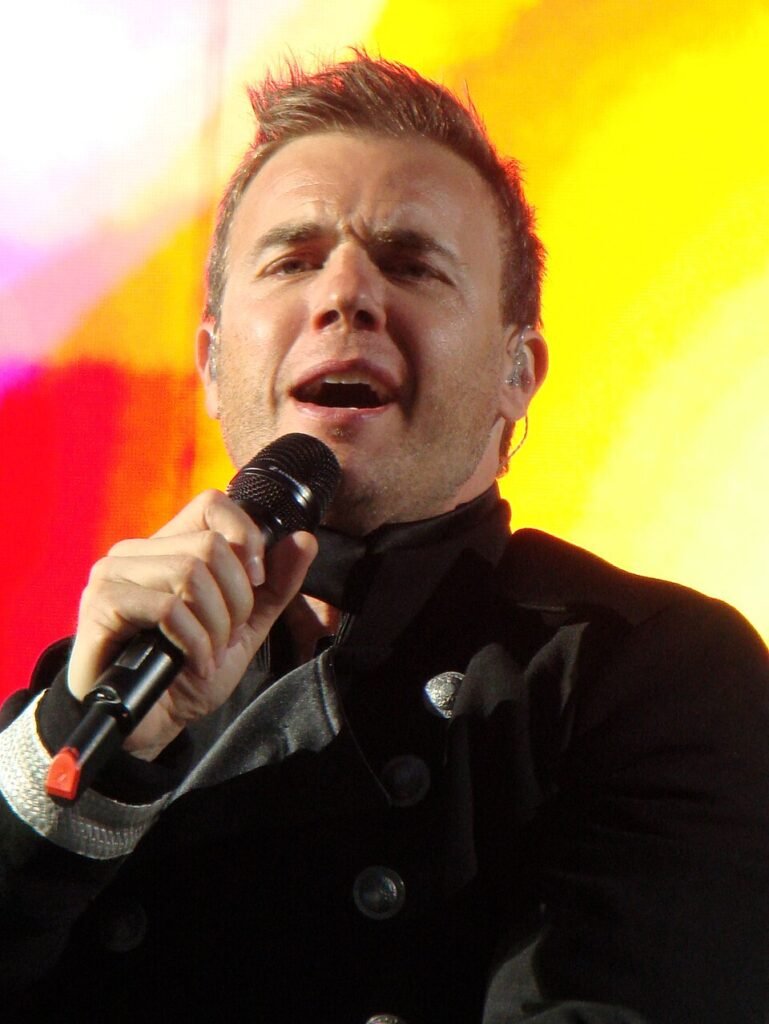
Gary Barlow is the Frodsham-born songwriter who wrote the great majority of Take That’s hits, built a solo career alongside the group’s, and then led one of the most successful reunions in pop history. Celebrity Net Worth puts his fortune at an estimated $125 million. This profile sets out the facts plainly — his age, height, wife, children, parents, best-known songs and albums — in one scannable digest.
Now fifty-five, he remains Take That’s frontman and chief writer more than three decades after the group first charted, and in February 2026 he signed an exclusive global publishing agreement with BMG covering his entire songwriting catalogue, past and future. The story below runs from a Cheshire childhood spent at the piano to that position, in order.
A Cheshire Childhood at the Piano
Gary Barlow was born on 20 January 1971 in Frodsham, a market town in Cheshire, the son of Colin and Marjorie Barlow. His father worked in agriculture, and the family lived modestly, the piano becoming the centre of the boy’s life remarkably early. He has described himself as one of the most studious children he knew: while other youngsters were out, he was indoors learning the instrument, working through the pop hits of the day by ear and then picking apart how they were built. By his early teens he was writing songs of his own, and the writing, rather than the performing, was always the point — he wanted to be the person who created the material.
The apprenticeship was practical as well as private. As a teenager he played keyboards in working men’s clubs and pubs around the North West, accompanying cabaret acts and learning, night after night, what held a room and what lost it. In 1986, aged fifteen, he entered a BBC festive song competition with one of his own compositions; it reached the semi-final stage and led to studio time in London, where he recorded and, just as usefully, watched professional writers and producers at work. A demo tape of his own songs, made in that period, circulated through management circles in Manchester — and it was that tape, full of polished, radio-ready material from a teenager, that changed everything.
What stands out in the early record is the steadiness of the ambition. Barlow did not drift towards a group and then learn to write; he arrived as a writer first, with a catalogue already forming, and everything that followed — the group, the solo years, the work for other artists — grew out of that single, settled intention. The discipline of those club years, playing other people’s requests while quietly stockpiling songs of his own, is the foundation the whole career rests on.
Frodsham to Take That: The Essentials
| Frodsham to Take That: The Essentials | Details |
|---|---|
| Born | 20 January 1971, in Frodsham, Cheshire |
| Age | 55 years old |
| Height | 5 feet 9 inches (1.75 m) |
| Weight | No reliable published figure |
| Wife | Dawn Andrews — married since 12 January 2000 |
| Children | Three — Daniel (born 2000), Emily (born 2002) and Daisy (born 2009); a fourth child, Poppy, was stillborn in August 2012 |
| Parents | Colin Barlow (father, died 15 October 2009) and Marjorie Barlow, née Cowan (mother) |
| Family | Raised in Frodsham; married to Dawn Andrews since 2000; three children |
| Songs | A Million Love Songs, Back for Good, Pray, Relight My Fire, Patience, Rule the World, Greatest Day, Forever Love, Let Me Go |
| Albums | With Take That: Everything Changes, Nobody Else, Beautiful World, The Circus, Progress, This Life; solo: Open Road, Sing, Since I Saw You Last, Music Played by Humans |
| @garybarlow | |
| Net Worth | Estimated $125 million (Celebrity Net Worth) |
Take That, a Solo Reckoning and a Reunion
1990–1991 — Take That are put together around his songs
In 1990 the manager Nigel Martin-Smith set out to build a Manchester-based vocal group and recruited Barlow as its singer and songwriter, alongside Howard Donald, Jason Orange, Mark Owen and Robbie Williams. Take That were, from the start, built around Barlow’s writing: he composed the bulk of their material and took most of the lead vocals. The group’s first singles in 1991 made little impression, and a cover of It Only Takes a Minute in 1992 finally carried them into the top ten. The breakthrough original was Pray in 1993, written by Barlow, which became their first number one and established the pattern of the years that followed: his ballads and mid-tempo songs at the centre, the others rotating around them.
1993–1995 — Everything Changes, Nobody Else and the peak
The album Everything Changes, released in 1993, produced a run of number-one singles including Pray, Relight My Fire and Babe. Nobody Else followed in 1995 and contained Back for Good, the song that defines Barlow’s writing for most listeners: a simple, direct ballad that reached number one in more than thirty countries and remains one of the best-loved pop records of its decade. Behind the scenes, though, the arrangement that powered the group was straining. Williams left in 1995, the remaining four completed their commitments, and in February 1996 Take That announced they were splitting up. Barlow, widely assumed to be the one certain of solo success, prepared his own career.
1996–1999 — The solo years and a reckoning
His solo start was strong: Forever Love reached number one in 1996, Love Won’t Wait followed it to the top in 1997, and the album Open Road sold respectably. But the second solo album, Twelve Months, Eleven Days, in 1999, performed poorly, and his record deal ended. At the same time, Williams — the member expected to struggle — became the biggest solo star in the country, and the contrast between the two careers was drawn constantly and unkindly. Barlow withdrew from performing, concentrated on writing and producing for other artists, and has spoken candidly since about how difficult those years were. Professionally, the period mattered: it turned a frontman into a working songwriter for hire, with credits for acts across the pop spectrum and a reputation inside the industry that his public profile no longer matched.
2005–2006 — The reunion nobody predicted
In 2005 the four members who had finished Take That’s original run agreed to a documentary and then, finding the response overwhelming, to a reunion tour. The comeback album Beautiful World arrived in 2006 and was a triumph on every measure: Patience, its lead single, written by Barlow with the group, returned them to number one after a decade away, and Rule the World, written for the soundtrack of the fantasy adventure Stardust, became one of their biggest records of all. The Circus followed in 2008, with Greatest Day as its lead single, and its accompanying stadium tour became the fastest-selling in the country’s history at that point. Barlow’s writing sat at the centre of all of it, exactly as it had fifteen years earlier.
2010–2013 — Progress, a fifth member returns, and judging
In 2010 Williams rejoined for the album Progress, largely co-written by Barlow, which became one of the fastest-selling albums of the century and was followed by a record-breaking stadium tour in 2011. Alongside the group work, Barlow’s public role widened: he organised major charity concerts, was appointed OBE in 2012 for services to entertainment and charity, and served as a judge on The X Factor from 2011 to 2013, bringing the same meticulous, work-focused approach to the panel that he brought to the studio. His Diamond Jubilee concert organisation in 2012, and the official single Sing, co-written with Andrew Lloyd Webber and performed by artists drawn from across the Commonwealth, underlined a position few pop writers have held: part hitmaker, part national-events fixture.
2012–2020 — Solo records again, and the stage
With the group secure, Barlow returned to solo recording on his own terms. Sing, a short album drawn from the Jubilee project, reached number one in 2012. Since I Saw You Last followed in 2013 and sold strongly, restoring a solo career that had once looked finished. He also moved into stage writing, composing the score for the Broadway musical Finding Neverland, which opened in 2015, and co-creating The Girls, a stage musical drawn from the true story of a Women’s Institute fundraising calendar, which opened in the West End in 2017. Take That, by then a trio of Barlow, Donald and Owen, released Wonderland in 2017, and Barlow’s fifth solo album, Music Played by Humans, arrived in 2020, built around big-band and orchestral arrangements and collaborations with singers he admired.
2023–2026 — This Life and the catalogue deal
The trio’s ninth studio album, This Life, was released in November 2023 and became their ninth number-one album, supported by an extensive arena and outdoor tour through 2024. In 2026 the three brought back their spectacular Circus Live staging for a new run of stadium dates, a quarter of a century after the original production. In February 2026 Barlow signed an exclusive global publishing agreement with BMG covering his entire songwriting catalogue, including future releases — a deal that recognised, in commercial form, what the industry had long known: the songs themselves, written across thirty-five years, are the core asset of the career.
Dawn, Three Children and a Marriage Since 2000
Barlow married Dawn Andrews on 12 January 2000. She had been a dancer on Take That’s 1995 Nobody Else tour, and the marriage has been a notably private and steady one, kept almost entirely out of the publicity circuit that surrounded the group. Their son Daniel was born in 2000, followed by daughters Emily in 2002 and Daisy in 2009. In August 2012 the couple announced that their fourth child, a daughter named Poppy, had been delivered stillborn. Barlow performed at the closing ceremony of the London Olympics days later, a commitment he kept while grieving, and he has spoken about Poppy rarely and carefully in the years since, while supporters have raised substantial sums in her memory for stillbirth charities.
His father, Colin, died on 15 October 2009, during the height of the reunion years, and Barlow has credited both of his parents with the work ethic that shaped him: the Frodsham family treated his practice hours as something to be protected rather than indulged. Family life, by his own account, is organised with the same forward planning he applies to tours — readers who recognise that approach will find it set out in our guide to saving through the year so the festive season never means debt, a habit his own famously organised approach to the calendar would approve of. He marked twenty-five years of marriage to Dawn in January 2025, a milestone reached with the same low-key manner that has characterised the marriage throughout.
A $125 Million Fortune From Songs and Stages
Celebrity Net Worth puts Barlow’s fortune at an estimated $125 million. No competing total from Forbes or the Sunday Times Rich List was found for him as an individual, so the Celebrity Net Worth estimate stands as the headline here without a rival allowed-source figure to set against it. The figure is best understood as the value of a writing catalogue as much as of a performing career: as Take That’s principal songwriter, Barlow earned publishing royalties on a run of number-one singles and multi-million-selling albums in the 1990s, and then, unusually, earned them all over again when the reunion produced a second run of number-one albums and record-breaking tours between 2006 and 2011.
The income streams around that core are several. His solo albums have sold steadily, his writing and production work for other artists has continued across three decades, and his stage scores add a further royalty line. In 2016 it was reported that Barlow, Donald and Owen had collectively repaid more than £20 million to HM Revenue and Customs in relation to a tax-avoidance scheme in which members had invested — recorded here as a reported repayment, kept separate from the fortune as a whole, and a reminder that headline estimates are not audited accounts. The February 2026 BMG publishing agreement, covering his entire catalogue and future writing, is the clearest recent marker of where the lasting value sits.
Set out plainly, the $125 million estimate reflects a career with an unusual shape: a first fortune earned in five frantic years, a public fallow period in which the writing trade was quietly relearned, and a second, larger success built on the same songs and the same skills. Few pop careers contain two peaks; fewer still rest, both times, on one man’s catalogue.
That is the digest: a Frodsham piano student who wrote his way into a group built around his songs, lost the solo contest everyone expected him to win, came back to lead the most successful reunion in pop, and at fifty-five holds an estimated $125 million fortune, a publishing deal covering everything he has written, and a frontman’s job he first took up in 1990.