Garth Brooks Net Worth, Age, Family and Career — Full Profile
Garth Brooks Net Worth, Age, Family and Career — Full Profile Garth Brooks is the best-selling solo recording artist in the history of the United States…
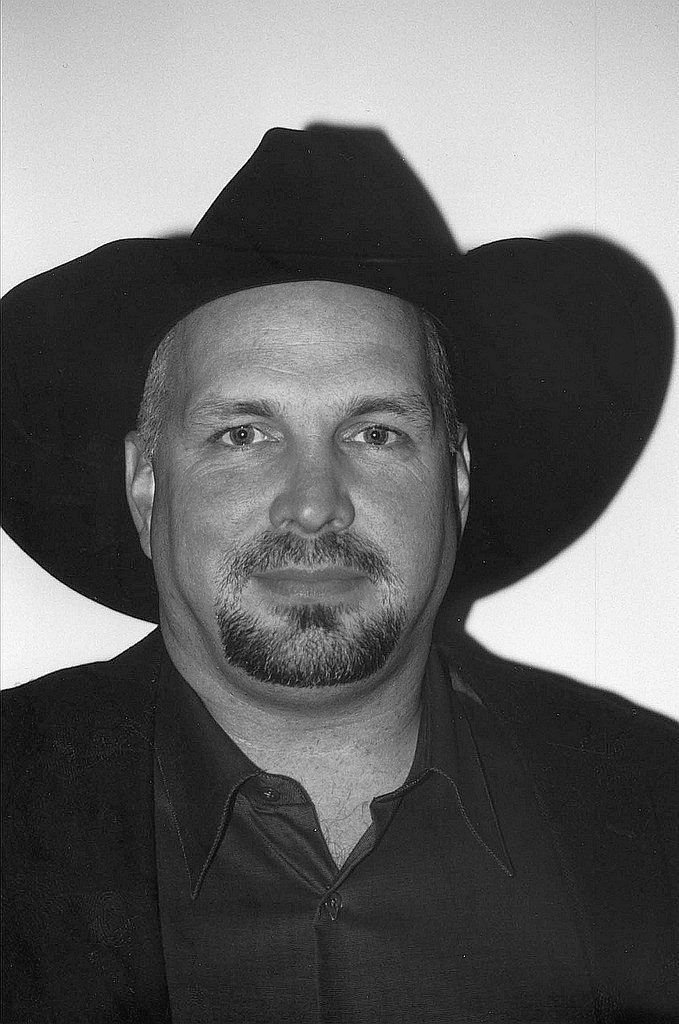
Garth Brooks Net Worth, Age, Family and Career — Full Profile
Garth Brooks is the best-selling solo recording artist in the history of the United States charts: a Tulsa-born singer-songwriter who took country music into stadiums in the 1990s, retired at his peak to raise his daughters, and returned to touring figures that few performers in any genre have matched. Celebrity Net Worth puts his fortune at an estimated $400 million — a combined figure with his wife, Trisha Yearwood, flagged as combined wherever it appears in this profile, with the same source attributing the vast majority of the total, some $300 million to $350 million, to Brooks himself. This profile sets out the facts plainly — his age, height, wife, three daughters, parents, best-known songs and catalogue — in one scannable digest.
Now sixty-four, Brooks marked twenty years of marriage to Yearwood in December 2025 and, with her, runs a Nashville bar business alongside his touring and residencies. The story below runs from Tulsa, Oklahoma to that position, in order.
The short version: Tulsa singer who filled stadiums
| The short version: Tulsa singer who filled stadiums | Details |
|---|---|
| Born | 7 February 1962, in Tulsa, Oklahoma |
| Age | 64 years old |
| Height | 6 feet 0 inches (1.83 m) |
| Weight | No reliable published figure |
| Wife | Trisha Yearwood — married 10 December 2005 |
| Children | Three daughters — Taylor Mayne Pearl, born in 1992; August Anna, born in 1994; Allie Colleen, born in 1996 |
| Parents | Troyal Raymond Brooks Jr. (father) and Colleen McElroy Carroll (mother) |
| Family | Raised in Yukon, Oklahoma; married to Trisha Yearwood since 2005; father of three daughters |
| Songs | If Tomorrow Never Comes, The Dance, Friends in Low Places, The Thunder Rolls, Unanswered Prayers, Shameless, The River, Ain’t Goin’ Down (‘Til the Sun Comes Up), Much Too Young (To Feel This Damn Old), Two Piña Coladas |
| Albums | Garth Brooks (1989), No Fences (1990), Ropin’ the Wind (1991), The Chase (1992), In Pieces (1993), Fresh Horses (1995), Sevens (1997), Scarecrow (2001), Man Against Machine (2014), Gunslinger (2016), Fun (2020), Time Traveller (2023) |
| @garthbrooks | |
| Net Worth | Estimated $400 million, combined with Trisha Yearwood (Celebrity Net Worth) |
Tulsa childhood, college and a first Nashville demo
Troyal Garth Brooks was born on 7 February 1962 in Tulsa, Oklahoma, and grew up in Yukon, a town west of Oklahoma City. His father, Troyal Raymond Brooks Jr., worked as a draughtsman for an oil company. His mother, Colleen McElroy Carroll, had been a country singer in the 1950s, recording for a major label and performing on regional broadcasts — music, in other words, was not an abstraction in the Brooks family but something his mother had done professionally a generation before him. Family music nights were a fixture of his childhood, with the children expected to perform, and Brooks has credited those evenings with teaching him harmony singing and stagecraft long before he thought of either as a career.
Sport ran alongside the music through his teens — he was a capable athlete in several disciplines — but by his late teens the guitar had won. He began playing in clubs and bars around Oklahoma while still young, learning the practical craft of holding a room: which songs to open with, how to read a crowd, how long a set could run. In 1985 he made a first, brief trip to Nashville and returned discouraged by what he learned about the business. In 1987 he moved there properly, with his wife Sandy, and began the slow work of demo singing, songwriting appointments and introductions that eventually put him in front of the people who would sign him.
The Nashville apprenticeship matters to everything that followed, because Brooks arrived with two assets most new signings lack: a catalogue of his own songs, and a fully formed idea of the live performer he intended to be — one who would bring the energy and scale of a rock concert to country music, a genre whose stage shows were then comparatively restrained. Both assets were visible from his very first album.
Sandy Mahl, Trisha Yearwood and three daughters raised at home
Brooks married Sandy Mahl, whom he had met in Oklahoma, on 24 May 1986, just as his career was beginning. Their three daughters were born during the years of his greatest fame: Taylor Mayne Pearl in 1992, August Anna in 1994 and Allie Colleen in 1996. The couple separated in 1999 and their divorce was finalised in 2001 — the retirement that followed was, by his own repeated account, undertaken so that he could be present for the remainder of his daughters’ childhoods, and he has described those years as the most important of his life. His eldest grandchild, his daughter August’s child, was born in 2013.
He married Trisha Yearwood on 10 December 2005, in a private ceremony in Oklahoma. The two had first met in 1987, as young demo singers in a Nashville attic studio, and had been friends and touring partners for years before their relationship began; Yearwood became, in the family’s own word, a bonus mother to his daughters, a role she has written and spoken about with candour. The couple marked their twentieth wedding anniversary in December 2025, and on all reliable reporting the marriage remains intact and current. The accurate label is wife, and this profile uses it.
His family story begins where the music did: with a draughtsman father and a mother who had sung professionally in the 1950s, in a Yukon family where performing at family music nights was simply what the children did. Both of his parents died before his comeback years — his mother in 1999 and his father in 2010 — and Brooks has continued to cite his mother’s example, a singer who gave up a recording career for family life, as the standard against which he measured his own decision to retire in 2001.
No Fences, Friends in Low Places and retirement at his peak
1989 — Garth Brooks and If Tomorrow Never Comes
Brooks signed with Capitol Records and released his debut album, titled simply Garth Brooks, in April 1989. It reached the top of the country album chart, and its ballad If Tomorrow Never Comes became his first number one single, while Much Too Young (To Feel This Damn Old) gave him an enduring early signature. The album eventually sold in Diamond quantities — ten million copies in the United States alone — but its first importance was simpler: it announced a singer-songwriter of unusual emotional directness, and a live act already drawing attention well beyond country’s usual circuit.
1990 — No Fences and Friends in Low Places
No Fences, released in August 1990, was the explosion. It carried Friends in Low Places, the rowdy singalong that became his signature song, alongside The Thunder Rolls and Unanswered Prayers. The album sold more than seventeen million copies in the United States and spent months at the top of the country chart while reaching the pop top three. His concerts grew in step: arena-scale productions with the lighting, movement and volume of a stadium rock show, at ticket prices he deliberately held below the market rate — a policy he maintained for decades, and one of the foundations of the loyalty his audience showed him.
1991 — Ropin’ the Wind
Ropin’ the Wind, released in September 1991, became the first country album to enter the all-genre album chart in the United States at number one. Shameless, written by Billy Joel and recorded by Brooks with Joel’s blessing, and The River were among its major singles. By the end of 1991 he was, by sales, the biggest act in country music, and his success was pulling a new, younger audience into the genre as a whole — the rising tide on which much of 1990s country floated.
1993 — In Pieces and the stadium years
The Chase (1992) and In Pieces (1993) sustained the run. Ain’t Goin’ Down (‘Til the Sun Comes Up), the lead single from In Pieces, was a number one built for the live show, and its other singles celebrated the working bars where he had learned his trade. Through the middle of the decade his touring operation was among the largest in the world in any genre, and his catalogue kept accumulating Diamond and multi-platinum certifications at a rate no solo artist had previously managed. Fresh Horses (1995) and Sevens (1997) extended the sequence, and a 1997 concert in New York’s Central Park drew one of the largest crowds in that venue’s history.
2001 — Retirement, on his own terms
In 2000 Brooks announced that he would retire from recording and touring to concentrate on raising his three daughters, then aged eight, six and four. Scarecrow, released in November 2001, was presented as his final studio album of that era. The retirement was genuine and it was long: for most of the following decade he performed only occasionally, for charity and at selected residencies, while his catalogue — which he kept off the major streaming services, preferring his own channels and terms — continued to sell in quantities most active artists would envy. He was inducted into the Country Music Hall of Fame in 2012, during the retirement years.
2014 — The comeback tour
Brooks returned in 2014 with a new album, Man Against Machine, and a world tour mounted jointly with Yearwood that ran until 2017 and became one of the highest-grossing tours of its decade in North America, playing multiple nights in city after city to meet demand. Gunslinger followed in 2016. A stadium tour ran from 2019, and a Las Vegas residency followed in the 2020s, alongside the studio albums Fun (2020) and Time Traveller (2023). In a touring year he has been reported to earn as much as $90 million — a single year’s earnings figure, kept separate here from his fortune as a whole, exactly as the sources present it.
2023 — A bar of his own in Nashville
In November 2023 Brooks headlined the opening concert for his own Nashville venue, the Friends in Low Places Bar & Honky-Tonk on Lower Broadway, named for his signature song, which opened fully in March 2024 with Yearwood’s food offering as part of the business. Running a multi-floor hospitality venue in the most competitive entertainment street in Nashville is a business undertaking of a different kind from touring, with premises, staff and licensing costs of its own; anyone weighing a venture on even a far smaller scale will find the same categories of cost set out in our guide to how much it costs to start a small business in the UK. The bar has since become the couple’s most visible joint business, and a fixed Nashville base for a performer whose career was built on the road.
Four hundred million dollars combined: Brooks and Yearwood’s shared fortune
Celebrity Net Worth puts the fortune at an estimated $400 million, and states that the figure is a combined net worth for Brooks and his wife, Trisha Yearwood, together. The same source adds an attribution few combined figures provide: the vast majority of the couple’s total, some $300 million to $350 million, is attributable to Brooks himself, with the balance representing Yearwood’s own considerable career. This profile therefore prints the $400 million as combined, as the source requires, while recording the source’s own attribution alongside it; it does not present the combined total as a solo figure without that context. Forbes publishes no competing net-worth total for him; its past coverage has taken the form of earnings rankings, which measure a period’s income rather than accumulated wealth and are kept separate here.
The composition, on that combined basis, rests principally on Brooks’s side of the ledger. The first pillar is catalogue: more than 150 million certified album units in the United States, a record number of Diamond-certified albums for a solo artist, and ownership and control of his recordings exercised on his own terms throughout — including holding his catalogue back from the major streaming services for years while it continued to sell. The second is touring: the 1990s stadium years, the 2014 to 2017 comeback tour, the stadium tour that followed it and the Las Vegas residency years, all run under his long-standing policy of holding ticket prices down and making the money on volume. The third, shared with Yearwood, is business: the Nashville bar and hospitality venture that opened in 2024, and Yearwood’s own recording, publishing and food-business career, counted inside the combined figure.
One reported figure belongs in the record precisely so that it is not mistaken for wealth. In June 2026 it was reported that Brooks was considering a sale of his music catalogue, with a sought valuation that could reach roughly $2 billion. A sought valuation for a sale that has not completed is not a receipt, not income and not net worth; no completed sale on those terms has been confirmed, and nothing from that reporting is added to the $400 million combined estimate above. If a transaction of that scale were ever completed, the position would change materially — until then, the estimate stands as printed.
That is the digest: a Yukon boy from a musical family who rewrote the scale of country music in three years flat, walked away at his peak to raise his daughters, came back to touring figures most performers never reach once, and shares with his wife of twenty years a combined estimated fortune of $400 million — the bulk of it, on the source’s own attribution, his.