Frank Sinatra Net Worth, Age, Family and Career — Full Profile
Frank Sinatra Net Worth, Age, Family and Career — Full Profile Frank Sinatra was the defining popular singer of the twentieth century: a Hoboken-born vocalist who…
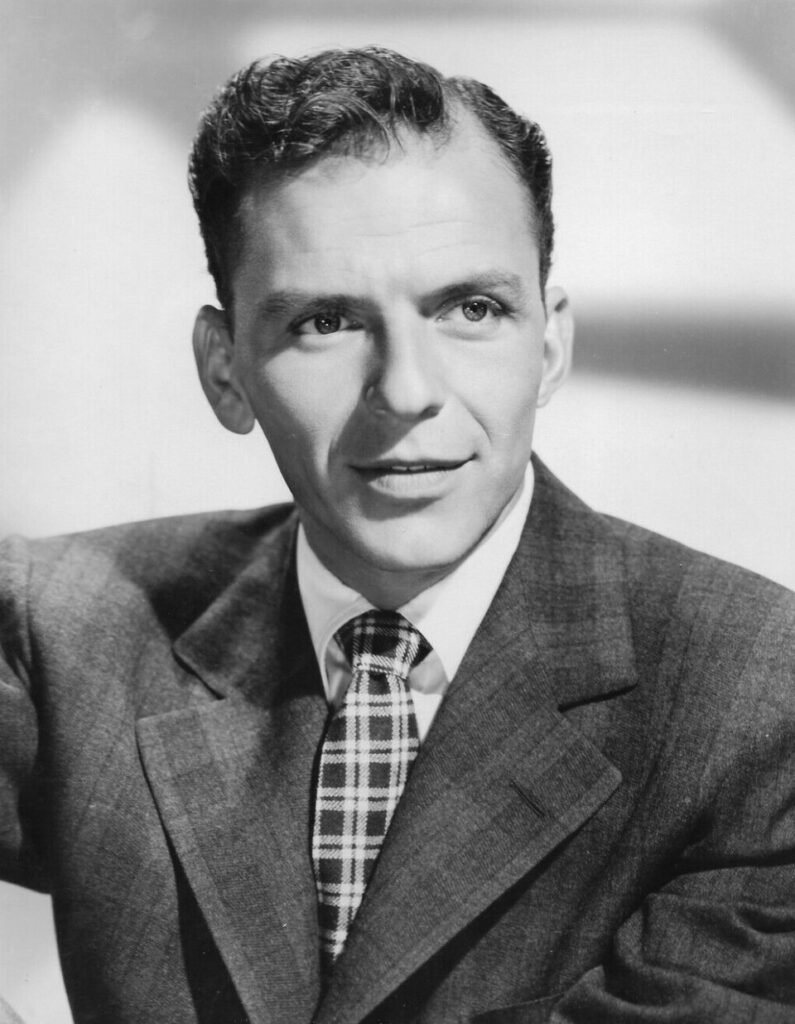
Frank Sinatra Net Worth, Age, Family and Career — Full Profile
Frank Sinatra was the defining popular singer of the twentieth century: a Hoboken-born vocalist who rose through the big-band era, remade himself in the 1950s as the most admired interpreter of the popular songbook, founded his own record label, and held concert audiences around the world for more than fifty years. Celebrity Net Worth puts his fortune at an estimated $200 million at the time of his death in 1998, with contemporary estimates of the estate ranging as high as $600 million. This profile sets out the facts plainly — his age at death, height, wife, three children, parents, houses, best-known songs and albums — in one scannable digest.
Sinatra died on 14 May 1998, aged eighty-two, still married to his wife Barbara, and the story in this profile runs from a Hoboken tenement to that position.
Hoboken to My Way: The Short Version
| Hoboken to My Way: The Short Version | Details |
|---|---|
| Born | 12 December 1915, in Hoboken, New Jersey |
| Age | 82 years old at his death on 14 May 1998 |
| Height | 5 feet 8 inches (1.73 m) |
| Weight | No reliable published figure |
| Wife | Barbara Sinatra, née Marx — married 11 July 1976, until his death in 1998 |
| Children | Three — Nancy, born 8 June 1940; Frank Jr., born 10 January 1944, died 16 March 2016; Tina, born 20 June 1948 |
| Parents | Anthony Martin Sinatra (father) and Natalina Sinatra, née Garaventa, known as Dolly (mother) |
| Family | Raised in Hoboken, New Jersey; married four times; father of three; based in California for most of his later life |
| Songs | I’ve Got You Under My Skin, Fly Me to the Moon, Strangers in the Night, My Way, That’s Life, Summer Wind, Come Fly with Me, Luck Be a Lady, The Way You Look Tonight, Theme from New York, New York |
| Albums | In the Wee Small Hours (1955), Songs for Swingin’ Lovers! (1956), Come Fly with Me (1958), Only the Lonely (1958), Nice ‘n’ Easy (1960), September of My Years (1965), Strangers in the Night (1966), My Way (1969), Trilogy (1980), Duets (1993) |
| House | Twin Palms in Palm Springs, commissioned in 1947; later houses in Rancho Mirage, Beverly Hills and Malibu |
| Net Worth | Estimated $200 million at his death (Celebrity Net Worth) |
A Hoboken Childhood and a Voice That Carried Him Out
Francis Albert Sinatra was born on 12 December 1915 in a tenement at 415 Monroe Street in Hoboken, New Jersey. His father, Anthony Martin Sinatra, had been a bantamweight boxer who fought under the name Marty O’Brien, and worked as a fireman with the Hoboken fire department and as a bar owner. His mother, Natalina Sinatra, née Garaventa and known to everyone as Dolly, was a midwife and the driving force of the household: energetic, ambitious for her son, and a figure of real influence in the neighbourhood’s local politics. The family home was modest, and Hoboken in the 1920s was a working port town of docks, bars and close-packed streets.
The birth itself left marks he carried all his life. He was a large baby — thirteen and a half pounds — delivered with the aid of forceps, which scarred his left cheek, neck and ear and damaged one eardrum permanently. As a boy and a young man he was strikingly thin, a frame that later became a running joke in his own stage act, and he sang from an early age: first for his own pleasure, then, encouraged by his mother, at family gatherings and local events around Hoboken.
By his late teens the ambition was fixed. Hearing Bing Crosby sing convinced him that a singer could build a life from a voice alone, and he began working wherever a young vocalist could: local dances, neighbourhood clubs and amateur contests across New Jersey and New York. In 1935 he won a talent contest as part of a local singing group, the Hoboken Four, and toured briefly with the act. Solo work followed in New Jersey clubs and on local radio broadcasts — live singing on the wireless was then a working singer’s bread and butter — and he took day jobs, including work as a singing waiter, while he waited for a bandleader to notice him.
Big Bands, Capitol Albums and a Second Act
1939 — The big bands
The break came in 1939, when bandleader Harry James heard Sinatra singing on a late-night radio broadcast from a New Jersey club and signed him as his band’s vocalist. His first recordings were made with James that year. Within months he had moved to the bigger prize: Tommy Dorsey’s orchestra, then among the most popular dance bands in the country, where he became the featured singer in 1940. With Dorsey he recorded a string of hits, including I’ll Never Smile Again, which spent twelve weeks at number one, and his phrasing — long, smooth lines modelled, as he often said, on the way Dorsey played the trombone — became the sound a generation of teenagers queued to hear. The concert scenes of those years, with young fans screaming at stage doors, effectively invented the modern pop idol’s reception, years before rock and roll.
1943 — Going solo
Sinatra left Dorsey in 1942 and launched a solo career with Columbia Records in 1943, at a moment when the big bands were fading and the singer was becoming the star. His solo concerts drew enormous crowds of young fans — the engagement at New York’s Paramount Theatre in October 1944 drew such numbers that the disturbance outside entered the record as the Columbus Day Riot. Through the 1940s he was rarely off the charts or the radio: songs such as Nancy (with the Laughing Face) and The House I Live In belonged to this period, and his voice — lighter, younger, more yearning than the one the world would later know — was the defining popular sound of the war years and their immediate aftermath.
1953 — Capitol and the great albums
By the early 1950s the first career had faltered: tastes had changed, his voice was strained, and his Columbia contract ended. The rebuild began at Capitol Records in 1953, working principally with the arranger Nelson Riddle, and it produced the body of work on which his reputation now rests. In the Wee Small Hours (1955) was a sustained meditation on lost love, sung late at night in a voice newly darkened and deepened. Songs for Swingin’ Lovers! (1956) was its opposite — buoyant, swinging, and home to his definitive recording of I’ve Got You Under My Skin. Come Fly with Me (1958) and Only the Lonely (1958) extended the run of themed albums, a format he did more than any singer of his era to establish as popular music’s serious long-form statement. His stage wardrobe of this period — immaculately tailored suits, narrow ties, a hat worn at a deliberate angle — set a standard of presentation that has never really dated; readers dressing for a formal occasion could do worse than start from it, and our guide to what men should wear to a summer wedding in the UK covers the modern version of the same ground.
1960 — Reprise, his own label
In 1960 Sinatra founded his own record label, Reprise Records, built to give its founder — and, in time, other established performers — the control over their recordings that the old studio contracts had denied them. Nice ‘n’ Easy (1960) closed his Capitol years in style, and the Reprise years that followed mixed swing albums, collaborations and experiments. His Las Vegas concert residencies of this era, often shared with Dean Martin and Sammy Davis Jr., became the most famous live attraction in the business: loose, funny, immaculately sung shows that ran for years and fixed the image of Sinatra in a dinner jacket, a drink in one hand and a microphone in the other, that the world still carries.
1965 — September of My Years and Strangers in the Night
At fifty, an age at which most popular singers of his generation were finished, Sinatra made September of My Years (1965), a reflective album about ageing that won the Grammy Award for Album of the Year and produced It Was a Very Good Year. The following year brought Strangers in the Night, whose title song gave him a number one single and another Grammy, and That’s Life, a swaggering top five hit. Fly Me to the Moon, recorded in 1964 with Count Basie’s orchestra arranged by Quincy Jones, became in these years one of his most requested concert songs. In 1969 he recorded My Way, an adaptation of a French song with new words by Paul Anka; he professed in later years to have tired of it, but audiences would not let him drop it, and it became his closing signature.
1971 — Retirement, and the return
Sinatra announced his retirement in 1971, gave a farewell concert, and meant it — for two years. He returned in 1973 with an album pointedly titled Ol’ Blue Eyes Is Back, and the second career that followed lasted a further two decades. Theme from New York, New York, recorded in 1979 for the Trilogy album, gave him a late signature song that became the city’s unofficial anthem. Through the 1980s he toured the world’s arenas and concert halls at an age when his contemporaries had long stopped, and in 1993 and 1994 the Duets albums — his voice paired with singers of younger generations — returned him to the top of the charts. His final concert was given in Japan in December 1994, and his last public singing appearance followed in February 1995, closing a performing career of nearly sixty years.
A $200 Million Fortune at His Death
Celebrity Net Worth puts Sinatra’s fortune at an estimated $200 million at the time of his death in 1998. The same source is candid that the true figure is uncertain: contemporary estimates of the estate ranged from $200 million to $600 million, because a significant part of his holdings had been placed in a living trust and never passed through the public probate process. An earlier snapshot survives from 1981, when a financial statement filed for the renewal of a Nevada gaming licence put his net worth at just over $14 million — a figure from a leaner moment in his finances, seventeen years before his death, and not comparable to the at-death estimates. The headline used here is the $200 million at-death figure, attributed as noted in this profile.
The composition at death rested on assets built over six decades. The first was the catalogue: master recordings and publishing interests from the Capitol and Reprise years, together with ownership of Reprise itself in its formative period, which continued to earn long after his final concert. The second was property: the Palm Springs, Rancho Mirage, Beverly Hills and Malibu houses named in his will were substantial California real estate by any measure. The third was the value of the name itself: in 2007, nine years after his death, Warner Music Group paid $50 million for a fifty per cent interest in the company formed to manage the licensing of his name, likeness and parts of his recorded legacy — a transaction price for a share of a business, recorded here as a transaction and not added to the at-death figure, which it postdates by nearly a decade.
Set against the totals is the shape of the earning life behind them: a singer who was the biggest concert draw of the 1940s, rebuilt himself completely in the 1950s, owned his own label in the 1960s, retired, unretired, and was still filling arenas in his late seventies. Few fortunes in popular music were earned over so long a span, or survived so many changes in the business that produced them.
That is the digest: a Hoboken fireman’s son who sang his way out of the tenements, faltered, rebuilt himself into the century’s defining popular vocalist on a run of albums that have never been bettered, and died in 1998, married to Barbara, holding an estimated $200 million fortune.
Four Marriages and a Final One to Barbara
Sinatra married four times. His first wife was Nancy Barbato, whom he married on 4 February 1939, before fame arrived; their three children — Nancy, born in 1940, Frank Jr., born in 1944, and Tina, born in 1948 — were all born during that marriage, which ended in divorce in 1951. His second marriage, to Ava Gardner, lasted from 1951 to 1957 and was the most stormily reported of his life. His third, to Mia Farrow, lasted from 1966 to 1968. His fourth marriage proved the lasting one: he married Barbara Marx on 11 July 1976, and they remained married until his death twenty-two years later. The accurate label for the digest table is wife — Barbara Sinatra, the wife of his final decades — and this profile uses it.
His children built lives around the family business in different ways. Nancy became a successful singer in her own right in the 1960s. Frank Jr. worked as a singer and bandleader, carrying his father’s songbook onto concert stages for decades, until his own death in March 2016. Tina worked as a producer and as a guardian of the family’s interests in her father’s legacy. Sinatra’s homes matched the geography of his later life: Twin Palms in Palm Springs, the modernist house he commissioned in 1947 with its piano-shaped swimming pool, remained the most famous, and he later kept houses in Rancho Mirage, Beverly Hills and Malibu, spending much of his final period in California.
He died on 14 May 1998 at Cedars-Sinai Medical Center in Los Angeles, after a heart attack, aged eighty-two, with Barbara at his side. His estate was divided under a will that guaranteed Barbara at least $3.5 million together with the California houses, while his children received $200,000 each directly under the will and substantially larger interests through trusts and other arrangements made outside it — a structure that kept much of the estate’s true scale out of public record, and explains much of the range in the estimates below.