Daniel Day-Lewis Net Worth, Age, Family and Career — Full Profile
Daniel Day-Lewis Net Worth, Age, Family and Career — Full Profile Daniel Day-Lewis is, by the verdict of his peers and of the record books, the…
Daniel Day-Lewis Net Worth, Age, Family and Career — Full Profile
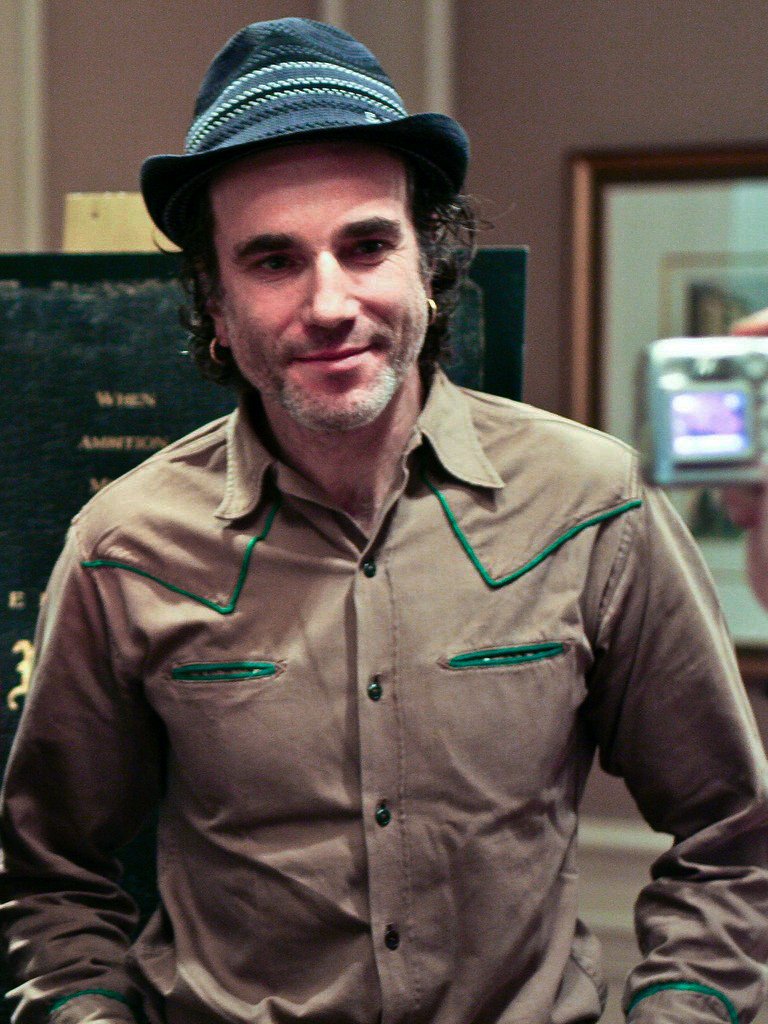
Daniel Day-Lewis is, by the verdict of his peers and of the record books, the outstanding screen performer of his generation: the only man ever to win three Academy Awards for Best Actor, assembled from barely twenty feature films across five decades, with two retirements and a spell as a trainee shoemaker in between. Celebrity Net Worth puts his fortune at an estimated $40 million. This profile sets out the facts plainly — his age, height, wife, sons, parents, nationality and best-known work — in one scannable digest.
Now in his late sixties, Day-Lewis has done the thing nobody expected: after announcing his retirement in 2017 and meaning it for eight years, he returned in 2025 in Anemone, a film he co-wrote with his son Ronan, who directed it — and then told Rolling Stone that his earlier retirement remarks had been, in his own words, grandiose gibberish. The story below runs from a childhood in Kensington and Greenwich to that position, in order.
A Kensington Childhood and a Restless School Life
Daniel Michael Blake Day-Lewis was born on 29 April 1957 in Kensington, London, and grew up in Greenwich, in the south of the city. His father, Cecil Day-Lewis, was one of the leading poets of his generation and Poet Laureate from 1968; his mother, Jill Balcon, was an actress whose own father, Michael Balcon, had run one of the great London studios. It was a literary, theatrical family, but not an easy upbringing: he was unhappy in the strict boarding setting in Kent to which he was sent at eleven, moved after two years to a more progressive boarding setting in Hampshire, and lost his father to pancreatic cancer in 1972, when he was fifteen.
The detail that explains much of the later career came next. On leaving, his first ambition was not the stage at all: he applied to train as a cabinet maker, wanting a working life built around wood and his hands, and was turned away for want of experience. Anyone who has felt the same pull toward the bench will recognise the tools of that trade are unforgiving of dull edges, which is why learning to sharpen chisels by hand remains the first skill of the craft. Turned away from the workshop, he applied instead to train as a performer, and was accepted in Bristol, where he spent three years. The woodworking never left him — it resurfaced, decades later, in a Florentine workshop and in the furniture he has made since — and neither did the lesson of the refusal: that a craft is something you serve an apprenticeship to, patiently, before it gives anything back.
He had, in fact, already appeared on screen once, as a teenager in 1971, in a small uncredited part. After his training in Bristol he worked in repertory theatre, joined the Royal Shakespeare Company in 1984, and took over the lead in the stage production Another Country to considerable attention — the classical grounding on which the whole later method was built.
Kensington to Lincoln: The Facts Together
| Kensington to Lincoln: The Facts Together | Details |
|---|---|
| Born | 29 April 1957, in Kensington, London |
| Age | 69 years old |
| Height | 6 feet 1 inch (1.85 m) |
| Weight | No reliable published figure |
| Wife | Rebecca Miller — married on 13 November 1996 |
| Children | Three sons — Gabriel-Kane Day-Lewis, born in 1995; Ronan Cal Day-Lewis, born in 1998; Cashel Blake Day-Lewis, born in 2002 |
| Parents | Cecil Day-Lewis (father; poet, Poet Laureate from 1968 until his death in 1972) and Jill Balcon (mother, actress) |
| Family | Raised in London; married to Rebecca Miller since 1996; three sons; the family divides its time between County Wicklow and Manhattan |
| Movies and TV Shows | My Beautiful Laundrette, A Room with a View, The Unbearable Lightness of Being, My Left Foot, The Last of the Mohicans, In the Name of the Father, The Age of Innocence, The Crucible, The Boxer, Gangs of New York, There Will Be Blood, Lincoln, Phantom Thread, Anemone |
| Nationality | British and Irish — dual citizenship, holding Irish citizenship since 1993 |
| No official account — Day-Lewis has no public social media presence | |
| Net Worth | Estimated $40 million (Celebrity Net Worth) |
Three Oscars, Two Retirements and a Return
1985 — Two films, one year, total range
Day-Lewis’s breakthrough arrived as a double demonstration in 1985. In My Beautiful Laundrette he played Johnny, a former street punk drawn into a relationship and a business with a young British Pakistani entrepreneur in south London; in A Room with a View, released in the same period, he played Cecil Vyse, the priggish, exquisite Edwardian suitor. The two performances, seen side by side, made the point that has defined his reputation ever since: there appeared to be no register, class or accent he could not inhabit completely. The Unbearable Lightness of Being followed in 1988, as a Prague surgeon in the year of the Soviet invasion.
1989 — My Left Foot and the first Oscar
My Left Foot, released in 1989, made him an international figure. Playing Christy Brown, the Dublin writer and painter who had cerebral palsy and could control only his left foot, Day-Lewis remained in character through the production, was carried and fed by the crew rather than break the physical reality of the part, and won the Academy Award for Best Actor — the first of three, a total no other man has matched in the leading category. The preparation became the template for the legend: total immersion, sustained for months, at whatever personal cost.
1992 — The Last of the Mohicans and the wilderness
For The Last of the Mohicans in 1992 he spent months learning to live off the land — building a canoe, hunting, skinning, carrying a flintlock rifle everywhere, at all hours; the performance turned a period adventure into a phenomenon and made him, briefly, a conventional leading man. In the Name of the Father followed in 1993, as Gerry Conlon, wrongfully imprisoned for a bombing he did not commit, for which he lived in a cell and endured interrogation conditions to understand the confinement; it brought another Academy Award nomination. The Age of Innocence, The Crucible and The Boxer closed the decade.
1997 — The first retirement and the cobbler’s bench
After The Boxer in 1997, Day-Lewis simply stopped. He moved to Florence and took up an apprenticeship as a shoemaker under the master cobbler Stefano Bemer, making shoes by hand and declining every script sent to him. The episode is sometimes told as an eccentricity; in context it was the cabinet-making ambition of his teens, finally served. It took Martin Scorsese, and the part of Bill the Butcher, to bring him back.
2002 — Gangs of New York and the return
Gangs of New York, released in 2002, returned him as Bill Cutting, the nativist gang leader of Civil War-era New York — a performance of such ferocity and relish that it dominated a vast, troubled production and earned another Academy Award nomination. The Ballad of Jack and Rose followed in 2005, written and directed by his wife, Rebecca Miller. The pattern of the career was now fixed: one film, total commitment, then years of silence.
2007 — There Will Be Blood
There Will Be Blood, released in 2007, is the performance most often placed at the top of lists of the greatest ever given on screen. As Daniel Plainview, an oil prospector hardening into a monster across three decades of California oil fever, Day-Lewis built the character from the voice outward and sustained him without a false note for two and a half hours. It brought his second Academy Award for Best Actor, along with the BAFTA and Golden Globe for the same performance.
2012 — Lincoln and the third Oscar
Lincoln, released in 2012, required a year of preparation — reading, thinking, and finding the high, reedy voice that startled audiences who expected a baritone — and produced a portrait of Abraham Lincoln as a working politician: humorous, melancholy and ruthless by turns. It brought his third Academy Award for Best Actor, a record for a man in the leading category that still stands. He was knighted the following year, in 2014, for services to drama. Nine, in 2009, stands as the single lighter entry in this period of the filmography.
2017 — Phantom Thread and the second retirement
Phantom Thread, released in 2017, reunited him with director Paul Thomas Anderson for the part of Reynolds Woodcock, a fastidious London couturier of the 1950s whose control over his world is undone by love. In June 2017, before the film was released, his representative announced that he would no longer work as an actor. This time the retirement looked, and was meant to look, final: he retreated to County Wicklow, gave almost no interviews, and was photographed, occasionally, doing ordinary things — the most famous performer in the world, apparently content to be none.
2025 — Anemone and the return
The return, when it came, came from inside the family. Anemone, which premiered at the New York Film Festival in the autumn of 2025 and was released that October, was directed by his son Ronan Day-Lewis, making his feature debut, and co-written by father and son. Day-Lewis plays Ray Stoker, a former soldier who has lived in isolation in the woods of the north for twenty years, until a figure from the past he abandoned arrives and the buried history has to be faced; Sean Bean and Samantha Morton complete the central cast. Interviewed with Ronan in Rolling Stone around the release, he was blunt about the earlier announcement, calling his retirement remarks grandiose gibberish and saying he had never intended to stop for good — he had simply, at the time, felt the need of a different life, and then his son had a film he wanted to make. Whether Anemone is a one-off or a reopening is, at the time of writing, unanswered, and characteristically he is in no hurry to answer it.
Rebecca Miller and a Marriage Since 1996
Day-Lewis’s longest early relationship was with the French actress Isabelle Adjani, from 1989 to 1995. Their son, Gabriel-Kane, was born in New York in April 1995, a few months after the relationship had ended. In 1996, while working on the film of The Crucible, he visited its playwright, Arthur Miller, and there met Miller’s daughter Rebecca — a writer and filmmaker in her own right. They married on 13 November 1996, within the year, and have two sons: Ronan Cal, born in June 1998, and Cashel Blake, born in May 2002.
The marriage has been conducted, like everything else in his life, almost entirely out of public view. Rebecca Miller’s own career — novels, and films including The Ballad of Jack and Rose, in which her husband played the lead — runs in parallel, and the couple’s rare joint appearances, at awards ceremonies during the Lincoln and Phantom Thread campaigns and again around Anemone, are notable precisely because they are rare. Around the release of Anemone he spoke of her, in the Rolling Stone conversation with Ronan, with a warmth that underlined how central the family is to the one professional decision he has made in a decade: the film exists because his son directed it and his family made it together.
The family divides its time between Annamoe, in County Wicklow, and Manhattan. He has held Irish citizenship since 1993 alongside his British citizenship, and the Wicklow base — chosen in the 1990s, long before it was fashionable for performers of his standing to disappear — is where both retirements were spent and where, between films, he has made furniture, walked, and lived at a distance from the industry that his method requires. He gives very few interviews, makes very few public appearances and has no public presence on social media in any form; accounts using his name are not his.
A $40 Million Fortune From a Very Selective Career
Celebrity Net Worth puts Day-Lewis’s fortune at an estimated $40 million, in a page updated in October 2025. Higher totals, in the $50 million to $60 million range, circulate on other trackers, but those sources sit outside the allowed set for this profile and were not used as the headline; the disagreement is recorded here so readers can see it. Forbes publishes no competing net-worth total for him, and no Sunday Times Rich List figure for him was found in the sources consulted.
The composition is the inverse of the usual star fortune. Where a conventional leading man of his era might have made forty films, Day-Lewis has made barely twenty features in five decades, turned down far more than he accepted, taken years-long breaks at the height of his market value — twice walking away entirely — and done no advertising work of any consequence. Individual salaries on the major films were substantial by the standards of serious drama, and the continuing life of a small catalogue of canonical performances, from My Left Foot to Lincoln, generates the steady residual income of films that are revived, rewatched and endlessly discussed. But nothing in the record suggests money was ever the variable: this is the fortune of a man who worked, by choice, perhaps a third as often as his talent would have allowed.
Set against the $200 million and $300 million fortunes elsewhere in this series, the $40 million estimate is therefore best read as evidence for the prosecution in the case he has always made by example — that the work was the point. He retired twice with the figure already sufficient, returned once for his son, and has never, in fifty years, taken a part that the record suggests he took for the fee.
That is the digest: a poet’s son from Greenwich who was refused a cabinet-making apprenticeship, became the most decorated leading man in the history of the Academy Awards on a filmography of barely twenty titles, retired twice — once to make shoes — and returned at sixty-eight in a film made with his son, holding an estimated $40 million fortune and a knighthood.