Clint Eastwood Net Worth, Age, Family and Career — Full Profile
Clint Eastwood Net Worth, Age, Family and Career — Full Profile Clint Eastwood is the longest-serving leading man in cinema history: a Depression-era child from San…
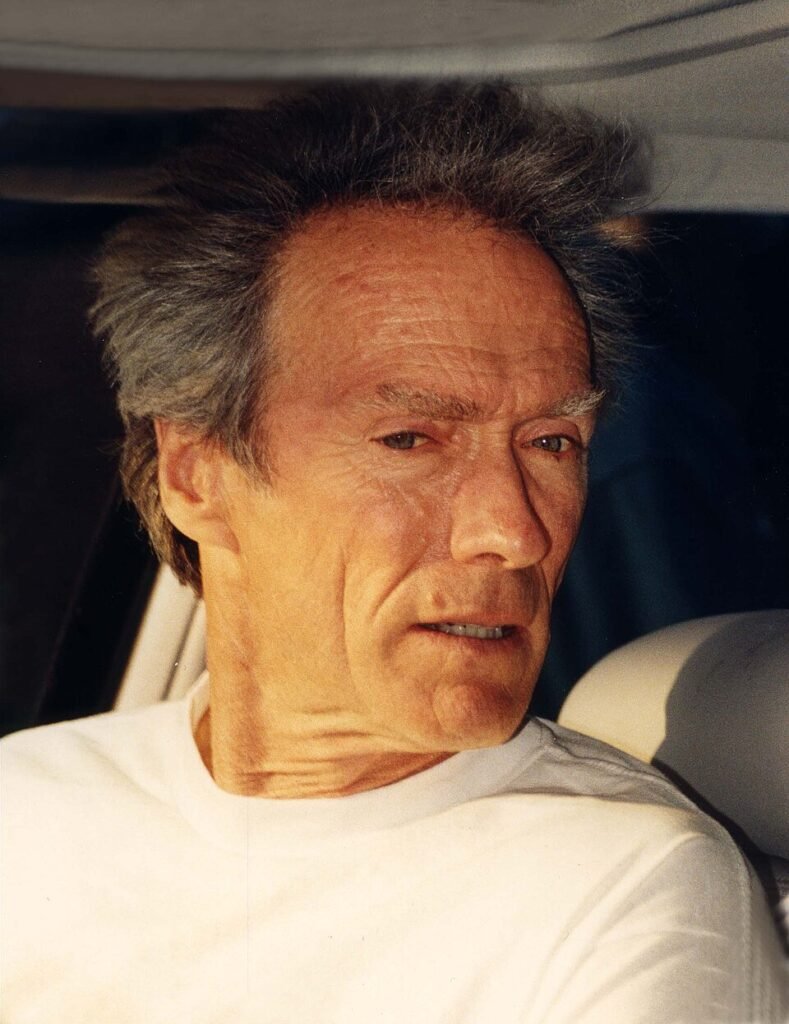
Clint Eastwood Net Worth, Age, Family and Career — Full Profile
Clint Eastwood is the longest-serving leading man in cinema history: a Depression-era child from San Francisco who became a star in a television western, remade himself as the defining screen cowboy of the 1960s, and then directed himself into a second career that brought two Academy Awards for Best Picture and lasted into his nineties. Celebrity Net Worth puts his fortune at an estimated $400 million. This profile sets out the facts plainly — his age, height, children, parents, best-known work and the Carmel base he has kept for half a century — in one scannable digest.
Now ninety-six, he lives in Carmel-by-the-Sea, California. His long-term partner Christina Sandera died in July 2024, and in June 2026 his son Kyle said in an interview that his father had retired, though Eastwood himself has issued no formal announcement. The story below runs from 1930 to that position, in order.
The Short Version: San Francisco Beginnings and Dirty Harry
| The Short Version: San Francisco Beginnings and Dirty Harry | Details |
|---|---|
| Born | 31 May 1930, in San Francisco, California |
| Age | 96 years old |
| Height | 6 feet 4 inches (1.93 m) |
| Weight | No reliable published figure |
| Former Partner | Christina Sandera — together from 2014 until her death on 18 July 2024; no new partner has been confirmed by major outlets since |
| Children | Eight — Laurie (born 1954), Kimber (born 1964), Kyle (born 1968), Alison (born 1972), Scott (born 1986), Kathryn (born 1988), Francesca (born 1993) and Morgan (born 1996) |
| Parents | Clinton Eastwood Sr. (father) and Margaret Ruth Eastwood, née Runner (mother) |
| Family | Born in San Francisco and raised across California during the Depression; twice married and divorced; father of eight |
| Movies and TV Shows | Rawhide, A Fistful of Dollars, For a Few Dollars More, The Good, the Bad and the Ugly, Dirty Harry, The Outlaw Josey Wales, Escape from Alcatraz, Unforgiven, Million Dollar Baby, Gran Torino, The Mule, Cry Macho, Juror #2 |
| House | Based in Carmel-by-the-Sea, California; owner of the Mission Ranch Hotel and Restaurant in Carmel and of the Tehama Golf Club in Carmel Valley |
| No official account — his representatives have confirmed that he keeps no official social media accounts | |
| Net Worth | Estimated $400 million (Celebrity Net Worth) |
At Home With eight children: Eastwood Beyond Work
Eastwood has been married twice. His first marriage, to Maggie Johnson, began in 1953 and ended in divorce in 1984; they had two children together, Kyle, born in 1968, and Alison, born in 1972. His second marriage, to the news anchor Dina Ruiz, began in 1996 and ended in divorce in 2014; their daughter, Morgan, was born in 1996. Between and around those marriages, his long relationship with the actor Sondra Locke, his co-star in several films, ran from the mid-1970s to 1989.
He has eight children in total. Laurie, born in 1954, whose mother’s name has never been publicly disclosed, was adopted by another family and reconnected with Eastwood as an adult. Kimber, born in 1964, is his daughter with Roxanne Tunis. Kyle and Alison followed with Maggie Johnson. Scott, born in 1986, and Kathryn, born in 1988, are his children with Jacelyn Reeves; Scott has built a substantial acting career of his own. Francesca, born in 1993, is his daughter with the actor Frances Fisher. Morgan, born in 1996, is the youngest. In June 2024, at ninety-four, he walked Morgan down the aisle at her wedding at Mission Ranch in Carmel.
His last long-term partner was Christina Sandera, a hostess at his Mission Ranch Hotel, whom he met in 2014. They were together for a decade, appearing together at premieres and awards ceremonies, until her death on 18 July 2024, at the age of sixty-one; Eastwood said in a statement that she was a lovely, caring woman and that he would miss her very much. Reports of a new, unnamed partner circulated in the autumn of 2024 on the strength of a lone journalistic claim; no major outlet has confirmed a new relationship, and this profile records none.
His base throughout has been Carmel. He bought the run-down Mission Ranch property in 1986 and restored it as a working hotel and restaurant, and he founded the Tehama Golf Club in Carmel Valley, an eighteen-hole course built to strict environmental standards on land he owns. Golf has been his principal recreation for decades — he is also a part-owner of the famous Pebble Beach links nearby — and beginners inspired by a nonagenarian still walking courses can start with our guide to improving your golf swing with a beginner’s guide. He is, by every account, still there: private, plain-spoken, and letting the work speak.
Young Eastwood: Life in San Francisco Before the Spotlight
Clinton Eastwood Jr. was born on 31 May 1930 in San Francisco, California, to Clinton Eastwood Sr. and Margaret Ruth Eastwood, née Runner. He arrived in the first full year of the Great Depression, weighing, by family account, over eleven pounds — nurses at the hospital nicknamed the outsized baby Samson. His father worked first as a bond salesman and later in manufacturing, and the family moved repeatedly around California and the Pacific coast as work came and went, living for stretches in towns including Piedmont, Redding, Sacramento and Pacific Palisades.
The restlessness of that childhood stayed with him. As a young man he worked a string of manual jobs — lumber work in Oregon, a steel mill, digging pools, pumping fuel — before being drafted into the Army in 1951. He served at Fort Ord in California, where he worked as a lifeguard and swimming instructor. In October 1951 he survived a genuine emergency: the bomber he was travelling in ran out of fuel and ditched in the Pacific off Point Reyes, and he swam roughly two miles through cold water to reach shore. He has rarely dramatised the episode, but it is part of the record, and it predates every tough character he ever played.
Discharged in 1953, he drifted towards acting with no training and no connections, signing a modest contract with Universal in 1955 and collecting tiny, often uncredited parts. The studio years taught him the mechanics of a film set from the bottom up — knowledge he would later use, as a director, better than almost anyone.
Chasing the Breakthrough: Dirty Harry and Beyond
1959 — Rawhide and Rowdy Yates
His break came on television. From 1959 to 1965 he played Rowdy Yates, the young trail hand, in Rawhide, a hit western series that ran for seven seasons and made him a familiar face across the country. The part nearly typecast him — tall, quiet, handy in a saddle — but it gave him something better than fame: a complete practical grounding in screen acting, delivered at production speed, week after week.
1964 — A Fistful of Dollars and the Man with No Name
In 1964 he travelled to Spain to make a low-budget western for the Italian director Sergio Leone. A Fistful of Dollars, followed by For a Few Dollars More in 1965 and The Good, the Bad and the Ugly in 1966, created the Man with No Name: poncho, cigarillo, and a silence more expressive than dialogue. Released in the United States in 1967, the trilogy made him a global star and rewrote the western for a generation. The laconic screen persona the world still associates with him was complete by the time he was thirty-six.
1971 — Dirty Harry and a director is born
In 1971 he played Inspector Harry Callahan in Dirty Harry, directed by Don Siegel, creating a second defining character and a franchise that ran to five films. The same year he directed for the first time, with the thriller Play Misty for Me, and founded the pattern of his working life: act, direct, alternate, repeat. His production company, Malpaso, formed in the late 1960s, gave him control over budgets and schedules, and his sets became famous for economy — few takes, no shouting, days finished on time.
1976 — The Outlaw Josey Wales
The Outlaw Josey Wales, released in 1976, which he directed and starred in, is now regularly placed among the greatest westerns ever made: a revenge story that turns, almost imperceptibly, into a story about a man assembling a family from strays. Escape from Alcatraz followed in 1979, and through the 1980s he remained one of the most bankable stars in the world, in hits including Every Which Way but Loose and its sequel, while directing steadily in parallel.
1986 — Mayor of Carmel-by-the-Sea
In 1986, frustrated by local planning decisions affecting his property in Carmel-by-the-Sea, he stood for mayor of the small coastal town — and won with a large majority. He served a two-year term from 1986 to 1988, liberalising planning rules, championing small business and famously overturning a local ban on eating ice cream in public areas. He did not seek a second term. The episode remains the most unusual line on any major film star’s record: the biggest name in Hollywood, running a town of four thousand people, and by most local accounts running it well.
1992 — Unforgiven and the first Oscars
Unforgiven, released in 1992, was his reckoning with his own mythology: an ageing gunman, William Munny, pulled back into killing for money. He directed and starred, and the film won the Academy Award for Best Picture, with Eastwood also winning Best Director. It is now routinely ranked among the finest films of its decade, and it transformed his critical standing permanently — from star who directed to director who had once been a star.
2004 — Million Dollar Baby
Twelve years later he did it again. Million Dollar Baby, a boxing drama made quietly and released in late 2004, won Best Picture and brought him a second Best Director Oscar, at seventy-four. Flags of Our Fathers and Letters from Iwo Jima, companion films about the same battle told from opposite sides, followed in 2006, and Changeling and Gran Torino in 2008 — the latter pairing his directing with one of his most popular late performances, as the widowed Walt Kowalski. His output through his seventies and eighties, in volume and in honours, has no real parallel.
2018 — The Mule and the last acting roles
The Mule, released in 2018, cast him at eighty-eight as a horticulturist turned courier, and became a substantial hit. Cry Macho, in 2021, was his most recent acting role, a gentle western made when he was ninety-one. As a director he continued with Richard Jewell in 2019 and then Juror #2, a courtroom drama released in late 2024, when he was ninety-four — his fortieth film as a director, and, on current evidence, his last.
2026 — Retirement, reported by his son
Eastwood turned ninety-six on 31 May 2026. In June 2026 his son Kyle, speaking in a French television interview, said that his father had retired. Eastwood himself has made no formal announcement, and one of his other sons was reported to be less certain about the claim, so the accurate position is this: no new film has been announced since Juror #2, retirement has been reported by his family, and the man himself has said nothing either way — which anyone who has watched his films will recognise as entirely in character.
From Dirty Harry to $400 million: Eastwood’s Wealth Story
Celebrity Net Worth puts Eastwood’s fortune at an estimated $400 million. Readers will also find a figure of $375 million widely quoted; that was the same source’s earlier estimate, still carried by many outlets, and the difference is a revision between editions of one estimator rather than a dispute between rivals. The headline here follows the current Celebrity Net Worth figure. Forbes publishes no competing current total for him.
The fortune was built in layers. Acting fees rose from Rawhide wages to seven figures by the late 1960s and far beyond in the blockbuster years, often with a share of profits attached. Directing added a second income on the same films. Malpaso Productions, his company since the late 1960s, added a third: ownership. A star who also owns the production entity keeps a slice of everything, for decades, and Eastwood’s catalogue — much of it evergreen — has earned across every format from cinema reissue to streaming.
The visible assets sit in Carmel. The Mission Ranch Hotel and Restaurant, bought in 1986 and painstakingly restored, remains a working business on twenty-two acres beside the beach. The Tehama Golf Club and its surrounding land in Carmel Valley represent a substantial property holding, alongside his residence in the Carmel area and other California property accumulated over sixty years. None of these holdings carries a reliable public valuation, and none is assigned one here; they are listed because they are documented, not priced because they are not.
Set the total against the timeline and it explains itself: seventy years of fees at or near the top of the industry, ownership rather than salary wherever he could arrange it, and famously modest personal spending for a man of his means. The $400 million estimate is what compound patience looks like in Hollywood form.
That is the digest: a lifeguard who survived a ditching at sea, a television cowboy who became the Man with No Name, a mayor, a two-time Oscar-winning director still working at ninety-four, and a father of eight in Carmel — holding an estimated $400 million fortune at ninety-six.