Anthony Hopkins Net Worth, Age, Family and Career — Full Profile
Anthony Hopkins Net Worth, Age, Family and Career — Full Profile Anthony Hopkins is the outstanding screen actor of his generation: a baker’s son from Port…
Anthony Hopkins Net Worth, Age, Family and Career — Full Profile
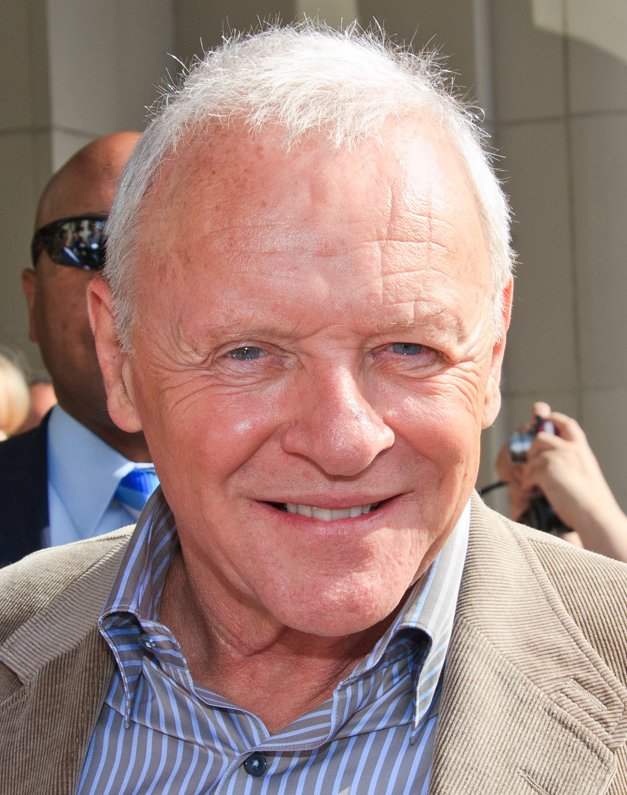
Anthony Hopkins is the outstanding screen actor of his generation: a baker’s son from Port Talbot who was written off at school, trained for the stage, and then, in his fifties, played a part for barely sixteen minutes that rearranged his career and popular culture with it. Celebrity Net Worth puts his fortune at an estimated $160 million. This profile sets out the facts plainly — his age, height, wife, daughter, parents, his Welsh nationality and his best-known screen work — in one scannable digest.
Now aged 88, Hopkins remains married to Stella Arroyave, whom he wed in 2003, published a memoir in November 2025, and continues to work and to paint. The story below runs from a Margam childhood to that position, in order.
A Welsh Schoolboy Who Found the Stage
Philip Anthony Hopkins was born on 31 December 1937 in Margam, Port Talbot, Wales. He was the only child of Richard Arthur Hopkins, a baker, and Muriel Anne Hopkins, née Yeates. His schooling was, by his own account, a failure from start to finish: he was a solitary, unhappy pupil at Cowbridge Grammar School, did poorly in every subject, and concluded early that he was, in his own later word, useless at the things schools measured. What he could do was draw, paint and play the piano, and he did those things alone and obsessively while formal education passed him by.
The turn came through a chance local connection and a scholarship. At fifteen he briefly met Richard Burton, Port Talbot’s most famous son, whose success made an acting life seem, for the first time, like a thing a boy from that town could plausibly attempt. He won a scholarship to study drama in Cardiff, trained there, completed his national service with the Royal Artillery between 1958 and 1960, and then trained further at the Royal Academy of Dramatic Art in London. His father died in 1981, before the film fame arrived; the bakery background and the failed schooling remain the two facts Hopkins himself returns to whenever he explains the ferocity of the work ethic that followed.
The stage took him first. He joined the National Theatre in 1965 at the invitation of Laurence Olivier, understudied Olivier himself, and built a formidable stage reputation through the late 1960s and 1970s — a period in which drink began to damage the career it was meant to be steadying. He stopped drinking in 1975 and has spoken about that decision, plainly and often, as the one on which everything since depends.
The Lion in Winter, Lecter and a Second Oscar at 83
1968 — The Lion in Winter and the stage years
Hopkins’s first major screen part came in The Lion in Winter in 1968, playing Richard the Lionheart opposite Peter O’Toole and Katharine Hepburn — an introduction to cinema at the highest level while still in his stage apprenticeship. Through the 1970s the stage remained the centre, with acclaimed performances in London and a growing body of screen work alongside it, including A Bridge Too Far in 1977. The Elephant Man arrived in 1980, with Hopkins as the doctor Frederick Treves, a performance of restraint that showed film audiences what theatre audiences already knew.
1991 — The Silence of the Lambs
The Silence of the Lambs, released in 1991, changed everything. Hopkins played Hannibal Lecter for a total screen time of roughly sixteen minutes and won the Academy Award for Best Actor, in one of the shortest performances ever to take the prize. The part made him, at fifty-three, a global star of a kind his stage career had never promised, and it fixed the public image — stillness, precision, a voice used like an instrument — that has defined him since. Readers working on their own creative applications may find our guide to building a portfolio for art school useful; Hopkins’s own second life as a painter, taken up seriously in his later decades and exhibited and sold internationally, began from exactly the solitary drawing and painting of his Port Talbot childhood.
1992 — Howards End, The Remains of the Day and the great decade
The decade that followed the Oscar was extraordinary in both volume and range. Howards End came in 1992, and The Remains of the Day in 1993, in which his performance as the repressed butler Stevens brought another Academy Award nomination and is still regularly ranked among the finest screen performances of the century. Bram Stoker’s Dracula, Shadowlands, Nixon — which brought a further nomination — Legends of the Fall, Amistad and The Mask of Zorro filled the years to 1998, moving between leading and supporting parts, period and contemporary settings, without the quality of the central performances varying in any way audiences could detect.
2001 — Hannibal, Thor and the franchise years
He returned to Lecter in Hannibal in 2001, reportedly earning $15 million for the part — a salary figure, recorded here as such and kept separate from his fortune as a whole — and again in Red Dragon in 2002. A knighthood had come in 1993, following his appointment as a CBE in 1987. From 2011 he played Odin across three Thor pictures, introducing him to a new generation as a franchise elder, and from 2016 he led the drama Westworld as Dr Robert Ford, a performance of the same stillness and menace that had made Lecter immortal, now applied to a creator surveying his own creations.
2020 — The Father and the second Oscar
The Father, released in 2020, brought the second Academy Award for Best Actor, for his performance as a man descending into dementia; at eighty-three he became the oldest winner of the award. One Life followed in 2023, and work has continued through 2025 and 2026 at a pace that would be notable in an actor half his age. His memoir, We Did OK, Kid, was published in November 2025 and became a bestseller, covering the failed schooling, the drinking years and the long sobriety with the same unsparing directness he brings to interviews. Two Academy Awards, four BAFTA Awards, two Emmy Awards and a Laurence Olivier Award make up the formal record; the informal one is simpler, and it is that for sixty years there has been no more reliable guarantee of quality in a cast list than his name. Directors who have worked with him across five different decades return to the same description of the method behind that record: total preparation before the cameras turn, every line learned to the point of invisibility, and then, on the day, an ease that makes the preparation impossible to see.
Margam to Hannibal Lecter: The Facts Together
| Margam to Hannibal Lecter: The Facts Together | Details |
|---|---|
| Born | 31 December 1937, in Margam, Port Talbot, Wales |
| Age | 88 years old |
| Height | 5 feet 9 inches (1.75 m) |
| Weight | No reliable published figure |
| Wife | Stella Arroyave — married on 1 March 2003 |
| Children | One daughter — Abigail Hopkins, born 20 August 1968 |
| Parents | Richard Arthur Hopkins (father, died 1981) and Muriel Anne Hopkins, née Yeates (mother) |
| Family | An only child raised in Port Talbot; married to Stella Arroyave since 2003; father of one daughter |
| Movies and TV Shows | The Lion in Winter, The Elephant Man, The Silence of the Lambs, Howards End, The Remains of the Day, Nixon, Amistad, Hannibal, Thor, Westworld, The Father, One Life |
| Nationality | Welsh — born in Wales; he also became a citizen of the United States in 2000 |
| @anthonyhopkins | |
| Net Worth | Estimated $160 million (Celebrity Net Worth) |
Stella, Painting and a Third Marriage
Hopkins has been married three times. His first marriage, to Petronella Barker, ran from 1966 to 1972, and their daughter, Abigail Hopkins, was born on 20 August 1968. His second marriage, to Jennifer Lynton, ran from 1973 to 2002. On 1 March 2003 he married Stella Arroyave, a former antiques dealer he had met in Los Angeles, and the marriage has continued since, with Arroyave producing and collaborating on his later projects and appearing beside him throughout the memoir’s publication period in 2025 and 2026. No reliable report suggests any change, and the accurate label remains wife.
His relationship with his daughter is the difficult entry in the record, and it is widely and reliably reported rather than rumoured: father and daughter have been estranged for most of her life, a fact Hopkins has acknowledged in interviews with regret and without self-pity, saying that people make choices and that he wishes her well. Abigail Hopkins has built her own career as a performer and practitioner. This profile records the estrangement because it is established fact, and adds nothing to it, because nothing reliable exists to add.
Two further facts organise the private life. The first is sobriety: he stopped drinking in 1975 and has credited that single decision, maintained for fifty years, with his career, his marriages’ survival and his life itself. The second is painting, pursued daily in his later years with the discipline of the stage training he never abandoned. Family, for Hopkins, began as a baker’s only child in Port Talbot who could not do school; it ends, in the present tense, with a marriage of more than twenty years and a working life still running at eighty-eight.
A $160 Million Fortune From Seven Decades of Acting
Celebrity Net Worth puts Hopkins’s fortune at an estimated $160 million. Forbes publishes no competing net-worth total for him, and no figure from the Sunday Times Rich List exists. Individual salary figures from his peak years — the reported $15 million for Hannibal among them — are earnings from single engagements, not wealth, and this profile keeps them separate, as it does the grosses of his pictures, which measure what audiences paid and not what he kept.
The composition rests on longevity more than on any single payday. Six decades of leading and supporting parts, at fees that reached eight figures a picture in his peak years, plus continuing payments from a catalogue of more than a hundred screen credits, form the base. The franchise years added a second, larger audience and the fees that come with it. His paintings sell internationally and his memoir has sold strongly, but no reliable figures for either exist in an allowed source and none are claimed here; they are recorded as activities, not as amounts. No company valuation, settlement or single transaction in his record could sensibly be mistaken for the fortune itself, and none is presented as such.
No reliable breakdown of his assets beyond the estimate itself has been published, and this profile invents none. What the record supports is the shape of the thing: a fortune accumulated later than almost any comparable star’s — the decisive decade began when he was already in his fifties — and still attached to an active career in its seventh decade.
That is the digest: a Port Talbot baker’s son who failed at school, stopped drinking at thirty-seven, won an Oscar for sixteen minutes of screen time at fifty-three and another at eighty-three, and holds an estimated $160 million fortune — Welsh, married to Stella Arroyave for more than twenty years, father of one daughter, and, by every current report, still working.