Sinéad O’Connor Net Worth, Age, Family and Career — Full Profile
Sinéad O’Connor Net Worth, Age, Family and Career — Full Profile Sinéad O’Connor was one of the most distinctive voices in popular music: a singer from…
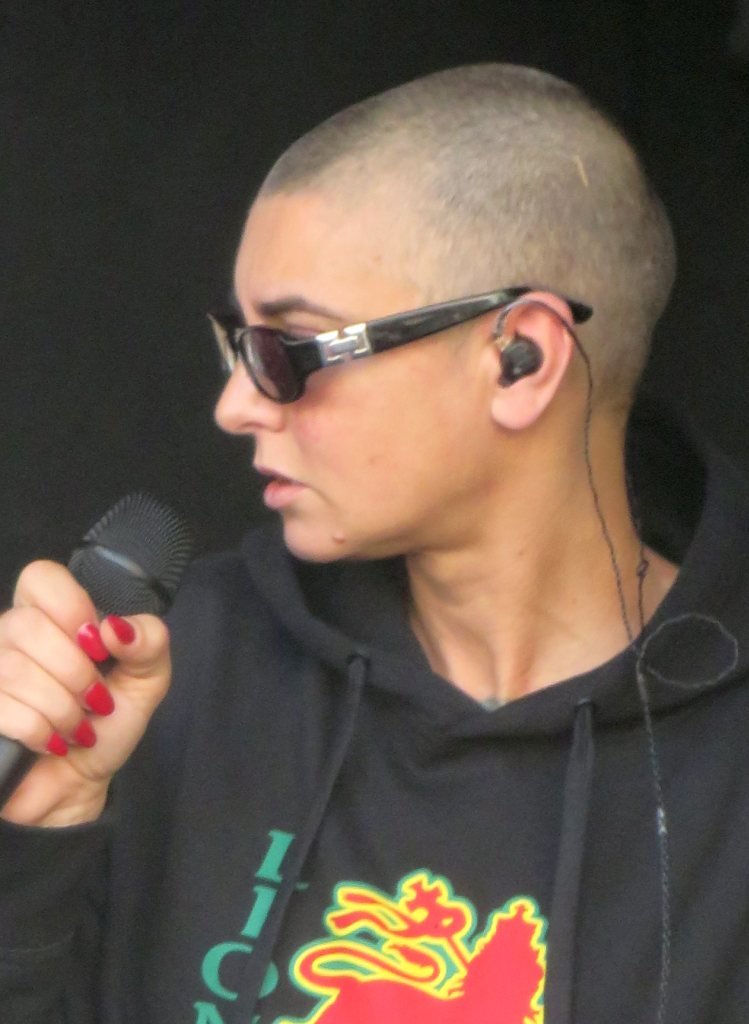
Sinéad O’Connor Net Worth, Age, Family and Career — Full Profile
Sinéad O’Connor was one of the most distinctive voices in popular music: a singer from Dublin whose second album carried her to worldwide fame at twenty-three, and whose refusal to soften either her singing or her opinions made her as famous for controversy as for recordings. Celebrity Net Worth puts her fortune at the time of her death at an estimated $1.5 million — a strikingly modest total for an artist of her reach, and one that the probate record published after her death broadly supports. This profile sets out the facts plainly — her age at death, height, marriages, four children, parents, best-known recordings and beliefs — in one scannable digest.
O’Connor died in London on 26 July 2023, aged 56, eighteen months after the death of her son Shane. The account below is posthumous throughout: ages, relationships and figures are given as they stood at her death.
Her life in numbers: Dublin voice that shook the world
| Her life in numbers: Dublin voice that shook the world | Details |
|---|---|
| Born | 8 December 1966, in Dublin |
| Age | 56 years old at her death on 26 July 2023 |
| Height | 5 feet 4 inches (1.63 m) |
| Weight | No reliable published figure |
| Partner | None at the time of her death — four former marriages, the most recent ending in 2011 |
| Children | Four — Jake Reynolds, Roisin Waters, Shane Lunny (died January 2022) and Yeshua Bonadio |
| Parents | Sean O’Connor (father) and Marie O’Connor (mother, died 1985) |
| Family | Raised in Glenageary, County Dublin; mother of four; a grandmother from 2015 |
| Songs | Mandinka, Troy, Nothing Compares 2 U, The Emperor’s New Clothes, I Am Stretched on Your Grave, Fire on Babylon, No Man’s Woman, This Is to Mother You, The Healing Room |
| Albums | The Lion and the Cobra (1987), I Do Not Want What I Haven’t Got (1990), Am I Not Your Girl? (1992), Universal Mother (1994), Faith and Courage (2000), Throw Down Your Arms (2005), Theology (2007), I’m Not Bossy, I’m the Boss (2014) |
| Nationality | Irish |
| Religion | Islam — converted in 2018 and took the name Shuhada’ Sadaqat; raised in the Catholic tradition and ordained a priest in 1999 |
| Net Worth | Estimated $1.5 million at her death (Celebrity Net Worth) |
Glenageary childhood, a difficult home life and a first song
Sinéad Marie Bernadette O’Connor was born on 8 December 1966 in Dublin and grew up in Glenageary, in the south of County Dublin. Her father, Sean O’Connor, was a structural engineer. Her mother, Marie O’Connor, raised the family. Her parents’ marriage was an unhappy one by her own later account, and they separated when she was thirteen. In her memoir, Rememberings, published in 2021, she described her mother as abusive, an account that shaped much of her later writing about childhood, authority and the institutions of the Ireland she grew up in.
As a teenager she was caught shoplifting and was sent for a period to a training centre run by an order of nuns — an experience she later cited as formative, both for the discipline it imposed and for the encouragement one of the nuns gave her singing, helping her record a demo. Her mother died in a road accident in February 1985, when O’Connor was eighteen. Music became the route out: she sang in a Dublin band, Ton Ton Macoute, placed an advertisement that led her to the band In Tua Nua — for whom she co-wrote an early single — and was taken up by a manager who steered her towards a solo recording deal. For readers starting out by performing for passing crowds, as generations of Dublin singers did before and after her, our guide to busking for extra income in the UK sets out the practical side of earning that way.
The Lion and the Cobra, Nothing Compares 2 U and a protest on live TV
1987 — The Lion and the Cobra
Her debut album, The Lion and the Cobra, arrived in 1987, when she was twenty. Recorded while she was pregnant with her first child, and released after a dispute with her label over its production, it introduced the elements that defined her: a voice that moved from a whisper to a wail within a line, a shaven head that became one of the most recognisable images in popular music, and songs — Mandinka, Troy, I Want Your (Hands on Me) — that treated desire, anger and grief with unusual directness. The album sold steadily around the world and established her as an artist of serious intent.
1990 — Nothing Compares 2 U and worldwide fame
Her second album, I Do Not Want What I Haven’t Got, released in 1990, carried her to a different level entirely. Its centrepiece was Nothing Compares 2 U, a song written by Prince that she turned into a worldwide number one, topping charts in country after country and selling in the millions. The accompanying performance clip — her face in close-up, a single tear falling — became one of the defining images of the era. The album sold around seven million copies, and she won a Grammy Award for it, an honour she declined in protest at what she described as the materialism of the industry.
1992 — The photograph, and the backlash
In October 1992, during a live broadcast appearance in the United States, O’Connor tore up a photograph of Pope John Paul II, urging viewers to fight what she called the real enemy — a protest aimed at the Catholic Church’s handling of abuse. The reaction was ferocious: she was booed at a tribute concert days later, her recordings were publicly destroyed by protesters, and her commercial position in the United States never recovered. Her third album, Am I Not Your Girl?, a collection of standards released the same year, sold far below its predecessor. The episode fixed her public image for decades, although the passage of time — and the later documentation of the abuses she had pointed to — brought substantial reassessment of the protest itself.
1994 — Universal Mother and the years of working on
Universal Mother, released in 1994, was a quieter, more personal record, and from that point her career settled into the pattern it kept for the rest of her life: albums released at intervals of several years, loyal audiences rather than mass ones, and a reputation that ran ahead of her sales. Faith and Courage arrived in 2000, Sean-Nós Nua, a collection of traditional material, in 2002, and Throw Down Your Arms, an album of reggae covers recorded in Jamaica, in 2005. Theology, in 2007, worked directly with scripture, an interest that ran through her whole career.
2012 — The later albums and the memoir
How About I Be Me (and You Be You)?, released in 2012, was widely described as her strongest work in years, and I’m Not Bossy, I’m the Boss followed in 2014. Touring continued in spells, interrupted at times by her health, which she discussed with characteristic openness. Her memoir, Rememberings, appeared in 2021 to strong reviews. At her death she was reported to be completing a further album, to be titled No Veteran Dies Alone, which remains unreleased.
2023 — Death in London
O’Connor was found unresponsive at her flat in Herne Hill, south London, on 26 July 2023, and her family announced her death the same day, in a statement carried by the BBC and by RTÉ. She was 56. The news was reported by every major outlet — the BBC, The New York Times and The Guardian among them — and tributes followed from across music and public life. A coroner in London ruled in January 2024 that she had died of natural causes, and her death certificate, registered in July 2024, gave the specific causes as an exacerbation of chronic obstructive pulmonary disease and bronchial asthma together with a low-grade lower respiratory tract infection. Her funeral took place in Bray, County Wicklow, in August 2023, with funeral prayers held privately beforehand; she was buried at Dean’s Grange Cemetery in Dublin.
How the money adds up: one and a half million dollars at her death — o’Connor’s estate
Celebrity Net Worth puts O’Connor’s fortune at an estimated $1.5 million at the time of her death in July 2023, in a page updated in January 2025. Unusually for figures of this kind, the estimate can be checked against a document: Irish probate records published in January 2025 showed an estate of £1.7 million before debts, funeral expenses and legal fees, reduced to £1.4 million after those costs were settled. An estate value and a net-worth estimate are not identical measures, but the two figures sit close enough to support the same conclusion — that the fortune remaining at her death was modest by the standards of her fame.
The gap between fame and fortune had documented causes. Her commercial peak was brief — essentially the years around 1990 — and the 1992 backlash closed off the largest market in the world to her at the height of her powers. Her later albums sold to a loyal audience rather than a mass one. Financial difficulty in her later years was a matter of public record in her own words: in 2017 she described, in a video she posted herself, living in modest circumstances in New Jersey after losing much of what she had earned. None of that diminishes the catalogue: her will, signed in 2013, directed that her unreleased recordings be issued after her death so that her children could, in her own quoted phrase, “milk it for what it’s worth”, with John Reynolds named as executor.
That is the digest: a Dublin singer with a voice unlike any other, a worldwide number one at twenty-three, a protest that cost her the largest market in music and was reassessed by history, four children, two faiths embraced in succession, and an estate of around £1.4 million settled after her death at 56.
Four marriages, four children and a faith she never hid
O’Connor was married four times. Her first marriage was to John Reynolds, the producer who worked on several of her albums: their son Jake was born on 16 June 1987, and they married in March 1989, divorcing in 1991. Her daughter, Brigidine Roisin Waters, known as Roisin, was born on 6 March 1996; Roisin’s father is the columnist John Waters, and a custody dispute between the parents was settled with Roisin living in Dublin. Her second marriage, to the journalist Nick Sommerlad in August 2001, ended after eleven months. Her third son, Shane, was born on 10 March 2004; his father is the musician Dónal Lunny. Her fourth child, Yeshua Francis Neil Bonadio, was born on 19 December 2006; his father is Frank Bonadio. Her third marriage, to the musician Steve Cooney in July 2010, ended in 2011, and her fourth, to the therapist Barry Herridge in December 2011, ended within weeks, although the pair briefly reconciled before parting finally. No reliable report records a partner in the final decade of her life, and the accurate position at her death is the one given in the table: no partner, four former marriages.
Two losses frame her later family life. Her son Shane died by suicide in January 2022, aged seventeen, after leaving the hospital where he had been under observation; O’Connor cancelled her planned touring that year and spoke publicly about her grief in the months that followed. She had become a grandmother in July 2015, when Jake’s first child was born. Her three surviving children — Jake, Roisin and Yeshua — were the beneficiaries of her estate.
Belief ran through her life as publicly as music did. Raised in the Catholic tradition, she was ordained a priest in 1999 by the Irish Orthodox Catholic and Apostolic Church, a body outside the mainstream Church, taking the name Mother Bernadette Mary and continuing to identify her grievance as being with the institution rather than with belief itself. In October 2018 she announced that she had converted to Islam, describing it as the natural conclusion of her theological journey, and took the name Shuhada’ Sadaqat, while continuing to record and perform under her birth name. Both steps were reported at the time by national outlets and are recorded here as she presented them.