Jim Carrey Net Worth, Age, Family and Career — Full Profile
Jim Carrey Net Worth, Age, Family and Career — Full Profile Jim Carrey was the biggest comedy star on the planet for a decade: three films…
Jim Carrey Net Worth, Age, Family and Career — Full Profile
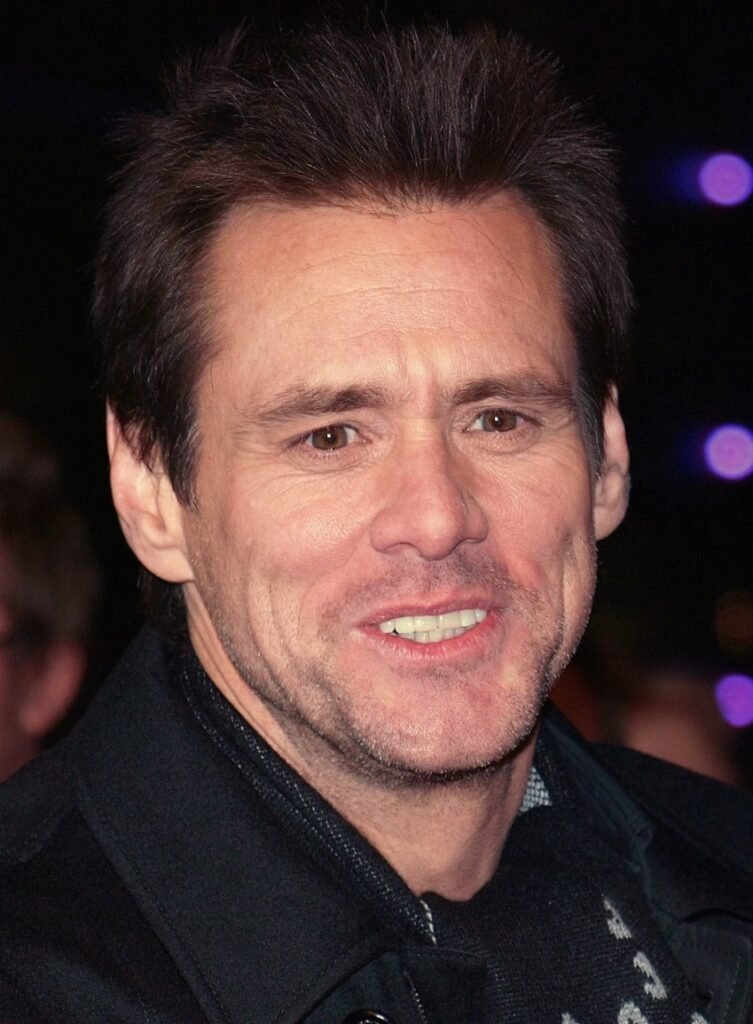
Jim Carrey was the biggest comedy star on the planet for a decade: three films in a single year, 1994, turned a former stand-up and sketch performer into the first actor in his industry paid $20 million for one picture. Celebrity Net Worth puts his fortune at an estimated $180 million. This profile sets out the facts plainly — his age, height, family, marriages, daughter, landmark films and television work, homes and vehicles — in one scannable digest.
Now in his mid-sixties, Carrey works selectively, paints, and surprised the industry twice in 2026: first by accepting an honorary César award in Paris in February, thanking his long-term partner Min Ah in his speech, and then by marrying her in September 2026, in a small private ceremony confirmed by his spokesperson to People. The story below runs from a childhood marked by real hardship in Ontario to that late, quiet happiness.
Newmarket childhood, a family that lived in a van and a first club gig
James Eugene Carrey was born on 17 January 1962 in Newmarket, Ontario. His father, Percy Carrey, was a musician and accountant; his mother, Kathleen, née Oram, was a homemaker whose health was often poor. The family lived in Scarborough and later Burlington, and Carrey was a funny, attention-seeking child who performed impressions for his classmates and once sent his résumé to a television comedy show at the age of ten.
The comfortable start did not last. When Carrey was a teenager, his father lost his accounting job, and the family fell into genuine poverty: they lived for a period in a van, and later in a tent in a park by Lake Ontario, while the children worked as janitors and security guards at a tyre factory to keep the family going. Carrey left school at sixteen to work and to help support the household. He has said many times, without self-pity, that those years taught him both his work ethic and the desperation underneath his earliest comedy.
Stand-up came next. He began performing in Toronto clubs as a teenager, bombing often, refining an act built on impressions and elastic physical comedy, and by the early 1980s he was headlining at home and being noticed by established comedians. A move to Los Angeles, work at The Comedy Store, and a mentorship of sorts from Rodney Dangerfield, who took him on tour as an opening act, put him at the edge of the industry — where, for most of a decade, he stayed, working steadily without breaking through.
In Living Color, Ace Ventura and the Truman Show reinvention
1990 — In Living Color and a sketch breakthrough
Carrey joined the sketch programme In Living Color in 1990 and stayed for its full run to 1994, creating characters including the hapless safety inspector Fire Marshal Bill. The programme made him a familiar face and, crucially, proved he could carry characters rather than just impressions. His film work in the same years was minor; the breakthrough, when it came, came all at once.
1994 — Ace Ventura, The Mask, Dumb and Dumber
No comedy performer has ever had a year like Carrey’s 1994. Ace Ventura: Pet Detective, made cheaply and expected to fail, became a hit on the strength of his performance. The Mask followed in the summer, a bigger production that showed what his physical comedy could do with pioneering effects. Dumb and Dumber closed the year as another major hit. Together the three films grossed hundreds of millions worldwide, and Carrey went, in twelve months, from working actor to the most bankable comedy star in the world. Viewers rediscovering that run today usually stream it — our explainer on downloading shows to watch offline on Netflix covers the practical side of keeping favourites available without a connection.
1995 — Batman Forever and a record salary arrives
As the Riddler in Batman Forever (1995), Carrey joined a major franchise at its commercial peak, and Ace Ventura: When Nature Calls, released the same year, confirmed the sequel value of his own creations. His salary climbed with each picture, and the industry watched the numbers as closely as the films.
1996 — The Cable Guy and the first $20 million fee
For The Cable Guy (1996), Carrey was paid a reported $20 million — the highest salary ever paid to an actor for a single film at that point, and a genuine industry landmark that reset pay expectations for every star who followed. The film itself divided critics, darker than audiences expected, but its reputation has grown steadily since, and the fee remains the single most cited fact of his commercial peak.
1997 — Liar Liar and a return to pure comedy
Liar Liar (1997), in which he played a lawyer forced by a birthday wish to tell the truth for twenty-four hours, was a straightforward crowd-pleaser built entirely around his gifts, and one of the biggest hits of the year. It also earned him a Golden Globe nomination and reminded studios that the simplest Carrey premise was usually the most profitable one.
1998 — The Truman Show and critical reinvention
The Truman Show (1998) changed how Carrey was judged. As Truman Burbank, a man whose whole life has been secretly broadcast, he gave a restrained, melancholy performance that won him a Golden Globe for Best Actor in a Drama and forced critics who had dismissed him as a rubber-faced clown to reassess him entirely. It remains, with the film below, the performance most often named as his finest.
1999 — Man on the Moon
Playing the comedian Andy Kaufman in Man on the Moon (1999), Carrey stayed in character on and off camera to a degree that became its own legend, and won a second consecutive Golden Globe. The film was not a commercial hit, but the performance completed his reinvention: the biggest comedy star in the world was also, demonstrably, a serious actor.
2003 — Bruce Almighty and another enormous hit
Bruce Almighty (2003), in which a frustrated reporter is handed extraordinary powers for a week, grossed more than $484 million worldwide and became one of the most successful comedies of its era. A year later came Lemony Snicket’s A Series of Unfortunate Events (2004), with Carrey unrecognisable as Count Olaf, and Fun with Dick and Jane (2005) kept his run of mainstream hits going.
2004 — Eternal Sunshine of the Spotless Mind
Eternal Sunshine of the Spotless Mind (2004) paired Carrey with Kate Winslet in a love story told backwards through eroding memories. His quiet, ordinary, heartbroken Joel is the opposite of his famous persona, and the film is now routinely placed among the greatest of its century. It is the clearest evidence in his record that the dramatic acclaim of 1998 and 1999 was no accident.
2018 — Kidding and a television return
After a quieter decade in which he worked less and painted more, Carrey returned to series television with Kidding (2018–2020), playing a beloved children’s presenter whose private life is collapsing. The role, reuniting him with the director of Eternal Sunshine, drew some of the best reviews of his later career and showed his dramatic control undimmed in his late fifties.
2020 — Sonic the Hedgehog and a villain for a new generation
As the villain Dr Robotnik in Sonic the Hedgehog (2020) and its sequels in 2022 and 2024, Carrey found a late-career franchise that introduced him to audiences who were not born when Ace Ventura opened. The third film took the series’ worldwide total past a billion dollars. He had announced in 2022 that he was largely retiring from acting, and described the Sonic role as the exception he was willing to keep making.
2026 — An honorary César and a public thank-you
In February 2026 the French film academy presented Carrey with an honorary César for his career, in Paris. He accepted in French, and used the speech to thank, among others, his partner Min Ah, whom he described in affectionate terms — one of the couple’s very few public moments together, and the prelude to the marriage confirmed later that year, set out in the personal life part of this profile.
The essentials: Three films in 1994 and a $20 million fee
| The essentials: Three films in 1994 and a $20 million fee | Details |
|---|---|
| Born | 17 January 1962, in Newmarket, Ontario |
| Age | 64 years old |
| Height | 6 feet 2 inches (1.88 m) |
| Weight | No reliable published figure |
| Wife | Min Ah — married in September 2026; his third marriage |
| Children | One daughter, Jane Erin Carrey, born on 6 September 1987 |
| Parents | Percy Carrey (father) and Kathleen Carrey, née Oram (mother) |
| Family | His family fell on hard times in his teens and at one point lived in a van |
| Movies and TV Shows | In Living Color, Ace Ventura: Pet Detective, The Mask, Dumb and Dumber, The Truman Show, Eternal Sunshine of the Spotless Mind, the Sonic the Hedgehog films |
| House | His long-time Brentwood base in Los Angeles was sold in 2025; a Maui oceanfront property was listed in October 2026 |
| Car Collection | Reported vehicles include a Mercedes-Benz SL63 and a Porsche Panamera; no verified inventory is published |
| No official account — he does not run one; pages using his name are fan pages | |
| Net Worth | Estimated $180 million (Celebrity Net Worth) |
Melissa Womer, Lauren Holly and a daughter who sings
Carrey’s first marriage was to Melissa Womer, a former waitress at The Comedy Store, whom he married on 28 March 1987. Their daughter, Jane Erin Carrey, was born on 6 September 1987. The marriage ended in divorce in 1995. His second marriage, to his Dumb and Dumber co-star Lauren Holly in 1996, ended in divorce the following year. His longest public relationship after that was with presenter and author Jenny McCarthy, from 2005 to 2010. His daughter Jane has pursued her own performing career, and Carrey became a grandfather in 2010 when she gave birth to her son, Jackson Riley Santana.
The bank label for this profile was “partner”, and for most of the past few years that was the accurate word for Min Ah, an artist based in Los Angeles with whom Carrey has been in a relationship for several years, kept almost entirely private. In September 2026, however, a spokesperson confirmed to People that the couple had married in a small private ceremony in Los Angeles. The verified label is therefore “wife”, and the table above uses it: Min Ah is his wife, and this is his third marriage. No date or venue beyond the month and the city has been disclosed, and this profile adds none.
His family of origin shaped him plainly. He was a child of Percy and Kathleen Carrey, and the family’s collapse into poverty in his teens — the van, the tent, the factory jobs — is the episode he returns to most often when explaining himself. Both of his parents died before his film career peaked, his mother in 1991 and his father in 1994, the year of his breakthrough, a timing he has described as one of the great sadnesses of his success.
The fortune, explained: an estimated $180 million — carrey’s fortune from comedy to painting
Celebrity Net Worth puts Carrey’s fortune at an estimated $180 million. The same source reports that his career earnings from film salaries, bonuses and profit participation exceed $300 million — a career earnings total, quoted here as earnings, which explains the scale of the estimate without being the same thing as it. No audited figure exists, and Forbes publishes no competing current net-worth total for him, so the $180 million stands as the single allowed-source estimate.
The salary record underneath it is historic. From a reported $350,000 for the first Ace Ventura film, his fee rose within two years to the reported $20 million for The Cable Guy that reset industry pay, and stayed at or near that level through a decade in which his films grossed billions worldwide. Those are individual fees from the 1990s and 2000s, recorded here as the earnings history they are.
Property has featured in his recent years mainly as sales. His Brentwood base in Los Angeles, assembled from 1994 onwards around a first purchase reported at $3.8 million, was listed in 2023 at $28.9 million and, after a long period on the market and several reductions, sold in 2025 for a reported figure of around $17 million. In October 2026 he listed an oceanfront property on Maui, bought in 2016 for a reported $16.5 million, at $35 million; reports in November 2026 said a buyer had been found. Listing and sale prices are reported figures, worded as reported here, and none of them is, on its own, a measure of his wealth.
His vehicles are handled the way this series handles all such claims. Older motoring round-ups attribute a small number of high-end cars to him, most often a Mercedes-Benz SL63 and a Porsche Panamera, and he has owned a private jet in the past according to the same reporting. No verified inventory of a Carrey collection has ever been published and no total value should be treated as fact; what exists is a short list of reported vehicles attached to a man who, by his own account, spends most of his time at an easel.
The overall picture is of a fortune made in one extraordinary decade of dominance, held steadily through a long, quieter second act of selective work and painting, and now attached to the most settled chapter of his private life — a third marriage, a grandson in his teens, and a career he returns to only when a role genuinely tempts him.