Michael Jackson Net Worth, Age, Family and Career — Full Profile
Michael Jackson Net Worth, Age, Family and Career — Full Profile Michael Jackson, the King of Pop, died on 25 June 2009 at the age of…
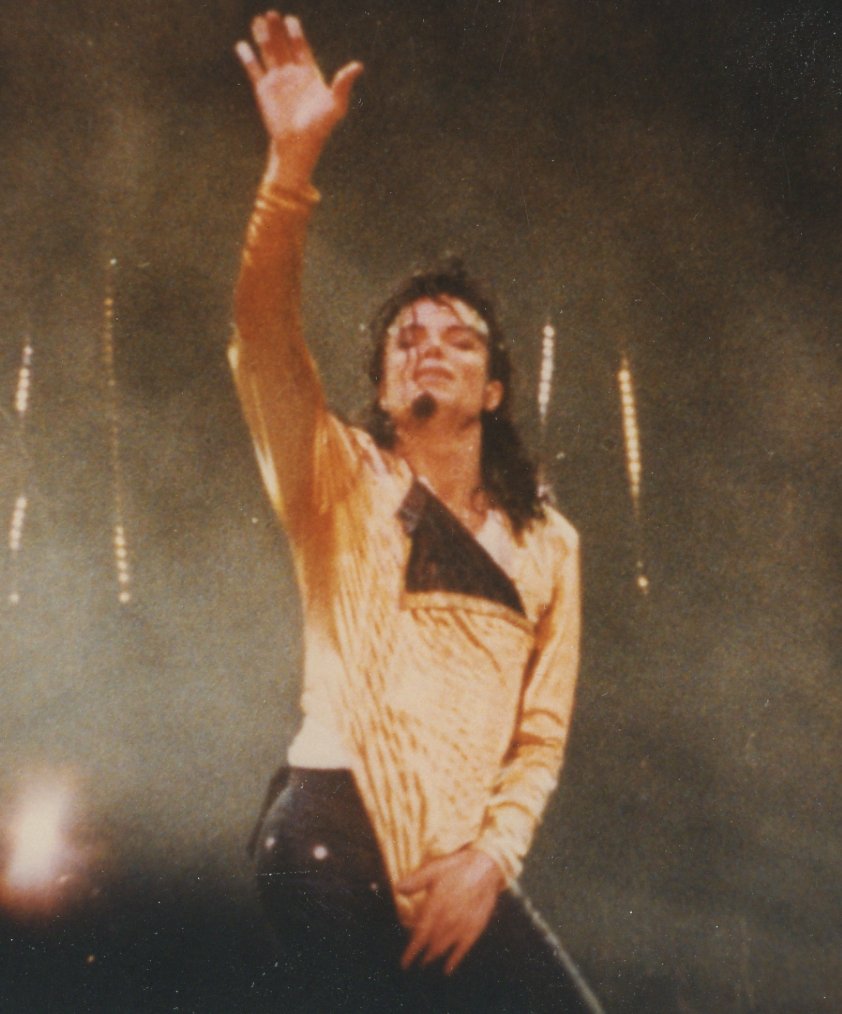
Michael Jackson Net Worth, Age, Family and Career — Full Profile
Michael Jackson, the King of Pop, died on 25 June 2009 at the age of 50, and his financial position at that moment remains one of the most misunderstood parts of his story. Celebrity Net Worth states that his net worth at the time of his death was negative $500 million, because his debts and creditor claims ran to more than $500 million. That is the figure this profile leads with, stated exactly as Celebrity Net Worth states it, and it is kept separate from the very large sums his estate has earned since 2009, which are estate earnings and not his personal net worth. What follows is the verified record: his age, height and weight, his family, his children, his faith, his songs and albums, his famous home and his reported cars.
A Gary Childhood in the Jackson 5
Michael Joseph Jackson was born on 29 August 1958 in Gary, Indiana, the eighth of ten children born to Joseph Walter Jackson and Katherine Esther Jackson. His father worked in a steel mill and played guitar in a local rhythm and blues band; his mother played piano and clarinet and raised the children in the Jehovah’s Witness faith, which shaped the household’s daily life throughout Michael’s childhood. One of the ten children, Brandon, a twin of Marlon, died shortly after birth, leaving nine children who grew up together in a small house on Jackson Street in Gary.
Joe Jackson was a strict and demanding father who organised his sons into a singing group, the Jackson Brothers, later the Jackson 5, and rehearsed them relentlessly. Michael, the youngest member, quickly became the focus: by the age of six he was sharing lead vocals, and his timing, footwork and confidence on stage were already remarkable. The group won local talent contests, played clubs and theatres across the Midwest, and in 1968 signed to Motown Records. The discipline of those years made his career, though Michael spoke in later life about the cost of a childhood spent working rather than playing, and about his father’s harsh methods during rehearsals.
The family’s faith remained part of his upbringing even as fame arrived. He went door to door with other Jehovah’s Witnesses as a boy and young man, and his mother remained a devout member of the faith for the rest of her life. As an adult he stepped back, and in 1987 he formally left the Jehovah’s Witnesses after disagreements with its elders, a decision reported at the time and confirmed in later biographies. He continued to describe himself in interviews as a man of faith, but he belonged to no organised congregation for the rest of his life.
Off the Wall, Thriller and the Biggest Album Ever
1969–1978: The Jackson 5 and the Motown years
The Jackson 5’s first four singles for Motown — I Want You Back, ABC, The Love You Save and I’ll Be There — all reached number one in 1970, an unprecedented start for a new group. Michael also began a solo career while still in the group: Got to Be There (1971) and Ben (1972) established him as a solo name, and the title song of Ben became his first solo number one. Through the mid-1970s his voice changed and sales cooled, and in 1976 the group left Motown for Epic Records, becoming the Jacksons. For readers learning the craft behind records like these, our beginner’s guide to reading sheet music for beginners explains the basics step by step.
1979–1987: Off the Wall, Thriller and Bad
Off the Wall (1979), produced by Quincy Jones, was the breakthrough: it produced four top ten singles, including Don’t Stop ‘Til You Get Enough and Rock with You, and presented Jackson as an adult solo star. Thriller, released on 30 November 1982, went far beyond it. Seven of its nine tracks were released as singles and all seven reached the top ten; Billie Jean, Beat It and Thriller itself became defining records of the decade, and the album became the best-selling album of all time worldwide, a position it still holds. His performance of the moonwalk during the Motown 25 celebration in May 1983 became one of the most replayed moments in pop history. Bad (1987), his third album with Quincy Jones, produced five consecutive number one singles — I Just Can’t Stop Loving You, Bad, The Way You Make Me Feel, Man in the Mirror and Dirty Diana — a chart record at the time.
1988–2001: Dangerous, HIStory and Invincible
Dangerous (1991) opened with Black or White and Remember the Time and sold in the tens of millions worldwide. HIStory (1995), a double album pairing a greatest hits disc with new material, included Scream, his duet with his sister Janet, and Earth Song, which became one of his biggest singles in Britain, spending six weeks at number one over Christmas 1995. Invincible (2001) was his final studio album released in his lifetime; it topped charts around the world but received a limited promotional push amid a public dispute with his record label. Across his solo career his best-known songs — Billie Jean, Beat It, Thriller, Smooth Criminal, Black or White, Man in the Mirror and Earth Song among them — set the template for modern pop performance.
His stage record matched his studio record. The Bad World Tour of 1987–89, his first solo world tour, played to more than four million people, and the Dangerous World Tour and the HIStory World Tour that followed were among the largest productions of their kind ever mounted, with the HIStory run drawing around four and a half million fans across five continents. His half-time performance at the Super Bowl in January 1993 drew one of the largest television audiences of the decade and changed what that slot was expected to be: after Jackson, the half-time show became a headline event in its own right, booked a year ahead and built around a single star.
2002–2009: The final years and This Is It
Jackson’s last years were dominated by legal and financial trouble. In 2005 he stood trial on charges relating to allegations made by a teenage guest at his ranch; a jury acquitted him on all counts in June 2005. He lived abroad for periods after the trial and performed rarely. In March 2009 he announced This Is It, a run of fifty concerts at the O2 Arena in London that was to begin that July; tickets sold out within hours. On 25 June 2009, while rehearsals were under way, he died at his rented home in Holmby Hills, Los Angeles, from acute propofol intoxication. The coroner ruled the death a homicide, and his personal physician was later convicted of involuntary manslaughter. He was 50 years old.
Three Children and Two Marriages That Ended
Jackson’s family was both his foundation and his first workplace. His siblings — Rebbie, Jackie, Tito, Jermaine, La Toya, Marlon, Randy and Janet — nearly all built careers in music, Janet becoming a major star in her own right. His father died in June 2018, aged 89. His mother, Katherine, became the guardian of his three children after his death, under the terms of his will.
He married twice, and both marriages ended in divorce. His first marriage, to Lisa Marie Presley, ran from 1994 to 1996. His second, to Debbie Rowe, ran from 1996 to 1999. He had no partner at the time of his death, and he had been divorced for a decade by then — a point worth stating plainly, because the record is often muddled in retellings.
His three children are Prince, born Michael Joseph Jackson Jr. on 13 February 1997, and Paris, born Paris-Michael Katherine Jackson on 3 April 1998, both with Debbie Rowe; and Bigi, born Prince Michael Jackson II on 21 February 2002, via a surrogate whose identity has never been publicly confirmed. All three were raised largely out of the spotlight during his lifetime, a privacy he guarded fiercely, and all three have taken on public roles in music, modelling, business and charity work as adults.
A Negative $500 Million Figure at His Death
The at-death position needs care, because two very different numbers are often confused. Celebrity Net Worth states that Michael Jackson’s net worth at the time of his death was negative $500 million: in plain terms, he owed more than he held in available value, with more than $500 million in loans and creditor claims against his assets, a position the estate’s executors confirmed in court documents filed in June 2024. He had borrowed heavily against his most valuable asset, his half share of the Sony/ATV music publishing catalogue, which held the rights to thousands of songs including most of the Beatles catalogue. His spending on Neverland Ranch, travel, staff, art and jewellery had run ahead of even his enormous income for years.
Since his death, his estate — a separate legal entity run by his executors — has generated more than $2 billion in earnings from catalogue deals, licensing, stage productions and record sales, including the sale of his half of Sony/ATV to Sony in 2016 for a reported $750 million, paid to the estate. Those sums belong to the estate and its beneficiaries under his will. They are not, and must not be presented as, his personal net worth: at the moment of his death, on Celebrity Net Worth’s assessment, that figure was negative $500 million.
His best-known property was Neverland Ranch, the 2,700-acre estate near Los Olivos, California, which he bought in 1988 and renamed, adding a zoo, fairground rides and a railway. He left the ranch after his 2005 trial and never lived there again; it was sold by the estate’s interests in 2020, years after his death. His final home was a rented mansion in Holmby Hills. His cars, reported across the years, included Rolls-Royce and Mercedes-Benz limousines and a customised van fitted out for long journeys — a working fleet for a performer of his scale rather than a catalogued collection.
The digest summary is this: the most successful pop performer of his era died, on the best available assessment, half a billion dollars in debt — and the catalogue he left behind went on to earn more than almost any estate in entertainment history.
Gary to Thriller: In Brief
| Gary to Thriller: In Brief | Details |
|---|---|
| Born | 29 August 1958, Gary, Indiana |
| Age | Died aged 50, on 25 June 2009 |
| Height | 5 ft 9 in (175 cm), as commonly listed; some listings give 5 ft 10 in |
| Weight | About 136 lb (62 kg) at the time of his death, as reported |
| Partner | No partner at the time of his death; two earlier marriages, both ended in divorce |
| Children | Three: Prince Jackson, Paris Jackson and Bigi Jackson |
| Parents | Joseph Walter “Joe” Jackson and Katherine Esther Jackson |
| Family | The Jackson family of Gary, Indiana; Michael was the eighth of ten children |
| Siblings | Rebbie, Jackie, Tito, Jermaine, La Toya, Marlon, Randy and Janet Jackson |
| Songs | Billie Jean, Beat It, Thriller, Smooth Criminal, Black or White, Earth Song, Don’t Stop ‘Til You Get Enough |
| Albums | Off the Wall (1979), Thriller (1982), Bad (1987), Dangerous (1991), HIStory (1995), Invincible (2001) |
| House | Neverland Ranch in Los Olivos, California; his final home was a rented mansion in Holmby Hills, Los Angeles |
| Car Collection | Reported cars included Rolls-Royce and Mercedes-Benz models and a customised van |
| Religion | Raised as a Jehovah’s Witness; he left the faith in 1987 |
| Net Worth | Negative $500 million at the time of his death, per Celebrity Net Worth |