
Building a Home Gym on a Budget in Devon: Experts’ Advice
Commercial gym memberships in Devon run £25-50 monthly, and for many, the commute, the crowds and the recurring direct debit are the barriers, not the motivation. A home gym promises freedom: train at midnight, in your pants, with your music. But the home-gym graveyard is vast, spare rooms full of abandoned treadmills and clothes-horse weight benches. Experts’ advice converges on a clear message: build minimal, buy used, and spend on what you will actually use daily.
This article distils that advice for Devon budgets: the essential kit list, what to skip, where to source it cheaply locally, and how to design a space you will still be using in a year.
The Expert Consensus: Minimal and Used
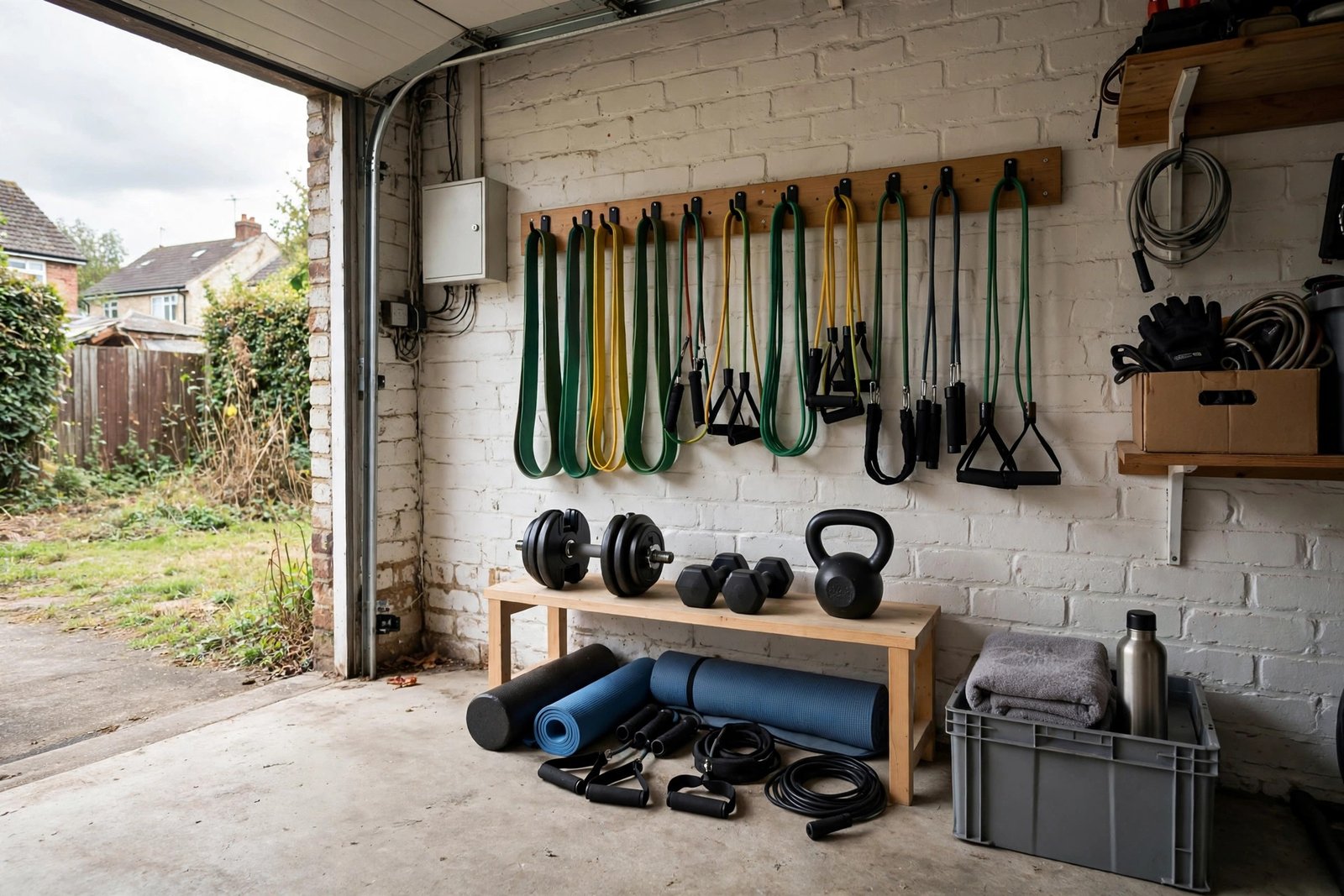
Fitness professionals agree on the starter kit with unusual unanimity. For most goals, you need: adjustable dumbbells or a kettlebell (£40-120 new, half used), a pull-up bar (£20-35), resistance bands (£15-25 for a set), a yoga mat (£15-25), and optionally a weight bench (£60-120). Total new: £150-325. Total used: £75-175. This kit covers strength, conditioning and mobility for years; everything else is optimisation, not necessity.
The “buy used” counsel is emphatic because gym equipment depreciates brutally and barely wears: the dumbbells abandoned in January are functionally identical to new ones. Devon’s secondhand market is rich: Facebook Marketplace, Gumtree, charity shops (weights appear regularly), and the January/February wave when resolutions die. Knowing how much exercise you actually need prevents overbuying for fantasy routines, and fuelling workouts properly matters more than any equipment upgrade. The NHS exercise guidelines confirm the kit’s sufficiency: 150 minutes of moderate activity plus two strength sessions weekly needs no machines at all.
What to Skip: The Graveyard Inventory
Treadmills top every expert’s skip list for beginners: £300-1,000+, enormous, noisy, and abandoned at extraordinary rates. Devon’s lanes, coastal paths and moors are free treadmills with better views; the only people who should buy one are those who will genuinely run at home daily, a claim best tested by six months of outdoor running first. Exercise bikes fare slightly better but still gather dust without a training plan; a used one at £50-100 is a reasonable experiment, a new £800 smart bike is a commitment device that often fails.
Multi-gyms and cable machines: expensive, space-hungry, and less versatile than free weights for beginners. Ab gadgets: the core is trained better by compound lifts and planks, free. Fancy flooring: interlocking foam tiles (£20-30 for a training area) beat £200 rubber flooring for home use. The rule: every purchase must answer “what will this let me do that the dumbbells cannot?” If the answer is vague, skip it.
The Devon Secondhand Gym Circuit
Devon’s secondhand fitness market deserves its own guide because it is unusually good. The January wave is real: search Facebook Marketplace and Gumtree in mid-January through March for dumbbells, benches and bikes at 40-60% off, often barely used. Charity shops in Exeter, Plymouth and Torquay regularly stock weights and mats; the trick is visiting often, as good kit sells within hours. University towns (Exeter especially) see student clear-outs in June, with entire setups going cheap.
Negotiation norms: offer 70-80% of asking for fairly priced kit, always test before paying (check dumbbell collars, bench stability, bike resistance), and bring help for bulky items. Which? buying guides for fitness equipment help you distinguish the durable from the disposable before you buy. Safety check everything: frayed cables, cracked welds and wobbly frames are walk-away signals regardless of price. The patient Devon buyer assembles a £500-quality gym for under £150; the impatient one pays full price for the same kit someone else is selling.
Designing the Space (Devon Edition)
Space is the real constraint in most Devon homes, from Exeter flats to Dartmoor cottages. The minimum viable gym is 2×2 metres of clear floor: enough for dumbbell work, bands, mat exercises and a pull-up bar in a doorframe. Garages are ideal (ventilation, noise tolerance, rubber-mat floors), spare rooms work with protection, and gardens suit summer training; Devon’s mild climate extends the outdoor season generously.
Design for friction-free use: equipment visible and accessible, not packed away (the packed-away gym is the unused gym); a whiteboard or app for programming; a speaker for music; and crucially, ventilation and light, because a dark, airless box kills motivation faster than any missing equipment. If space is truly minimal, the kettlebell-plus-bands kit packs into a cupboard and deploys in minutes. The best home gym is not the biggest; it is the one you walk past and use.
Programming: The Part Equipment Cannot Fix
Equipment without programming is furniture. Beginners should follow a simple full-body routine three times weekly: goblet squats, Romanian deadlifts, overhead press, rows, push-ups, planks, 3 sets of 8-12, progressing when it feels easy. Free programmes (NHS Couch to 5K for cardio, established beginner strength templates online) outperform expensive apps for the first year. Track workouts in a notebook; progressive overload, doing slightly more over time, is the entire secret of strength training.
The Devon advantage: combine indoor strength with outdoor cardio, the coast path, the moors, the cycle trails, and the gym becomes half the system, not the whole. Concrete options: the South West Coast Path for weekend conditioning hikes (choose sections by fitness, the Exmouth-Budleigh stretch is gentle, the Hartland section is not), Dartmoor for hill training that no treadmill replicates, and the Tarka Trail and Exe Estuary Trail for flat cycling miles. Parkrun operates free weekly 5ks across the county, the perfect cardio complement to a strength-focused home gym. Seasonal variation prevents the boredom that kills home gyms: winter strength blocks indoors, summer conditioning outside, and the landscape does the programming for you, better than any app ever could, and it is completely free for everyone in Devon, all year round, whatever the Devon weather. Seasonal variation prevents the boredom that kills home gyms: winter strength blocks indoors, summer conditioning outside. And set the review date: after three months, audit what you actually used, sell what you did not, and reinvest only in proven habits.
Conclusion
Experts recommend building a Devon home gym on a budget by buying minimal (dumbbells or kettlebell, pull-up bar, bands, mat), buying used (halving the £150-325 new cost), skipping the treadmill graveyard, designing a friction-free 2x2m space, and following a simple programme. The equipment is the easy part; the system that gets you training three times weekly is the real build. Start small, buy secondhand, and let proven habits dictate every further pound.
Frequently Asked Questions
How much does a budget home gym cost?
£150-325 new for the essentials, £75-175 buying used. Anything beyond dumbbells/kettlebell, pull-up bar, bands and mat is optional for beginners.
Is a treadmill worth it for a home gym?
Usually not for beginners: expensive, bulky and frequently abandoned. Test the habit with six months of outdoor running first; Devon’s countryside is a free alternative.
What is the best space for a home gym?
2×2 metres minimum, ideally a garage or spare room with ventilation and light. Equipment should stay set up and visible, not packed away.
Should I buy new or used gym equipment?
Used, emphatically. Weights and benches barely wear, depreciate steeply, and flood Devon’s secondhand market every January. Save 40-60% with no functional difference.