
Is Composting Kitchen Waste Worth It? The Honest Beginner’s Guide
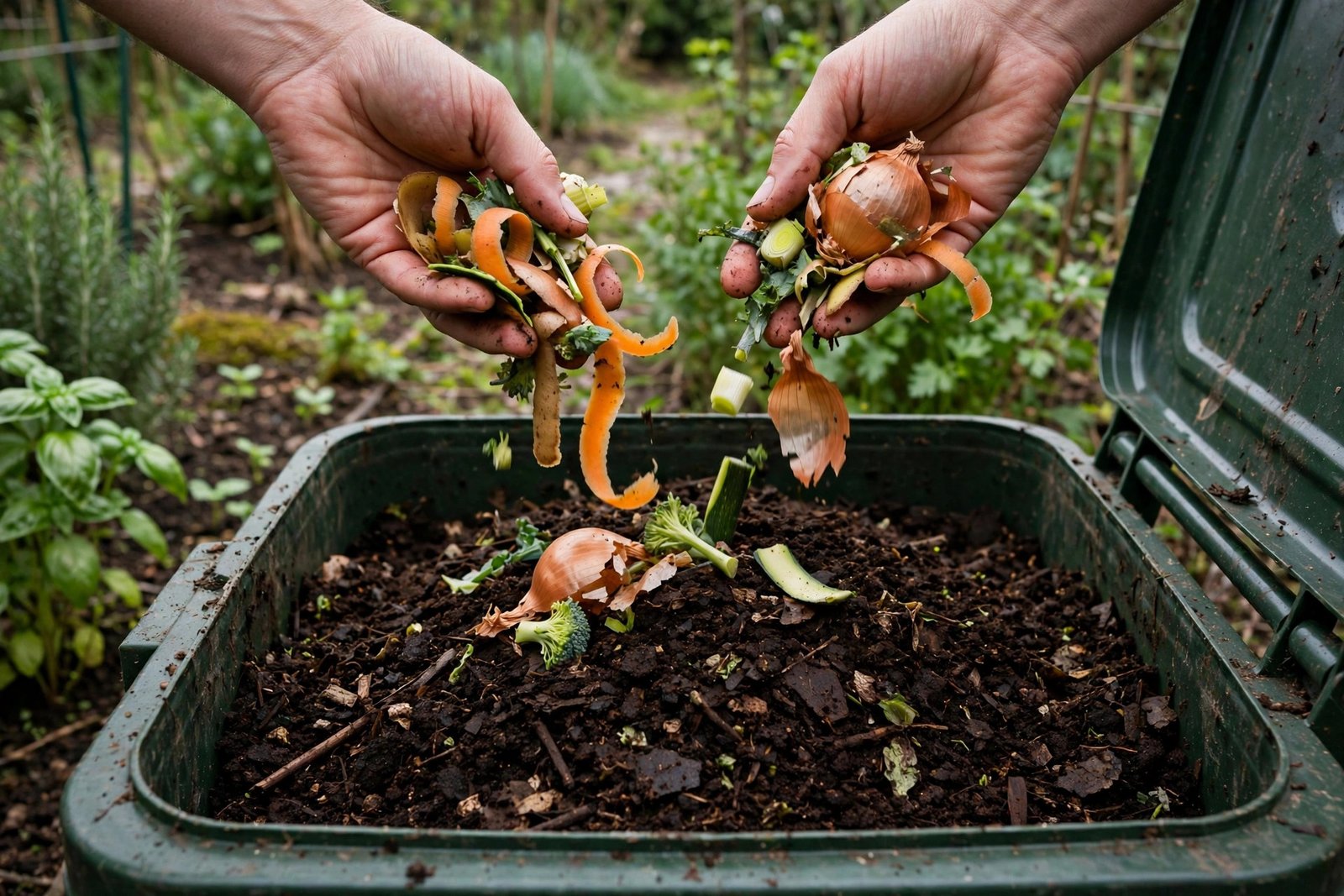
Every year, the average UK household throws away hundreds of kilos of food waste — much of it vegetable peelings, coffee grounds, and eggshells that could become garden gold instead. Composting kitchen waste is one of those rare win-win-wins: less rubbish, free fertiliser, and a smaller carbon footprint. But is it actually worth it for a complete beginner? The honest answer: yes, with caveats — it’s simpler than its reputation, but not quite as effortless as enthusiasts claim. Here’s the realistic guide.
What composting actually gives you
Finished compost is dark, crumbly, sweet-smelling humus — a soil improver, not a fertiliser in the concentrated sense. It adds organic matter that improves soil structure (clay drains better, sand holds water better), feeds the soil food web of worms, fungi, and microbes, and slowly releases nutrients. A typical home compost bin produces 200–400 litres of compost yearly from a household’s waste — worth £30–£60 if bought bagged, plus the avoided waste. The environmental case is stronger than the financial one: food waste in landfill generates methane, a potent greenhouse gas; composting returns it to the soil carbon cycle instead. Councils increasingly charge for garden waste collection or limit food-waste caddies, making home composting the convenient option. So the “worth it” calculation: modest money savings, meaningful environmental benefit, and genuinely better soil — for about ten minutes of effort a week once established. For the broader waste-reduction picture, our guide to reducing food waste at home pairs naturally with composting the unavoidable remainder.
The honest effort involved
Let’s counter both extremes. It’s not “just throw scraps in a bin” — a neglected bin becomes a slimy, smelly anaerobic mess that puts beginners off forever. But it’s not complicated either. The core skill is the green-brown balance: “greens” (nitrogen-rich: vegetable scraps, coffee grounds, grass clippings, tea bags) provide the fuel; “browns” (carbon-rich: cardboard, newspaper, dry leaves, wood chips) provide structure and absorb moisture. Aim for roughly equal volumes — beginners’ number one mistake is all greens, no browns, producing sludge. Chop or tear additions small (faster breakdown), keep the heap as damp as a wrung-out sponge (water in dry spells), and turn it occasionally (a forkful every couple of weeks introduces oxygen). That’s the entire technique. A well-managed bin produces usable compost in 6–12 months; a neglected one takes years and smells. Ten minutes weekly — mostly tearing cardboard and turning — is the real maintenance cost. The learning curve is about a month; after that it’s habit.
What to compost (and what never to add)
Yes: vegetable and fruit scraps, coffee grounds and paper filters, tea bags (check they’re plastic-free), eggshells (crushed), garden prunings and leaves, grass clippings (thin layers — thick mats go slimy), cardboard and newspaper (torn up, no glossy coatings), wood ash (small amounts), and hair. No: meat, fish, dairy, and cooked food (attracts rats — the number one reason councils discourage it), diseased plants (home heaps don’t get hot enough to kill pathogens), perennial weeds with roots or seeds, cat/dog waste (health risks), glossy magazines, and coal ash. The “no cooked food” rule surprises beginners — it’s about vermin, not chemistry; hot composting systems and sealed hot bins (like the Green Johanna) handle cooked food safely if you’re keen. When in doubt, leave it out — one rat incident ends more composting journeys than any other cause. A secure bin with a lid and a wire-mesh base deters rodents effectively. For keeping the rest of your kitchen eco-friendly, reducing plastic use in the kitchen tackles the packaging side of the same waste stream.
Choosing your setup: bins, from £0 to £200
The options: council-subsidised bins (£10–£25 through schemes like getcomposting.com — check your council; many offer them) are the default — 220–330 litre black plastic “dalek” bins that work fine. DIY pallet bins (free if you source pallets) suit larger gardens and look appropriately rustic. Tumbler composters (£80–£150) make turning effortless and deter vermin, at higher cost. Hot bins (£150–£200+) compost faster and handle cooked food and weeds. Wormeries (£60–£120) are brilliant for small spaces and produce premium worm castings plus liquid feed — ideal for flats with balconies. Bokashi (£40–£60 starter kits) ferments all food waste including meat/dairy anaerobically, producing pre-compost for the bin or soil. Placement: on soil (not concrete — worms need access), in shade or semi-shade, somewhere convenient (you’ll use it more if it’s near the kitchen door). Start simple — a subsidised dalek bin on soil near the back door. Upgrade only when you’ve outgrown it, which takes most beginners a year or more to determine. Recycle Now lists current council composting schemes and subsidies.
Troubleshooting: the four problems beginners hit
Smell (rotten eggs): too wet, too many greens, not enough air — add browns, turn it, and stop adding greens for a week. Slimy texture: same cause, same fix — browns are the answer to most composting problems. Not breaking down: too dry or too many browns — water it and add greens; winter slows everything (normal — heaps pause in cold weather and resume in spring). Fruit flies: bury fresh additions under browns or a layer of finished compost; keep the lid on. None of these is fatal — composting is forgiving, and even “failed” heaps eventually become usable material. The RHS composting guides offer authoritative troubleshooting for anything unusual. And remember the timeline: your first usable compost arrives in 6–12 months, so start now — the bin you fill this autumn feeds next year’s garden.
Winter composting: keeping the heap alive
Compost heaps slow dramatically in winter — microbial activity drops with temperature, and beginners often assume the bin has “died.” It hasn’t; it’s dormant. Keep adding greens and browns through winter (the freeze-thaw cycle actually helps break down materials), insulate the bin if you’re keen (a layer of cardboard or an old carpet over the top retains heat), and resist the urge to turn in the coldest weeks (you’ll lose the warmth the microbes have built). Come spring, the heap will reactivate with surprising speed — the winter’s accumulated material breaking down fast in warming weather. The patient composter’s reward: a bin full of nearly-finished compost just as the growing season demands it. Winter isn’t downtime; it’s the heap’s quiet preparation.
Conclusion
Is composting kitchen waste worth it for a beginner? Yes — for better soil, less waste, and genuine environmental benefit, at a cost of ten minutes a week and a £10–£25 bin. Master the green-brown balance, keep meat and dairy out, and be patient through the first year. It’s the rare habit that’s simultaneously thrifty, ecological, and satisfying — turning today’s peelings into tomorrow’s tomatoes is a small, real magic.
Frequently Asked Questions
How long does it take to make compost?
6–12 months in a typical home bin with basic management. Hot composting systems can do it in 2–3 months; neglected heaps take years.
What should beginners not put in compost?
Meat, fish, dairy, and cooked food (attract rats); diseased plants; perennial weed roots; pet waste; glossy paper; coal ash. When in doubt, leave it out.
Why does my compost smell bad?
Too many greens, too wet, not enough air. Add brown materials (cardboard, dry leaves), turn the heap, and pause green additions for a week.
Can I compost in a small garden or flat?
Yes — wormeries and bokashi systems suit balconies and small spaces, producing premium compost and liquid feed from kitchen waste alone.
Is home composting better than council food waste collection?
Both beat landfill. Home composting gives you free soil improver and avoids collection limits; council collection handles items (meat, dairy) that home bins shouldn’t. Many households do both.