
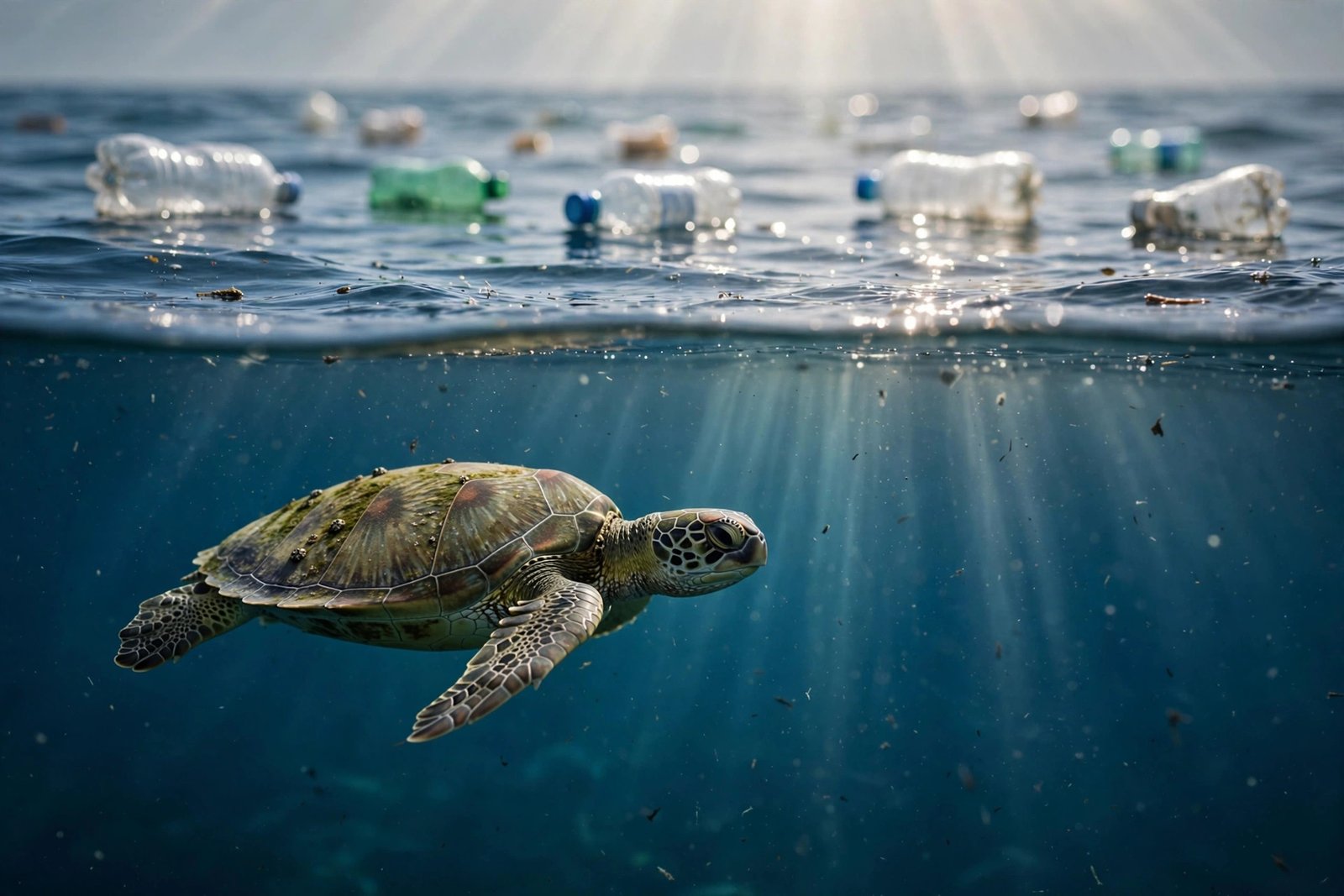
Ocean Plastic Explained: Sources, Impact and What Works
Every year, around 8 million tonnes of plastic enter the oceans — the equivalent of a rubbish truck emptied into the sea every minute. It is there in the deepest trenches, in Arctic ice, in the fish on your plate and, increasingly, in human bloodstreams. Ocean plastic is not a distant environmental issue; it is a materials crisis with your name on it, because the plastic in the ocean started as plastic in someone’s shopping basket. Understanding it properly — where it comes from, what it does, and what actually helps — is the first step to not wasting your effort on gestures that change nothing.
Where Ocean Plastic Actually Comes From
The popular image — tourists tossing bottles off cruise ships — is almost entirely wrong. Around 80% of ocean plastic comes from land, carried by rivers: just ten river systems (eight in Asia, two in Africa) carry the vast majority of river-borne plastic to the sea. The top contributors are countries with fast-growing plastic consumption and inadequate waste infrastructure — which reframes the issue from “litterbugs” to “systems.” The remaining 20% comes from marine sources: fishing gear (nets, lines, traps — “ghost gear” that keeps killing for years), shipping losses (containers lost overboard), and offshore industries.
The UK’s contribution is smaller per capita than the worst offenders but real: plastic flushed down toilets (wet wipes, cotton buds — the latter now banned in the UK), litter washed into drains, microfibres from laundry, and exported “recycling” that was historically shipped abroad with uncertain fates. Understanding the sources matters because it directs effort: beach cleanups are noble, but the leverage is in waste systems and product design, not just picking up bottles.
What It Does (Beyond the Turtle Photos)
Wildlife impacts
Entanglement and ingestion kill an estimated 100,000+ marine mammals and a million seabirds annually — and those are conservative figures. But the subtler damage may matter more: microplastics (fragments under 5mm, from broken-down larger items, tyre wear, synthetic textiles and microbeads) now permeate the marine food web from plankton upward, carrying absorbed pollutants with them. Seabirds feed plastic to chicks; filter feeders concentrate it; the base of the food chain is contaminated.
Human impacts
Microplastics are now found in human blood, lungs, placentas and drinking water worldwide. The health implications are still being researched — and that uncertainty is itself the story: we have dosed the entire species with a novel material without understanding the consequences. Seafood is one exposure route; airborne fibres and drinking water are others. The precautionary principle suggests reducing exposure where cheap to do so, which conveniently aligns with reducing ocean plastic at source.
Economic and ecosystem damage
Plastic-choked coastlines devastate tourism-dependent communities; ghost fishing gear depletes the fish stocks coastal livelihoods depend on; and plastic on coral reefs increases disease risk twentyfold (research-measured). The ocean’s ecosystems provide food, livelihoods and climate regulation for billions — plastic degrades all three, with the costs falling hardest on the poorest coastal communities.
What Actually Helps (Ranked by Impact)
1. Waste systems in high-leakage countries: the overwhelmingly highest-leverage intervention — funding waste collection and processing where plastic currently leaks. Organisations working on this deliver more per pound than any consumer action in the UK. 2. Product and packaging design: eliminating unnecessary plastic, designing for reuse and genuine recyclability — driven by regulation (the UK’s plastic packaging tax, extended producer responsibility reforms) and consumer pressure. 3. Fishing gear reform: biodegradable gear, gear marking and retrieval programmes tackle the deadliest 20%. 4. Your household plastic: real but smaller — it matters for UK waterways and sets the cultural norm, even if the tonnage is modest globally. Our guides to reducing plastic in the kitchen and eco-friendly changes at home cover the practical household side.
What does not help (much)
Ocean cleanup arrays — inspiring engineering, negligible tonnage versus the inflow (cleaning the gyres while rivers still pour plastic in is mopping with the tap running). Paper straws while buying fast fashion — performative swaps that miss the material flows. And “recycling harder” without systemic change — individual recycling is necessary but wildly insufficient against production growth. Direct your energy up the leverage ladder, not at the most visible gesture.
What You Can Do This Week
Audit your plastic: one week of noticing what you throw away reveals your top three plastic streams — target those specifically. Switch the big ones: reusable bags, bottles and coffee cups (the holy trinity — high-use, easy wins); refill shops for cleaning products and dry goods; loose produce over wrapped. Fix your laundry: a microfibre-catching laundry bag or filter cuts the fibres your washing machine sheds into waterways — one of the highest-impact household actions. Bin wet wipes properly (never flush — “flushable” is marketing, not engineering). Support the systems: donate to organisations building waste infrastructure where it leaks most; vote for and support packaging regulation. Individual action plus systemic pressure — that is the formula that has worked for every pollution problem we have ever solved.
The UK Picture: Closer to Home Than You Think
Britain’s own waters are not exempt: microplastics are found throughout UK rivers and coastlines, wet wipes reshape riverbeds (the Thames has “wet wipe reefs”), and nurdles (pre-production plastic pellets) wash up on beaches from industrial spills. The good news is that UK action works — the plastic bag charge cut usage by over 95%, the microbead ban removed a direct source, and deposit return schemes are expanding. These are proof that the systemic interventions ranked above actually deliver when implemented. The UK cannot fix Asian rivers, but it can stop adding to the problem, lead on regulation, and fund the waste infrastructure where it matters most. Local action plus global responsibility — that is Britain’s role in this story.
Conclusion
Understanding ocean plastic without wasting effort means knowing it comes overwhelmingly from land-based waste systems (not cruise ships), that microplastics now permeate food webs and human bodies, and that the highest-leverage fixes are waste infrastructure, product design and fishing-gear reform — with household action real but secondary. Do the household things (they matter locally and culturally), support the systemic things (they matter globally), and skip the performative gestures. The ocean does not need your guilt; it needs your plastic to stop arriving. Every intervention that reduces inflow beats any amount of cleanup after the fact.
Learn more from the Marine Conservation Society’s plastic pollution work and WRAP’s work on plastic packaging.
Frequently Asked Questions
Where does ocean plastic come from?
Around 80% from land via rivers (a handful of river systems carry most of it), 20% from marine sources like fishing gear and shipping. The top contributors are countries with growing plastic use and inadequate waste infrastructure.
Are microplastics harmful to humans?
They are now found in human blood, lungs and placentas; health implications are still being researched. The precautionary approach is to reduce exposure where cheap — which aligns with reducing plastic at source anyway.
What is the most effective way to reduce ocean plastic?
Building waste collection infrastructure in high-leakage countries, better product/packaging design driven by regulation, and fishing-gear reform. Household reduction matters too, especially for local waterways.
Do ocean cleanup projects work?
They remove tiny fractions versus the inflow — worthwhile symbolically and for hotspots, but negligible against 8 million tonnes a year entering. Stopping inflow beats cleanup by orders of magnitude.