
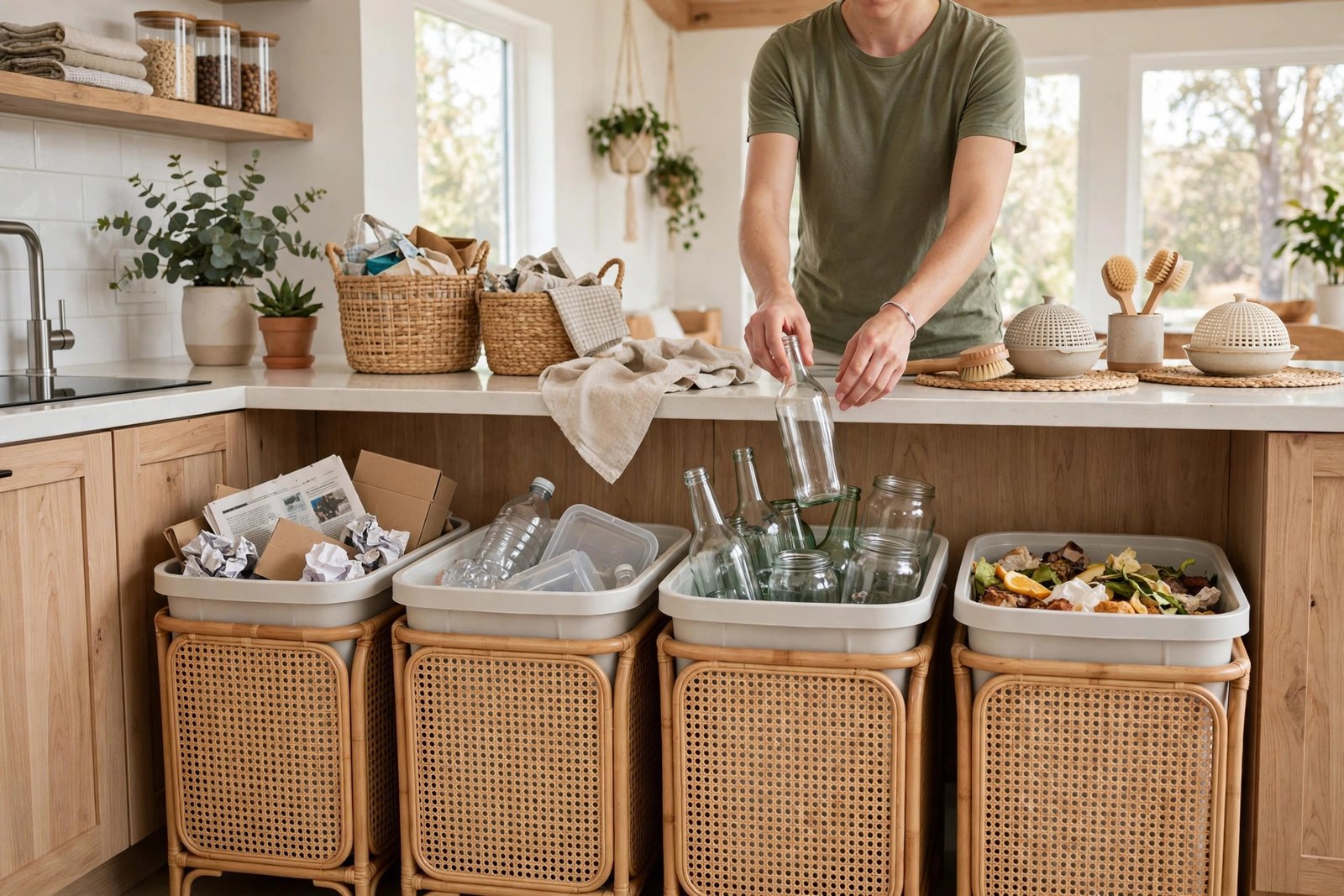
How to Recycle Properly at Home: The UK Guide
British households recycle more than ever — and still get it wrong constantly. Wish-cycling (tossing questionable items in “hoping” they are recyclable) contaminates whole truckloads, while perfectly recyclable items go to landfill daily because nobody was sure. The rules also differ by council, which means your neighbour’s advice from three streets over might be wrong for your bin. Recycling properly at home without wasting money on fancy sorting gadgets is mostly about knowing your local rules and breaking five common habits. Here is the complete guide.
Know YOUR Council’s Rules (They Differ)
This is the step everyone skips and the one that matters most. UK recycling is administered by local councils, and what goes in which bin varies enormously: some councils take glass in the main recycling bin, others require separate boxes; some accept food waste, others do not; tetrapaks, foil, and certain plastics are in-or-out depending on postcode. Check your council’s website — search “[your council] what goes in my bins” — and bookmark the page. Print the crib sheet and stick it inside a kitchen cupboard door. This single action eliminates 80% of recycling errors, and it is free.
Rules also change: councils periodically alter accepted materials as contracts change. Re-check annually, and read the leaflets that come with the council tax bill instead of recycling them unread (the irony).
The Five Habits to Break
1. Wish-cycling
The biggest contaminator: putting non-recyclables in the recycling “just in case.” Crisp packets, film lids, polystyrene, nappies, textiles in the recycling bin — none are typically recyclable kerbside, and one contaminated load can send an entire truck to landfill or incineration. The rule is strict but simple: when in doubt, leave it out (and check the council site later). Wish-cycling feels virtuous; it is actually sabotage.
2. Bagging recyclables in plastic bags
Recycling in black bags or carrier bags is rejected at sorting facilities — machinery cannot open them, so the whole bag goes to waste. Put items loose in the bin (rinse containers, squash bottles, but no bags). Exception: some councils specifically request clear bags — check yours.
3. Not rinsing (or over-rinsing)
A quick rinse or scrape prevents food residue contaminating paper and card in the same load — but do not run the hot tap for a minute per yoghurt pot; a swill in the washing-up bowl water is plenty. The goal is “not filthy,” not “dishwasher clean.” Wasting water and energy over-cleaning recyclables defeats the purpose.
4. Ignoring the numbers game on plastics
The chasing-arrows symbol does not mean recyclable — it is just a resin code. In practice: bottles (PET/HDPE, numbers 1-2) are almost universally accepted; pots, tubs and trays (5, sometimes) vary by council; films, wrappers and pouches (4, various) are rarely kerbside-recyclable but can go to supermarket collection points — most large supermarkets now take carrier bags, bread bags, crisp packets and film. Save them in one bag and drop off monthly.
5. Forgetting the special streams
Batteries (never in any bin — fire risk; take to supermarket collection points), small electricals (many councils collect kerbside or at recycling centres), textiles (charity shops, textile banks — never the recycling bin), cooking oil (solidify and bin, or take to recycling centres), and paint (recycling centres, not drains or bins). These “occasional” items cause disproportionate harm when binned wrongly — a single lithium battery can ignite a whole refuse truck.
Reduce First (Recycling Is Third Best)
The waste hierarchy is reduce, reuse, then recycle — recycling is the least-bad disposal option, not a virtue in itself. The biggest wins cost nothing: refuse excess packaging (loose veg over plastic-wrapped, refills over new bottles), reuse (jars, bags, containers — the average home rebuys what it throws away), repair (the UK’s repair cafés fix small electricals and textiles free), and compost food waste (even a small caddy or wormery diverts a third of household waste). Our guide to reducing plastic use in the kitchen tackles the highest-volume room in the house.
Food waste deserves special attention: the average UK household bins 30% of the food it buys. Meal planning, proper storage and “eat me first” shelf discipline cut this dramatically — and our guide to easy ways to be more eco-friendly at home covers the full household picture.
Setting Up a System That Works
The reason recycling fails in most homes is friction, not ignorance — so design the friction out. Sort at source: a simple multi-compartment setup (or labelled bags/boxes) in the kitchen where waste is generated beats a single bin plus good intentions. Make it visible: the crib sheet inside the cupboard door, labels on each compartment. Assign the streams: one small box for batteries, one bag for supermarket plastics, one spot for textiles — emptied monthly on a routine (tie it to an existing habit, like the monthly shop). Get the household on board: a two-minute tour for everyone, including kids (who are often the best enforcers once converted). Systems beat willpower; a well-set-up kitchen recycles correctly on autopilot.
Dealing With Tricky Items (The Reference List)
Bookmark this: Coffee cups: not recyclable kerbside (plastic lining) — use a reusable cup. Pizza boxes: recycle if clean; bin the greasy parts. Shredded paper: usually not accepted (falls through sorting machinery) — compost it instead. Light bulbs: recycling centres only (contain electronics/mercury). Aerosols: empty ones usually fine in recycling; full ones are hazardous — take to the centre. Cling film: supermarket collection points, not the bin. Hard plastics (toys, buckets): recycling centres, not kerbside. Duvets and pillows: charity shops, textile banks or the general bin — never recycling. When a new confusing item appears, the rule never changes: check the council site, and when in doubt, leave it out.
Conclusion
Recycling properly at home without wasting money means checking your specific council’s rules (they differ — bookmark the page), breaking the five contaminating habits (wish-cycling, bagging, dirty containers, plastic-number confusion, forgotten special streams), remembering that reduce and reuse beat recycling, and setting up a low-friction sorting system in the kitchen. It costs nothing beyond attention, and it is one of the few environmental actions where individual correctness genuinely matters — because one contaminated bin really can spoil the whole truck. Recycle right, or do not bother; there is no middle ground that helps.
Official sources: GOV.UK’s recycling guidance and WRAP’s recycling advice.
Frequently Asked Questions
What can I put in my recycling bin in the UK?
It depends on your council — rules vary significantly. Check “[your council] what goes in my bins” online. Generally: clean bottles, tins, paper and card loose (not bagged); specifics on glass, plastics and food waste vary.
What is wish-cycling and why is it bad?
Putting non-recyclable items in recycling “just in case.” It contaminates loads — one truck of contaminated recycling can be diverted entirely to landfill or incineration.
Can I recycle crisp packets and plastic film?
Not usually kerbside, but most large supermarkets have collection points for carrier bags, bread bags, crisp packets and plastic film. Save them in one bag and drop off monthly.
Where do I recycle batteries in the UK?
Never in any household bin (fire risk). Take them to supermarket collection points, recycling centres, or shops that sell batteries — retailers are obliged to take them back.